




















































Industrial 5G Router Security for OT Networks: RADIUS, TACACS+, 802.1x, and Zone-Based Firewall for PLC, SCADA, and Sensor Protection
Most compact industrial routers make a security trade-off that OT engineers have learned to live with: they support either VPN tunneling or basic access control lists, but not the full authentication and segmentation stack that a SCADA or PLC network actually requires. The H685f is an exception. Its security feature set — RADIUS and TACACS+ authentication, 802.1x port-level access control, per-client web and IP filtering, and a zone-based object firewall — is the kind of layered architecture usually found in rack-mounted enterprise gear, delivered in a unit small enough to install inside a control cabinet. This article examines each of those security layers in detail and explains why each matters specifically in OT environments where the consequences of unauthorized access go beyond data loss.
What Is an Industrial 5G Router with an Enterprise Security Stack?
An Enterprise-security industrial 5G router is a ruggedized cellular gateway that provides the authentication, access control, and traffic segmentation mechanisms that industrial and critical infrastructure networks require — while also delivering 5G connectivity for remote SCADA polling, PLC command traffic, and sensor telemetry. The emphasis on “enterprise security stack” is deliberate: it describes a specific combination of features that most compact routers at this form factor and price tier do not include together.
RADIUS (Remote Authentication Dial-In User Service) and TACACS+ (Terminal Access Controller Access-Control System Plus) are centralized authentication and authorization protocols that allow every administrator login to a router to be validated against a central server, with granular accounting of who accessed the device, when, and what commands they ran. 802.1x is a port-level access control standard that prevents any device from receiving network traffic through a router’s Ethernet port until it has successfully authenticated. A zone-based object firewall applies traffic rules to defined network segments — rather than just to individual IP addresses — so that a SCADA server zone, a PLC zone, and a remote maintenance zone each enforce their own policies independently.
Together, these four layers address the three primary attack vectors on OT network infrastructure: unauthorized administrator access (RADIUS/TACACS+), unauthorized device connections at the physical port level (802.1x), and unauthorized lateral movement between network segments once a device is connected (zone-based firewall). Per-client filtering adds a fourth control layer, applying individual web and IP filtering rules to specific connected devices rather than to all traffic from a zone uniformly.
Why this matters in OT contexts: the consequences of unauthorized access to a SCADA or PLC network extend far beyond data exfiltration. An attacker who can reach a programmable logic controller over the network can potentially modify the logic controlling a physical industrial process — a pump, a valve, a conveyor, an electrical switching system. The security stack on the router connecting those assets to a cellular WAN is the first and often the only line of defense between that control logic and the internet.
OT Network Security Assessment Checklist Before Deploying a Cellular Router
Before specifying a 5G router for an OT or industrial control network, confirm the following. Security requirements in OT environments are specific enough that a router meeting general IT-security specifications may still miss features that field engineers and SCADA architects need.
- Does the site operate PLCs, RTUs, or SCADA servers that require network connectivity, and what communication protocols do they use (Modbus, DNP3, IEC 104, OPC-UA)?
- Is centralized authentication management required, or will per-device local credential management be acceptable for the scale of this deployment?
- Which personnel roles need router management access, and does each role require different levels of privilege (read-only monitoring vs. full configuration access)?
- Are there specific network segments — engineering workstation subnets, historian servers, field device subnets — that must be isolated from each other and from the cellular WAN?
- Does the deployment require 802.1x at the LAN ports to prevent unauthorized devices from being plugged into the control network in the field?
- Are there compliance frameworks in scope — IEC 62443, NERC CIP, NIST SP 800-82 — that specify authentication and segmentation controls the router must support?
- What is the physical security posture of the installation? A router inside a locked control room has different threat exposure than one mounted in an accessible field enclosure.
- Does the deployment require VPN tunneling back to a central operations center in addition to the local security controls, and what VPN protocols does the operations center support?
Why OT Network Security Is Different From IT Network Security — and Why the Router Matters More
The security model that enterprise IT networks have converged on over the last two decades — perimeter firewalls, endpoint antivirus, frequent patch cycles, and user security awareness training — transfers to operational technology environments only partially, and often not at all in the parts that matter most. The differences are structural rather than cosmetic, and they place a higher burden on the network infrastructure, particularly on the router connecting field assets to any upstream network.
The most significant difference is device manageability. An IT security engineer who discovers a critical vulnerability in a Windows server can patch it within days; the vendor publishes an update, an administrator applies it, and the exposure window closes. The PLC or RTU running a pumping station or a substation’s protection relay may be running firmware from five or ten years ago, because the vendor no longer publishes updates for that hardware generation, or because the update process requires taking the system offline during a maintenance window that occurs once a year. The network router connecting that device to any upstream link cannot assume the endpoint is hardened. It has to treat every device behind it as potentially vulnerable and enforce access controls at the router layer rather than at the device.
The second key difference is the cost of availability interruption. An IT network can tolerate a brief outage while a security incident is contained; a production process usually cannot. An OT security engineer designing a defense cannot simply respond to unauthorized access by isolating affected segments and restoring from backup — restoring a PLC program is not the same as restoring a file server, and the physical-world consequences of the process going offline or behaving unexpectedly may be severe. This means detection and prevention must happen before the attacker reaches the device, at the router or firewall layer, rather than after the fact.
The cellular router at the edge of an OT network is the last enforcement point before traffic reaches devices that were never designed to defend themselves. Every security control you can push to that router is one you don’t have to count on the PLC to implement on its own.
— OT Network Security Architecture PrincipleThe third difference is the promiscuity of the threat surface once cellular connectivity is introduced. A field device that previously had no network connection except a serial cable to a local control system now has a path — through the 5G router — that terminates somewhere on the internet. Every attacker who can reach the router’s public IP can attempt to authenticate to the management interface, probe for open ports, or attempt to exploit any service the router exposes. The authentication and access control stack on the router is what stands between those probes and the SCADA or PLC assets behind it.
Industrial control system security incident reports have consistently shown that remote access pathways — including cellular links intended for legitimate SCADA polling and remote maintenance — are among the most commonly exploited vectors. In environments where the field router’s management interface is reachable from the internet with only a local username and password for authentication, and where there is no zone-based segmentation preventing a compromised maintenance laptop from reaching a PLC subnet directly, a single compromised credential can provide an attacker with direct access to control-layer assets. Centralized RADIUS/TACACS+ authentication combined with 802.1x port security reduces this surface substantially by ensuring that neither a guessed password on the router’s management interface nor a plugged-in rogue device gains automatic access to the OT network behind it.
The Four Security Layers of the H685f and Why Each Matters in OT
Layer 1: RADIUS and TACACS+ — Centralized Authentication With Full Accounting
Local username and password authentication — where credentials are stored on the router itself — has two weaknesses that become significant in OT deployments managing multiple field devices. The first is that every router in the network maintains its own credential database, which means when a technician leaves or a password must be rotated for compliance purposes, every router must be individually updated. In a deployment with dozens of field sites, this is both operationally burdensome and a source of drift: devices that were not updated within the required window retain the old credentials and remain accessible with a password that should have been revoked.
The second weakness is accountability. Local authentication tells you whether a login attempt succeeded or failed, but typically cannot tell you, from a central audit log, which specific technician used which device’s management interface at what time and what configuration changes they made. In environments subject to NERC CIP or IEC 62443 audit requirements, this absence of centralized accounting creates a compliance gap that is difficult to close after the fact.
The H685f’s RADIUS and TACACS+ support addresses both problems directly. With RADIUS or TACACS+ configured, every management login to every H685f in the deployment is validated against a central authentication server that maintains the credential database, enforces password policies centrally, and logs every access event — successful or not — to a central audit trail. Removing a technician’s access requires one change on the authentication server, not individual updates to every router. When an auditor asks who accessed the control network router at a specific remote site on a specific date and what they changed, that information is in the centralized accounting log.
TACACS+ provides more granular authorization than RADIUS in the router management context specifically: it can differentiate between what different user roles are permitted to do after authenticating. A monitoring technician may be authorized to view interface statistics and connection status but not to modify routing tables or firewall rules; a field engineer may be authorized to restart services but not to change authentication settings. RADIUS handles this less granularly at the command level, though it supports role-based access through attribute-value pairs. Both protocols are available on the H685f, allowing the deployment to match whichever authentication infrastructure the organization already operates.
Key distinction for OT deployments: TACACS+ separates authentication, authorization, and accounting into three independent operations, allowing each to be configured independently. This makes it possible to use a different authorization policy for break-glass emergency access than for normal operating procedures — a capability that OT environments need but that many compact routers simply do not support.
Layer 2: 802.1x Port Security — Stopping Rogue Devices at the Physical Connector
Once a device is physically plugged into an Ethernet port on a router without 802.1x, it receives a DHCP address and can begin sending traffic to anything on the same network segment. In an IT environment this is a manageable risk — a rogue device on a corporate network is bad, but it can typically be detected and isolated before causing serious harm. In an OT environment where the same Ethernet switch or router port connects to a PLC subnet, a rogue device achieving network access is potentially far more serious: it can observe all traffic on that segment, attempt to authenticate to control devices, or probe for exploitable services running on aging firmware that the PLC vendor has long since stopped patching.
The H685f supports 802.1x authentication on its Ethernet ports. With 802.1x configured, a device that is physically connected to the port does not receive any network access — not even a DHCP address — until it has completed an EAP (Extensible Authentication Protocol) exchange through the router acting as the 802.1x authenticator, validated against a RADIUS authentication server. A laptop plugged in by a technician who cannot supply valid credentials for the EAP exchange goes nowhere. A device that does not support 802.1x at all — an older device without a supplicant — can be handled through MAC authentication bypass, which authenticates on the basis of the device’s MAC address, or can be placed in a guest VLAN with restricted access until the authentication issue is resolved.
For OT environments where physical access to a control cabinet is possible for unauthorized personnel — a field enclosure at a remote pump station, a panel in a building accessible to non-technical staff — 802.1x provides the enforcement point that prevents the “I plugged in my laptop” physical access scenario from immediately translating to network access to the control system.
Layer 3: Zone-Based Object Firewall — Segmentation That Follows the OT Architecture
Traditional access control lists apply rules to traffic flowing between individual IP addresses or subnets. This approach scales poorly as the number of endpoints grows, and it requires every new device added to the network to be individually evaluated against every existing ACL rule. More importantly for OT environments, it does not naturally map to the security zones that IEC 62443 and similar frameworks define: a SCADA server zone, a historian zone, a field device zone, an engineering workstation zone, and a DMZ providing controlled access from the corporate network.
The H685f’s zone-based object firewall organizes firewall policy around defined zones rather than individual addresses. Each zone represents a network segment — a VLAN, a subnet, or a specific interface — and firewall rules are written between zones rather than between individual hosts. Traffic from the engineering workstation zone to the PLC zone is permitted on specific ports required for the specific PLC protocol in use; all other traffic between those zones is denied by default. Traffic from the cellular WAN zone to any OT zone is denied entirely unless it matches an explicit exception for an authorized VPN tunnel or a specific remote access session. A new PLC added to the field device zone automatically inherits the zone’s access policy without requiring a new firewall rule to be written for its specific IP address.
The object-based element of the H685f’s firewall allows hosts to be defined by IP address, FQDN, or MAC address. In OT environments where devices may have static IP addresses assigned by the SCADA system, IP-based objects work cleanly. FQDN-based objects allow policy to reference cloud management platforms or remote monitoring services by name rather than IP, which matters when those services are hosted on infrastructure whose IP addresses can change. MAC address-based objects allow policy to be tied to specific physical devices in contexts where IP assignment may vary.
A regional water utility deploying 5G cellular connectivity across remote pump stations and water treatment facilities used the H685f’s zone-based firewall to implement a three-zone architecture at each site: a field device zone containing the site’s PLCs and instrumentation, an operations zone containing the local SCADA historian and HMI workstation, and a WAN zone connecting to the central operations center over an IPsec VPN. Firewall policy between zones permitted SCADA polling traffic from the operations zone to the field device zone on the specific Modbus TCP ports their PLCs required, denied all other originating traffic from the WAN zone directly to the field device zone, and permitted only authenticated VPN sessions from the central operations center to the operations zone for remote monitoring. An attempted port scan from the cellular WAN that would previously have been able to reach field device subnets directly was blocked at the zone boundary without any additional rule requiring the individual PLC IP addresses to be enumerated in the firewall.
Layer 4: Per-Client Filtering — Individual Device Policy in a Mixed-Use Network
Zone-based segmentation handles the macro-level structure of a network: which subnets can talk to which other subnets, and under what conditions. Per-client filtering handles the micro-level: when multiple device types with different trust levels share the same physical network segment, applying different access policies to individual clients rather than uniformly to the zone they happen to be in.
The H685f supports per-client web filtering and IP filtering. In practical OT deployment terms, this means an engineering workstation temporarily connected to the same LAN segment as field devices can have IP filtering rules applied that restrict its access specifically — preventing it from directly reaching PLC subnets outside its authorized scope — while the PLCs on the same segment maintain their normal access to the SCADA polling server. A maintenance laptop brought in by a vendor technician can have web filtering applied that prevents it from making arbitrary outbound internet connections that would represent a data exfiltration path, while allowing the specific connections the maintenance tool requires.
In BYOD or multi-vendor maintenance scenarios — common in OT environments where different equipment is maintained by different vendors under different service contracts — per-client filtering provides granular policy control without requiring those devices to be placed in a completely separate physical or logical network segment, which may not be operationally practical at a compact field site.
Important: Per-client filtering on its own is not a substitute for zone-based segmentation. It operates at the IP and content filtering layer and does not prevent a client from communicating with other devices on the same local subnet. In OT environments where different trust levels exist among devices on the same segment, VLAN segmentation combined with the zone-based firewall provides stronger isolation than per-client filtering alone. Use per-client filtering as an additional control layer on top of zone segmentation, not as a replacement for it.
E-Lins H685f: Enterprise Security in an Industrial Compact Form Factor
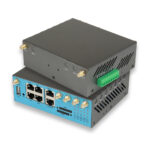
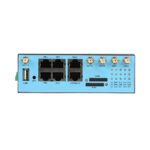
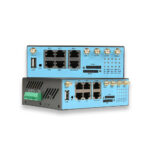
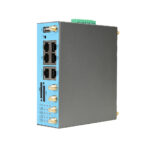
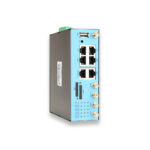
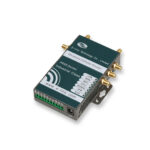
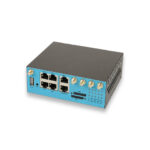
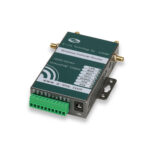
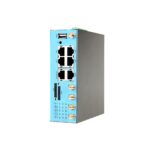
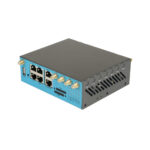
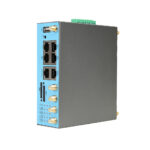
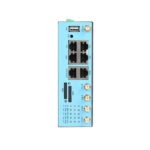
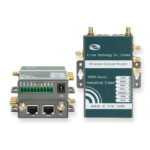
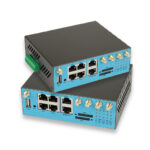
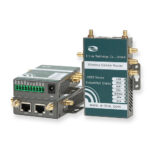
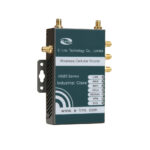
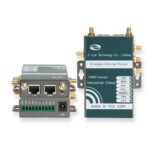
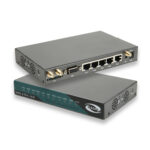
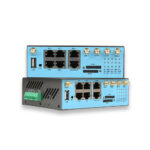
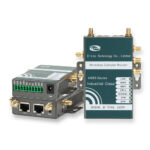
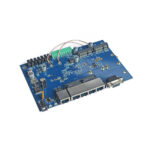
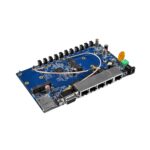
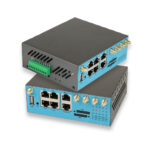
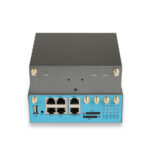
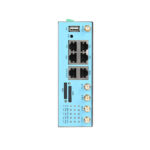
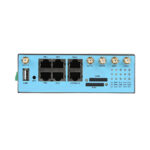
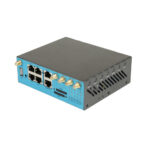
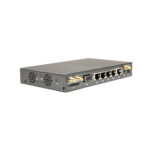
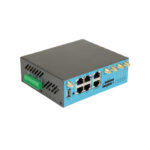
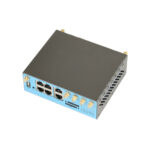
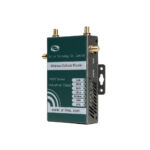
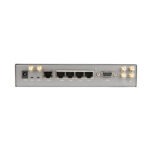
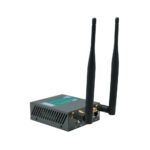
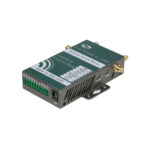
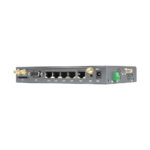
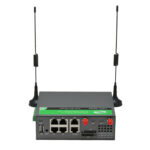
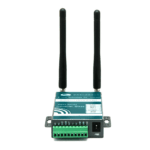
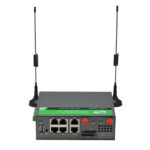
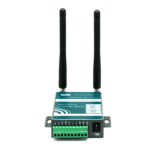
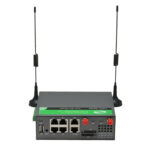
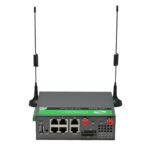
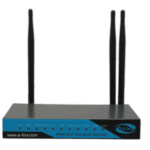
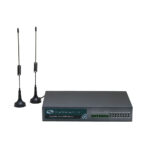
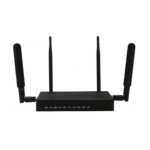
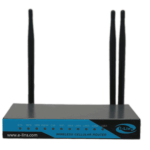
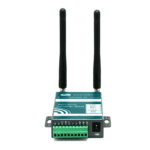
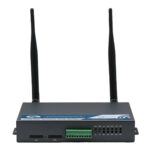
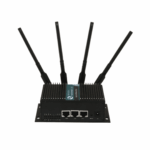
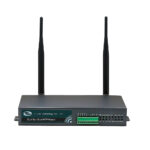
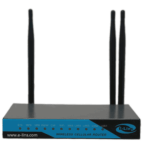
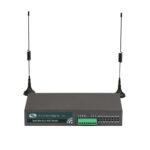
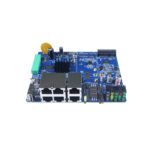
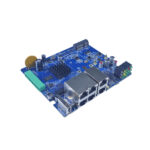
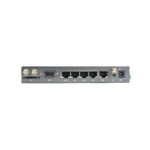
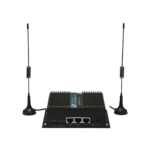
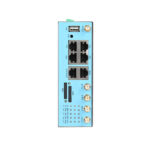
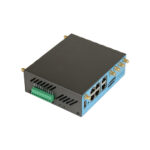
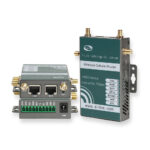
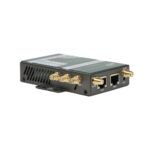
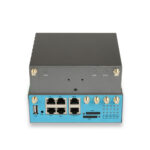
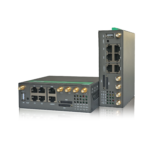
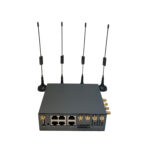
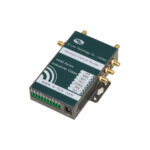
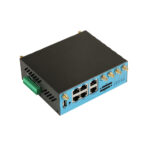
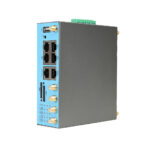
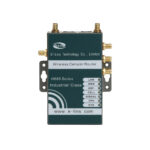
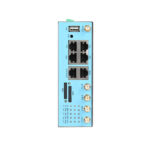
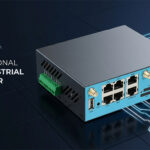
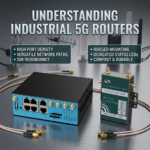
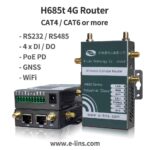
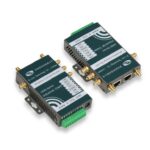
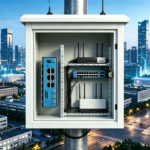
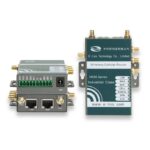
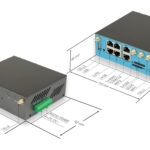
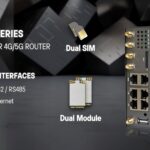
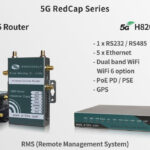
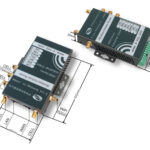
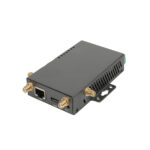
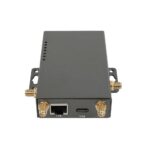
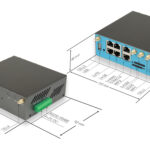
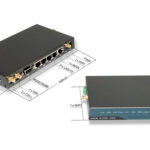
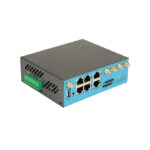
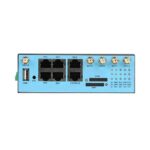
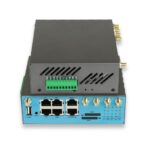
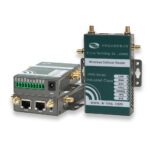
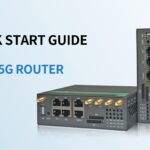
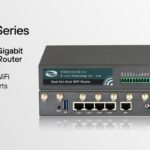
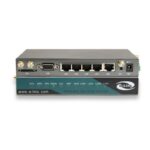
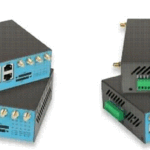
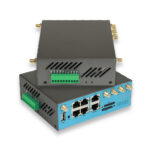
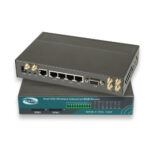
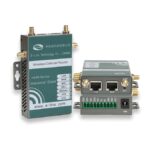
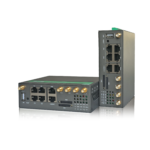
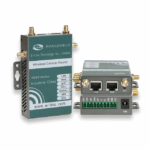
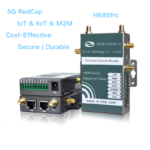
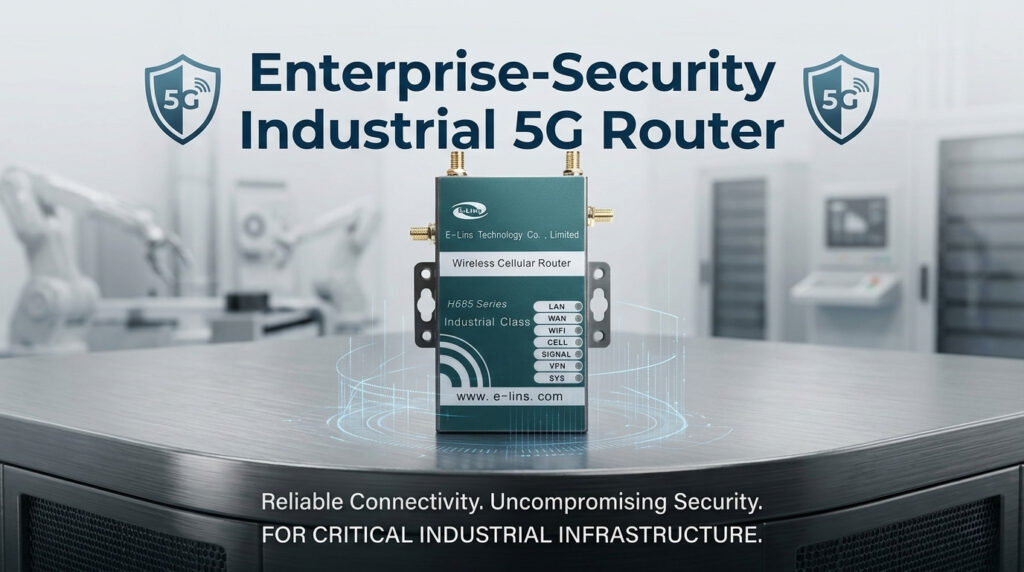
The E-Lins H685f is a compact 5G industrial router — measuring 100mm × 60mm × 21mm with its case — that packages the full security feature set described above alongside the environmental hardening and cellular reliability features that industrial deployments require. It operates from −35°C to +75°C ambient and accepts 5–40V DC input with built-in reverse polarity and transient voltage protection, making it suitable for installation in control cabinets, roadside enclosures, and vehicle-mounted installations where power quality and temperature control are not guaranteed.
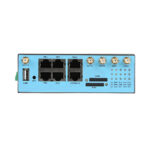
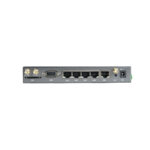
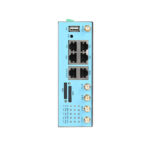
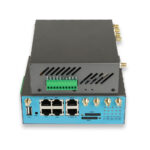
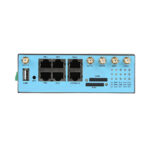
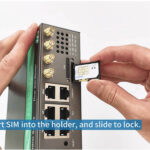
Two Gigabit Ethernet ports serve as LAN and WAN interfaces, with the WAN port supporting static IP, DHCP, and PPPoE configurations in addition to the primary 5G cellular connection. A single SIM card slot connects to the cellular modem supporting 5G SA and NSA, 4G LTE FDD and TDD, and fallback to 3G and 2G networks. Four cellular antenna connectors (SMA) and two Wi-Fi antenna connectors support external high-gain antenna replacement for installations where the router is inside a metal enclosure that would otherwise attenuate the cellular signal.
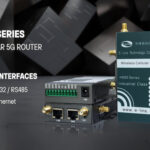
H685f Gigabit 5G Industrial Router
Compact 5G industrial router with RADIUS/TACACS+, 802.1x, zone-based object firewall, and full VPN suite. Rated −35°C to +75°C. DIN-rail, wall, or desktop mount.
Beyond the security stack, the H685f supports the full VPN suite that OT environments require for secure backhaul: IPsec in tunnel, transport, and NAT-T modes; L2TP and L2TP over IPsec; GRE tunneling; OpenVPN; WireGuard; and DMVPN for hub-and-spoke deployments connecting multiple field sites back to a central operations center. OSPF, BGP, and RIP support allows the router to participate in formal enterprise WAN topologies where dynamic routing is preferred over static configurations that require manual updates when WAN topology changes.
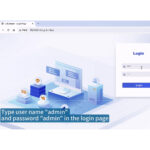
Management options include web UI, SSH/Telnet CLI, SNMP v1/v2c/v3, SMS control, and TR-069 for carrier-managed deployments. The E-Lins cloud NMS (Network Management System) provides centralized monitoring and configuration across multiple deployed H685f units — particularly relevant for OT deployments that span many field sites that would be impractical to manage individually. Optional DI/DO ports, serial RS232/RS485, GPS/GNSS, and PoE PD are available for applications where the router needs to interface with legacy serial devices or receive power directly from the network rather than a local supply. 
Project Selection Guide: When the H685f’s Security Stack Is the Right Specification
The H685f’s security features represent a specification level that not every deployment requires and that some deployments cannot go without. Understanding which category a given project falls into avoids both over-specifying a simple remote monitoring application and under-specifying a protection-relay or process control installation where the security consequences of the wrong router choice are serious.
High-Fit OT Security Scenarios
- SCADA or DCS deployments connecting field devices over cellular where unauthorized access to the PLC layer would have physical-world consequences.
- Multi-site deployments requiring centralized RADIUS/TACACS+ authentication and unified audit logging across all field routers for compliance purposes.
- Sites where field cabinet physical access by non-authorized personnel is possible and 802.1x port security is required to prevent rogue device connections.
- Environments subject to IEC 62443, NERC CIP, or NIST SP 800-82 requirements that specify authentication, segmentation, and accounting controls.
- Mixed-vendor maintenance environments where per-client filtering on visiting technician laptops is required to control their network access scope.
- Critical infrastructure segments where the WAN-facing side of the router must be fully segmented from OT device subnets except through explicitly authorized VPN tunnels.
Lower-Priority Security Scenarios
- Simple environmental monitoring applications — weather stations, non-critical sensors — where data loss is inconvenient but there are no physical-process consequences from unauthorized access.
- Deployments where all cellular traffic terminates at a separate upstream security appliance before reaching any OT assets, making router-level segmentation redundant.
- Single-site deployments managed by a single known technician where centralized authentication management provides no practical operational benefit over local credentials.
- Asset tracking and fleet telematics applications where the router handles outbound-only telemetry and no inbound connection paths to industrial assets exist.
The dividing line is usually the question of whether a compromised or misconfigured router would provide a path to a device that controls a physical process. If yes, the H685f’s security stack is the right specification. If the router connects only to sensors that report data without accepting commands — and where the worst-case consequence of unauthorized access is data loss rather than process disruption — a lighter-security specification may be sufficient and more economical.
Comparison: H685f Security Stack vs Standard Industrial Router for OT Networks
The table below contrasts the H685f’s security feature set with a typical compact industrial cellular router that offers basic firewall and VPN but does not include centralized authentication or 802.1x port security. Both router categories are commonly specified for industrial cellular applications; the distinction matters when the connected assets are critical OT infrastructure rather than simple data collection endpoints.
| Security Factor | H685f (Enterprise Security Stack) | Standard Industrial Router (Basic Security) |
|---|---|---|
| Management Authentication | RADIUS, TACACS+, or local. Centralized credential management with full accounting and per-command authorization possible via TACACS+. | Local username/password only. Per-device credential management; no centralized accounting log. |
| Port-Level Access Control | 802.1x port authentication. Devices must authenticate via EAP before receiving any network access, preventing unauthorized device connections. | No 802.1x. Any device physically connected to a LAN port receives network access automatically. |
| Firewall Architecture | Zone-based object firewall. Policy defined between named zones (not just individual IPs). Hosts addressable by IP, FQDN, or MAC. | Stateful packet inspection with ACLs. Rules applied to individual IP addresses or subnets; does not support zone abstraction. |
| Per-Client Filtering | Per-client web filtering and IP filtering. Individual devices can have different access policies even within the same LAN segment. | Filtering applied uniformly to all traffic on an interface or subnet; per-device policy differentiation not available. |
| Audit and Accounting | RADIUS and TACACS+ accounting provides centralized logs of all management access events across all deployed routers. Syslog to remote server also supported. | Local syslog only. No centralized accounting; audit trail reconstruction requires manual log retrieval from each device. |
| VPN for OT Backhaul | Full suite: IPsec (NAT-T, tunnel, transport), L2TP/IPsec, GRE, OpenVPN, WireGuard, DMVPN, ZeroTier, VTI tunnel support. | IPsec and typically one or two additional protocols. May lack DMVPN or WireGuard for modern deployments. |
| Routing Protocol Support | OSPF, BGP, RIP, VRRP. Participates in enterprise WAN topology; supports hub-and-spoke and mesh OT network designs. | Static routing and basic dynamic routing; may not support BGP for enterprise WAN integration. |
| Compliance Posture (IEC 62443 / NERC CIP) | Centralized auth, port security, zone segmentation, and accounting align with IEC 62443 SL-2 access control and audit requirements. | Basic firewalling covers perimeter requirements but lacks centralized authentication and accounting controls specified at higher security levels. |
| Management Scalability | E-Lins NMS for centralized multi-site management; SNMP v3; RADIUS/TACACS+ for unified credential management across all sites. | Per-device web UI management. Scaling to dozens of sites requires manual per-device configuration management. |
| Physical Installation | 100 × 60 × 21 mm with case. DIN-rail, wall, or desktop mount. −35 to +75°C. 5–40V DC. | Varies. Comparable form-factor devices typically also support DIN-rail and similar temperature/voltage ranges. |
Common Security Mistakes When Deploying Cellular Routers in OT Networks
Treating the Cellular WAN as a Secure Perimeter
A common assumption in OT deployments transitioning from serial SCADA links or dedicated leased lines to cellular is that because the SIM card is associated with the organization, the cellular network itself is trusted. This is not the case. A 5G cellular WAN is a shared carrier network: the router’s WAN interface has a public or carrier-NAT IP address that is reachable from the internet. The cellular link provides transport security but not access control — any adversary who knows the WAN IP or can identify it through scanning can probe the router’s management interface and any open ports. RADIUS/TACACS+ authentication, zone-based firewall rules, and WAN service filtering (blocking management interface access from the WAN entirely except through VPN) are the correct response to this threat, not the assumption that being on a cellular network provides protection.
Configuring 802.1x Without Considering Legacy OT Device Compatibility
802.1x requires that the connecting device implement an EAP supplicant — authentication software on the device itself that participates in the port authentication handshake. Many older PLCs, RTUs, and field instruments do not implement 802.1x supplicants, because they predate the standard’s widespread adoption or because the vendor did not include it. Deploying 802.1x without first auditing which devices on the OT network support it — and without planning a fallback policy for non-supporting devices, such as MAC authentication bypass or assignment to a restricted VLAN — will prevent legitimate field devices from obtaining network access. Audit the device list first, design the 802.1x policy around what is actually there, and use MAC bypass with restricted access rights as the fallback for legacy devices rather than disabling 802.1x entirely.
Writing Zone Firewall Rules That Are Too Broad to Provide Meaningful Segmentation
Zone-based firewall policies are only as effective as the rules that implement them. A zone policy that permits all TCP traffic from the WAN zone to the OT zone “for troubleshooting” — added during commissioning and never removed — effectively negates the segmentation the zone architecture was designed to provide. Each inter-zone rule should be as specific as the operational requirement allows: a specific source host or FQDN, a specific destination zone or object, specific ports matching the protocol actually in use (Modbus TCP/502, DNP3/20000, IEC 104/2404), and a defined review date. Temporary exceptions added for maintenance access should be documented and removed when the maintenance window closes, not left in place indefinitely.
Neglecting TACACS+ Accounting Even When Authentication Is Centralized
Organizations that deploy RADIUS or TACACS+ for authentication sometimes configure authentication and authorization correctly but do not configure accounting — the component that records what each authenticated user actually did during their session. Authentication tells you who logged in. Accounting tells you what they changed. In OT environments subject to compliance requirements, and in any environment where post-incident forensics might be needed to understand what configuration changes were made before a fault or security incident, accounting is as important as authentication. Configure all three AAA functions — authentication, authorization, and accounting — and confirm that the accounting records are being written to the central server and retained for the required period.
Using Per-Client Filtering as a Substitute for Physical Network Segmentation
Per-client IP filtering on the H685f applies access control at the layer-3 routing level for traffic that passes through the router. It does not prevent devices on the same LAN segment from communicating directly at layer 2 — if two devices are on the same subnet and can reach each other via ARP without passing through the router, per-client filtering on the router does not intercept that traffic. In OT environments where field devices and maintenance laptops are physically connected to the same switch or LAN port, and where direct device-to-device communication is a concern, VLAN segmentation enforced through the router’s zone-based firewall provides stronger isolation than per-client filtering alone.
OT Application Scenarios for the H685f Security Stack

Water and Wastewater SCADA
Zone-based segmentation isolating PLC subnets from WAN. 802.1x preventing unauthorized device connections at pump station enclosures. RADIUS accounting for NERC CIP-equivalent audit requirements.

Electrical Substation and Distribution
TACACS+ providing role-separated management access for operations vs. engineering roles. Zone firewall segmenting protection relay subnets from SCADA polling paths. VPN backhaul over 5G to utility operations center.

Remote Manufacturing and Process Control
Per-client filtering on vendor maintenance laptops restricting their access scope during scheduled maintenance visits. 802.1x ensuring only authenticated devices join the production network during maintenance windows.

Pipeline and Oil and Gas Field Monitoring
Multi-site DMVPN connecting dozens of wellhead and pipeline RTUs back to a central SCADA center. Centralized RADIUS authentication managing access across all field sites from a single credential store.

Renewable Energy and Grid Edge
Zone-based firewall segmenting inverter control networks from data historian interfaces. 5G cellular backhaul with IPsec to central energy management system. SNMP v3 for secure performance monitoring without exposing management interfaces to WAN.

Smart City and Traffic Control Infrastructure
802.1x on roadside control cabinet ports preventing unauthorized device connections in publicly accessible locations. Zone firewall isolating traffic controller PLCs from general urban network infrastructure using the cellular WAN.
Frequently Asked Questions
Does the H685f require a separate RADIUS or TACACS+ server to be deployed, or can it handle authentication locally?
The H685f supports both centralized RADIUS/TACACS+ authentication and local credential management; the two can also be used together, with centralized authentication as the primary method and local credentials as a fallback if the authentication server is unreachable. For small single-site deployments, local authentication may be sufficient. For deployments that need centralized accounting, password policy enforcement, or role-based management access across multiple sites, a RADIUS or TACACS+ server — which can be as lightweight as FreeRADIUS running on a small virtual machine at the central operations center — is required. The H685f does not itself act as a RADIUS or TACACS+ server.
Can 802.1x be applied to only specific Ethernet ports on the H685f, or does enabling it affect all ports?
802.1x port security configuration on the H685f can be applied selectively. In practice, this allows 802.1x to be enforced on ports that face the field — ports where an unauthorized device connection is a realistic concern — while exempting ports connected to known trusted infrastructure that does not require or support 802.1x authentication. The appropriate configuration depends on the physical network topology at the installation site and which specific ports represent the threat surface that 802.1x is intended to address.
How does the zone-based object firewall differ from a standard stateful firewall in an OT context?
A standard stateful firewall tracks connection state and applies rules based on source and destination IP addresses and ports. This works for perimeter filtering but scales poorly in OT environments where many field devices need individual rules, and it does not naturally represent the zone structure (SCADA zone, field device zone, DMZ, WAN zone) that IEC 62443 and similar frameworks describe. The H685f’s zone-based object firewall defines policy between named zones, so adding a new PLC to the field device zone automatically inherits that zone’s access policy without requiring a new firewall rule for its specific IP address. The object-based element — defining hosts by IP, FQDN, or MAC — allows policy to reference assets by identity rather than requiring every rule to be updated when an IP address changes.
What happens to an OT device that does not support 802.1x if port security is enabled?
Devices that do not implement an 802.1x EAP supplicant — which includes many older PLCs, RTUs, and field instruments — can be handled through MAC authentication bypass (MAB), where the router authenticates the device based on its MAC address by checking it against a list on the RADIUS server. This provides weaker assurance than full 802.1x EAP (a MAC address can be spoofed), but it allows legacy devices to receive network access within a controlled policy rather than requiring 802.1x to be disabled entirely. Alternatively, non-supporting devices can be placed in a restricted VLAN with limited access while the authentication issue is resolved. The right approach depends on the device’s role and the security policy for its specific zone.
Is the H685f compliant with IEC 62443 or NERC CIP requirements for industrial cybersecurity?
The H685f’s security feature set — centralized authentication with accounting (RADIUS/TACACS+), port-level access control (802.1x), zone-based segmentation, per-client filtering, VPN, and encrypted management protocols (SSH, HTTPS, SNMP v3) — aligns with the technical controls specified in IEC 62443 SL-1 and SL-2 for access control, identification and authentication, and audit trail requirements. Whether a specific deployment meets IEC 62443 or NERC CIP compliance is determined by how those features are configured and by the overall security architecture, not by the router alone. The H685f provides the technical capability; the compliance determination requires a full assessment of the implementation against the specific framework’s requirements.
Can the H685f support DMVPN for connecting many field sites to a central SCADA operations center?
Yes. DMVPN (Dynamic Multipoint VPN) is supported on the H685f as an optional feature, and it is specifically relevant to OT deployments connecting many geographically distributed field sites — pump stations, substations, RTU locations — back to a central operations center using a hub-and-spoke topology. DMVPN allows spoke sites to establish dynamic VPN tunnels to the hub without requiring individual static tunnel configurations for each spoke, which significantly reduces the configuration management burden as the number of field sites scales. It also supports spoke-to-spoke traffic without requiring all traffic to traverse the central hub, which matters for peer-to-peer communications between field sites in some SCADA architectures.
How does the H685f fit into an IEC 62443 conduit design for OT network segmentation?
In IEC 62443 terminology, a conduit is the communication path connecting two zones, and the controls on that conduit define the security level of the inter-zone communication. The H685f operating as the gateway between a field device zone and the cellular WAN acts as the conduit control point for all traffic crossing that boundary. Its zone-based firewall implements the conduit filtering policy; its 802.1x controls manage what devices can connect to the field side of the conduit; and its VPN and RADIUS/TACACS+ features implement the authentication and encryption requirements for the conduit’s authorized communication paths. For a formal IEC 62443 conduit design, the H685f’s capabilities cover the core technical requirements of the conduit security controls, subject to configuration that correctly implements the design intent.
Conclusion: The Security Stack on the Edge Router Determines What the PLC Can Defend Against
The case for specifying the E-Lins H685f for OT network security rests on a gap that most compact industrial routers leave open: they provide connectivity and basic stateful firewalling, but they do not provide the centralized authentication, port-level access control, or zone-based segmentation that industrial control system security frameworks require and that the threat landscape facing cellular-connected OT assets demands. The H685f closes that gap in a form factor that fits inside a control cabinet and operates reliably at the temperatures and voltage ranges that industrial field installations produce.
For SCADA architects and OT security engineers, the specific capabilities that distinguish the H685f’s security stack from a general-purpose industrial router are RADIUS and TACACS+ centralized authentication with accounting, 802.1x port security preventing unauthorized device connections, and a zone-based object firewall that maps naturally to the zone-conduit security model that IEC 62443 and similar frameworks define. These are not theoretical security improvements — they are the controls that directly address the attack vectors most commonly exploited against cellular-connected OT infrastructure.
Before finalizing a cellular router specification for an OT deployment, confirm the following:
- Audit OT device 802.1x supplicant support before enabling port security, and plan MAC authentication bypass as the fallback policy for legacy devices that do not implement EAP.
- Configure TACACS+ or RADIUS accounting in addition to authentication — authentication tells you who logged in, accounting tells you what they changed, and both are required for meaningful compliance audit trails.
- Write zone firewall inter-zone rules to match the specific protocols and ports your OT devices actually use, and review and remove temporary maintenance exceptions when the maintenance window closes rather than leaving broad exceptions in place.
Connecting PLC, SCADA, or Sensor Networks Over 5G Cellular?
Tell E-Lins your OT network topology, compliance framework, device types, and cellular carrier region. We will confirm whether the H685f fits your security requirements or recommend the right configuration for your specific industrial environment.
Contact Us