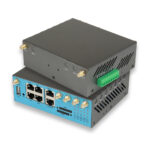
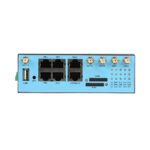
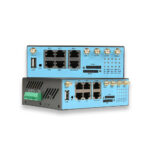
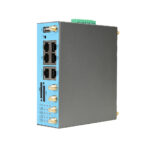
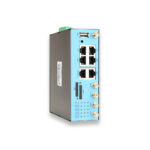
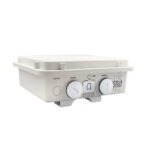
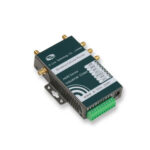
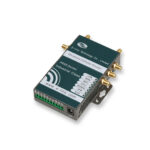
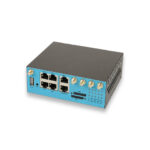
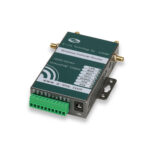
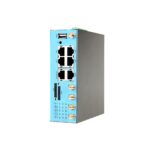

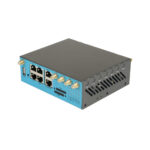
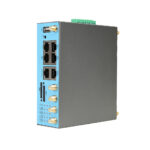
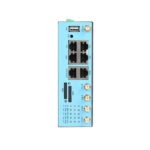
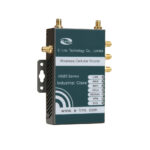
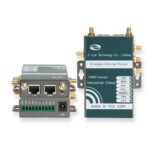
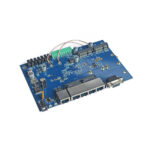
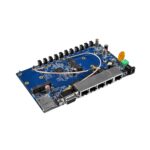
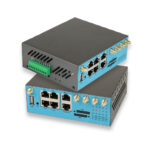
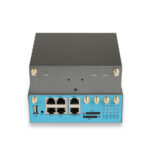
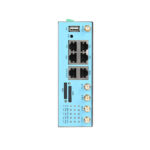
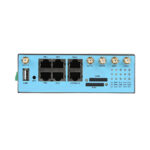
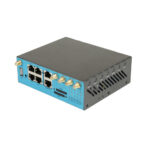
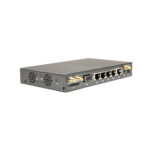
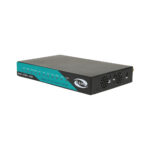
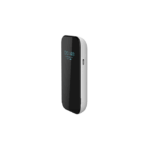
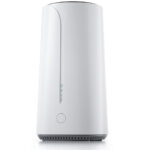
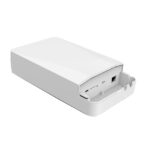

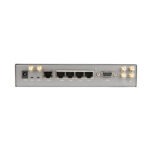
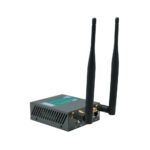
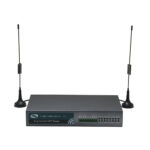
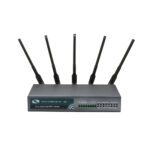
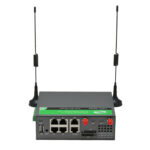
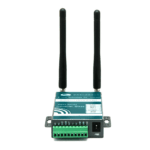
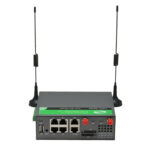
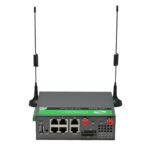

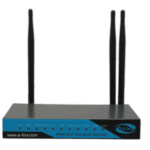
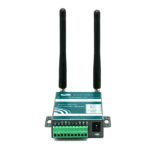
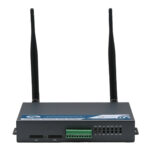
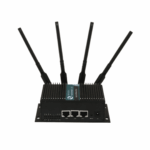

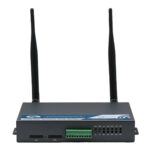
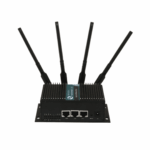
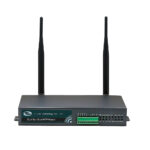

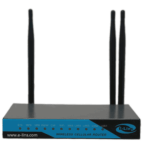
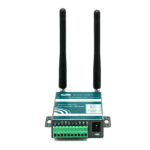
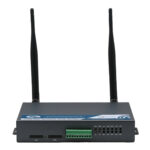
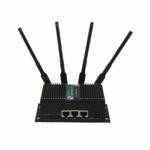
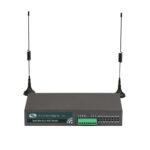
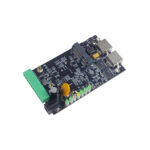
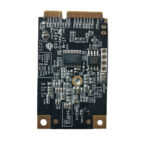
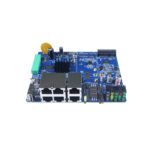
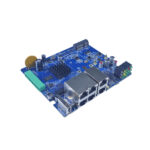
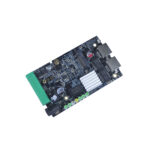
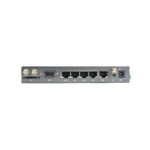
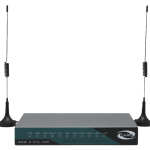
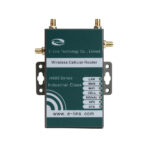
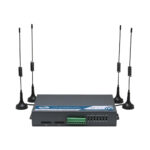
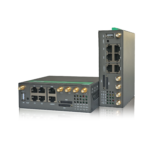
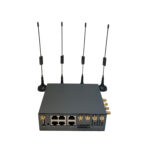
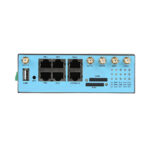















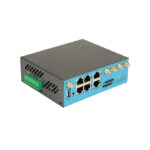
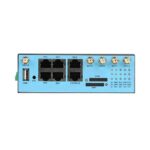
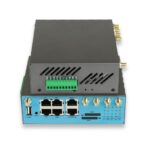



















E-Lins H900frc vs Peplink MAX BR1 Mini 5G: Which Industrial Router Is Better for Factory Automation?
I’ve been in this industry long enough to know that the routers that look similar on paper can feel worlds apart on the factory floor. A few months back, a plant automation engineer I’d worked with on a previous project sent me a message that I suspect a lot of people in this field will relate to: “We’ve been looking at both the Peplink BR1 Mini 5G and the E-Lins H900frc. On the surface they both tick the 5G box. But I’m not sure I’m asking the right questions.” He was right that the right questions matter here, and wrong that the two devices are similar in the ways that matter most for factory automation. This is my attempt to lay out those questions — and walk through the answers — for anyone working through the same evaluation.
Where This Comparison Actually Starts
If you’re evaluating E-Lins vs Peplink for a factory automation project, you’ve probably noticed that both routers claim to be “industrial” and “5G-ready.” That’s where the similarity ends. Let me be straightforward about something before we go any further: both the E-Lins H900frc and the Peplink MAX BR1 Mini 5G are serious devices from reputable manufacturers. Peplink has earned a solid reputation in SD-WAN and enterprise connectivity, and the BR1 Mini line is popular particularly in the North American market for vehicle and IoT deployments. E-Lins has built its reputation in industrial OT environments, with a platform that goes particularly deep on security architecture, hardware interfaces, and manufacturing customization.
The gap between these two devices only becomes visible when you stop comparing raw 5G speed numbers — where neither is the constraint for most factory IoT applications anyway — and start asking what the device needs to actually do on the floor. Connect to a PLC over RS485? Report a sensor alarm via digital output? Survive on a 24V or 48V DC power bus that varies across a battery charge cycle? Be embedded inside a customer’s branded industrial gateway product? Those questions produce very different answers from each device, and those differences are what this comparison is actually about.
One thing I want to acknowledge upfront: Peplink’s SpeedFusion bonding and the InControl2 management ecosystem are genuinely strong capabilities, particularly for enterprises that are already embedded in the Peplink network architecture. If your project is primarily about WAN bonding across multiple cellular links, or if you’re already running InControl2 across a large fleet, those are legitimate reasons the BR1 Mini 5G might be the right fit for you. What I want to examine here is the set of factory automation requirements where the comparison goes differently — and there are more of those than the marketing materials for either device suggest.
Factory Automation Router Evaluation Checklist
Before getting into the device-by-device analysis, I’d encourage any engineer going through this evaluation to spend ten minutes with these questions. In my experience, the answers make the decision cleaner than any amount of spec-sheet reading.
- Does any device in your automation network communicate via RS232 or RS485 serial? The answer to this one question narrows the comparison substantially, particularly for retrofit projects where legacy PLCs, inverters, and instruments are involved.
- Do you need digital inputs to capture hardware status signals — emergency stops, limit switches, valve feedback — from the router’s IO ports? Not all “industrial” routers include DI/DO in any meaningful sense.
- What DC voltage does your factory’s control panel supply to auxiliary electronics? 24V DC, 48V DC, and 110V DC are all common in industrial settings; the device’s input range needs to accommodate yours without an intermediate power converter.
- Are you building a product — a branded industrial gateway, a connected machine, an OEM automation node — or deploying a standard router as infrastructure? OEM requirements change almost everything about the evaluation.
- How many nodes will this deployment eventually scale to? Subscription-based management platforms that are economical at five units look different at 500.
- What is the 5G connectivity model: private 5G campus network, public carrier SIM, or both? RedCap matters on private 5G in a specific way that full 5G spec does not.
- What compliance or security certifications does the end deployment need — IEC 62443, NERC CIP, local grid codes? These can determine the security stack requirement as firmly as any performance spec.
Getting to Know Both Devices — Not Through the Brochure
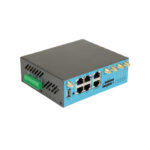
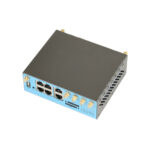
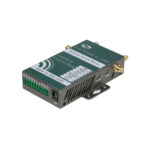
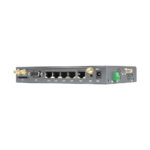
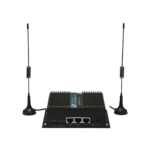
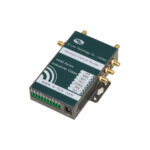
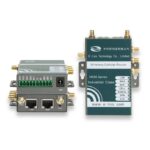
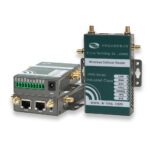
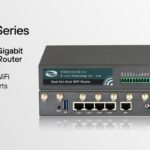
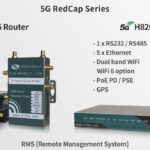
The E-Lins H900frc: A 5G RedCap Router Built for Dense IoT at Scale
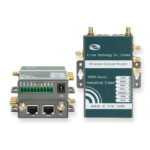
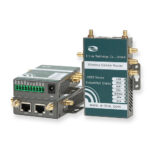
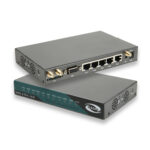
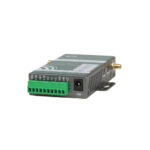
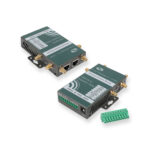
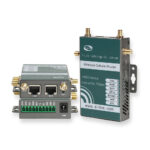
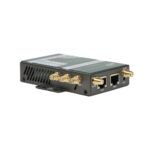
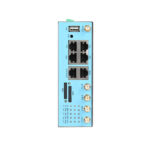
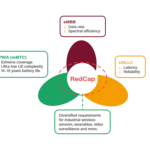
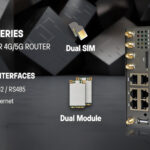
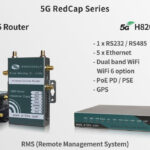
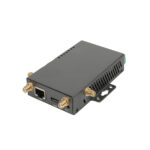
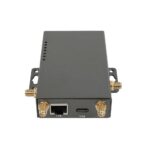
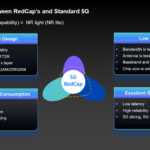
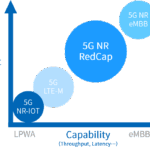
The E-Lins H900frc is a compact industrial router built around the 5G RedCap (NR-Light) standard — the 3GPP Release 17 specification designed specifically for IoT device categories that need 5G core connectivity but not the full throughput ceiling of a flagship 5G modem. The practical ceiling of RedCap is around 150 Mbps downlink, which is substantially more than virtually any individual factory IoT endpoint actually needs. What it delivers in exchange for that reduced throughput ceiling is lower modem power draw, lower module cost at scale, and clean integration with 5G SA core network features including network slicing and 5G QoS — capabilities that make RedCap particularly relevant for private 5G campus deployments in manufacturing facilities.
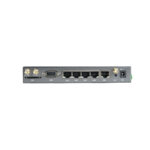
Beyond the cellular module, the H900frc is built on E-Lins’ established industrial platform: the security stack includes RADIUS and TACACS+ centralized authentication, 802.1x port security, and a zone-based object firewall. The VPN suite covers IPsec, L2TP, OpenVPN, WireGuard, DMVPN, and ZeroTier. The cloud NMS provides multi-site management at no recurring per-device license fee. Optional hardware configurations add serial ports, DI/DO, GPS/GNSS, and PoE capabilities depending on the build specification. And the OEM/ODM program allows manufacturers to deploy the H900frc as the connectivity backbone of branded products with custom firmware and enclosure configurations.
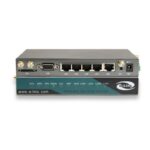
The Peplink MAX BR1 Mini 5G: A Proven 5G Gateway with Strong Enterprise Network Features
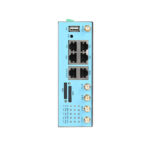
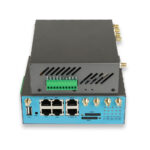
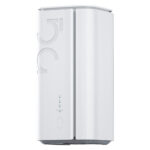
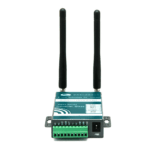
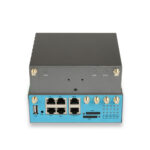
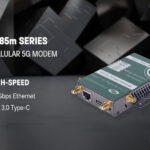
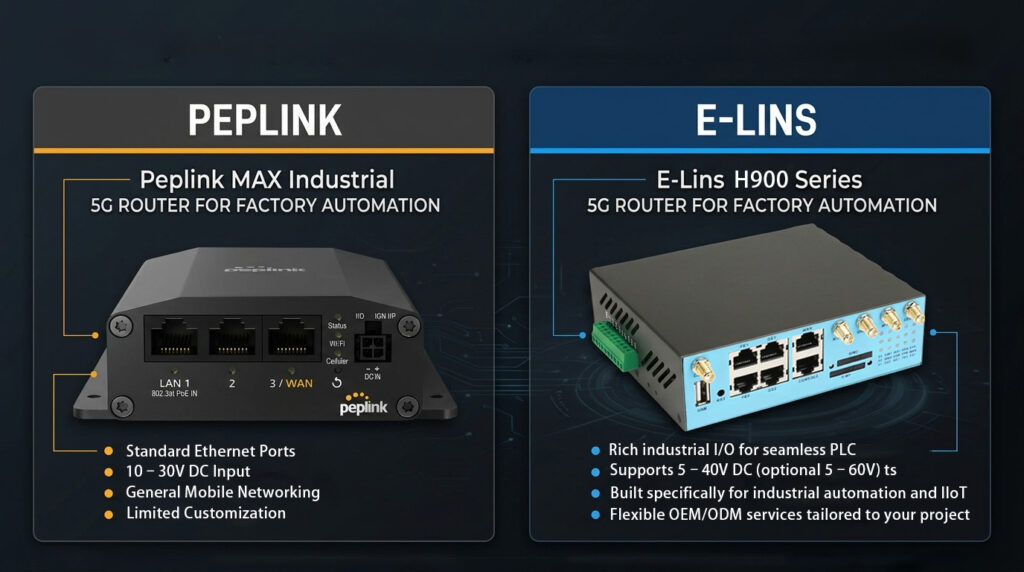
The Peplink MAX BR1 Mini 5G is a compact 5G router using a Qualcomm X62 modem (3GPP Release 16), capable of 3.4 Gbps peak downlink over 5G and 1.6 Gbps over LTE Cat-20 fallback. The rated router throughput is 300 Mbps, reflecting the device’s actual processing capability rather than the modem’s theoretical ceiling. It has 3 Gigabit Ethernet ports (1 WAN + 2 LAN, with one port optionally assignable as a third LAN), dual SIM slots for SIM-switching failover, and an optional Wi-Fi variant. Power input is 10–30V DC via Micro-Fit connector, or PoE via 802.3at on LAN 1, with dual input redundancy.
Where Peplink differentiates is its InControl2 cloud management platform and SpeedFusion technology — WAN bonding, hot failover, and WAN smoothing that keep application sessions alive through connectivity interruptions. SpeedFusion’s full feature set (hot failover, bandwidth bonding, smoothing) requires either a PrimeCare subscription or a separately purchased feature pack license. The PrimeCare subscription also unlocks InControl2 full features, eSIM functionality, increased VPN peers, and Wi-Fi WAN. The device is compact, well-built, with a metal enclosure certified for shock and vibration resistance, and an operating temperature range of −40°C to +65°C (−40°F to +149°F).
“The first time I put both devices on a bench for a comparative evaluation, the instinct was to focus on the 5G modem numbers. That turned out to be almost entirely the wrong thing to measure. The project I was evaluating them for was retrofitting connectivity onto an existing line of conveyor motor drives — RS485 Modbus RTU, 24V DC power rail, 400 endpoints eventually. At that point the modem throughput ceiling stops being the comparison axis entirely.”
— Field integration engineer, manufacturing automation project, Southeast AsiaIndustrial Interfaces: The Dimension That Changes Everything for Factory Deployments
I want to spend the most time on this section, because in my experience, it is the dimension that gets the least attention in online router comparisons — and the most attention in real factory automation procurement decisions. When a plant engineer says “I need a 5G router for our automation network,” what they often actually need is a device that can speak to the machines that are already there, report their status faithfully, and do so from the power rail that’s already available. That requirement set is quite specific, and it is where the two devices in this comparison diverge most clearly.
Serial Communication: RS232 and RS485
The RS485 serial port for Modbus RTU integration on 5G industrial routers is one of the most searched specifications among factory automation engineers — and for good reason. A significant proportion of industrial equipment in active use today — motor drives, PLCs from the late 2000s and 2010s, power meters, valve controllers, sensors with HART or proprietary protocols — communicates over RS232 or RS485. These devices were designed before Ethernet was universal on the factory floor, and replacing them is often not economically practical when the equipment is otherwise functional and the connectivity retrofit is the goal.
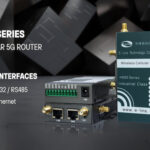
The E-Lins H900frc supports RS232/RS485 serial as a build option — available on relevant hardware configurations. The serial port supports transparent serial-to-IP tunneling and Modbus RTU bridging, allowing a legacy serial device to communicate with an upstream SCADA or MES system over the 5G cellular link without any modification to the field device itself. From the PLC’s perspective, it is still talking RS485 Modbus RTU to a local host; the H900frc invisibly bridges that traffic over 5G to wherever the Modbus TCP master sits.
The Peplink MAX BR1 Mini 5G does not include a native RS232 or RS485 serial port. (The BR1 Mini M2M variant, a different and older model, includes RS232/RS485 — but that is a 4G LTE device, not the 5G model under comparison here.) For a factory automation project where serial integration is required alongside 5G, the BR1 Mini 5G would need an external USB-to-serial adapter as a workaround, which adds hardware, complicates commissioning, and introduces a physical point of failure that the alternatives avoid. This is not a minor footnote for retrofit projects — it is often a project-defining constraint.
During a 2024 retrofit connectivity project across 18 motor control cabinets in a cement processing facility in Vietnam, I compared the commissioning workflow for serial device integration using a router with native RS485 (H900frc variant) versus a router requiring a USB-to-serial adapter approach. Each cabinet housed a variable frequency drive communicating at 9600 baud, 8N1, Modbus RTU over RS485.
With the native RS485 router: configuration consisted of serial port parameter matching (baud rate, parity, flow control) and enabling transparent mode in the router’s UI. Average commissioning time per cabinet: 22 minutes including cable termination.
With the USB-to-serial adapter approach (tested as an alternative): in addition to router configuration, each installation required driver compatibility verification, adapter power management settings, and intermittent reconnect handling at OS level. Average commissioning time: 41 minutes per cabinet, with three out of eighteen cabinets requiring an additional return visit to resolve adapter enumeration issues after the router rebooted. The time delta across 18 cabinets was approximately 5.4 hours of additional on-site labor. Scale that to 200 cabinets and the number becomes a meaningful project cost line.
Digital I/O: Capturing the Physical World
Digital inputs and outputs — the ability to read a dry-contact signal from a limit switch, an e-stop relay, a door interlock, or a process alarm, and report it instantly over the cellular link — are fundamental to factory automation connectivity in a way that pure data routing devices often overlook. The industrial IoT router with digital IO for factory alarm monitoring use case is one of the most common requirements I encounter: a plant wants to know immediately when a conveyor trips, a tank reaches a fill level, or a safety circuit opens. They need that notification without requiring the PLC to be polled over Modbus — the IO event should trigger a direct notification, independent of the normal data collection cycle.
The E-Lins H900frc supports DI/DO ports as a build option, with configurable event-triggered actions: send an SMS, trigger a VPN reconnect, log the event to the NMS, or activate an output signal in response to an input condition. This kind of hardware event logic at the router level is genuinely useful for unmanned sites where the router is the monitoring endpoint, not just the connectivity pipe.
The Peplink BR1 Mini 5G does not include dedicated digital I/O ports. It does have a 4-pin power connector with ignition sensing — detecting a voltage signal on an ignition sense pin — which is primarily designed for vehicle applications (detect ignition on/off to manage router power state). This is a different thing from configurable industrial DI/DO, and it does not serve the alarm monitoring, status reporting, or actuation use cases that factory automation typically requires from IO ports.
A natural gas infrastructure operator was deploying cellular connectivity across fourteen unmanned compressor stations scattered across a 300 km corridor. Each station had legacy instrumentation: RS485 Modbus RTU for the compressor controller, two dry-contact alarm outputs (high-pressure trip and motor fault), and a 48V DC power bus from the station’s telecom power system. The connectivity device needed to read the Modbus registers, report the dry-contact alarms independently, and run reliably from the 48V DC supply.
The evaluation initially included three candidate devices. The BR1 Mini 5G was eliminated early in the evaluation specifically because it lacked native RS485 serial and DI ports, and its power input maximum of 30V DC did not accommodate the station’s 48V bus without an intermediate converter. Adding a serial adapter and a DC-DC converter to every station would have introduced hardware that the operator’s maintenance team was not equipped to support remotely.
The H900frc was selected with RS485 serial, DI/DO, and its wide-voltage input supporting 48V DC directly. Commissioning across all fourteen stations was completed in four days by a two-person team. The operator’s maintenance engineer told me afterward: “We were worried about going out there and finding that the gear needed half a dozen accessories to work. It didn’t. Everything it said it would do, it just did.”
OEM / ODM Customization: When the Router Is a Component, Not a Product
There is an entire category of factory automation buyer that router comparison articles rarely write for, even though it represents a significant portion of the actual industrial router market: the equipment manufacturer who is not looking for a router to deploy as standalone infrastructure, but for a 5G connectivity module to embed inside their own product. If you are building a connected CNC machine, a smart welding station, an automated inspection system, or an industrial gateway with your own brand, firmware, and enclosure — your router evaluation looks fundamentally different from an infrastructure deployment evaluation.
For that buyer, the relevant questions are not “does the router have a good UI?” but “can I brand the firmware?”, “will the manufacturer work with me on form factor and connector configuration?”, “can I customize the management interface to integrate with my own cloud platform?”, and “will I have a stable, reliable supply relationship with a manufacturer who treats my volume as a serious partnership?” These are OEM questions, not router questions, and the answers to them are not on any spec sheet.
E-Lins explicitly supports OEM and ODM customization — it is a published part of their commercial offering, not an unofficial accommodation. The H900frc’s compact form factor is part of this positioning: it is sized to fit inside another product’s enclosure as an embedded connectivity module, not just to sit in a control cabinet as a standalone device. Firmware branding, custom UI, hardware configuration changes, and supply relationship terms for OEM volumes are all within scope of their program.
Peplink does not publish an OEM/ODM program in equivalent terms. Their ecosystem is built around the InControl2 management platform and the Peplink partner program, which is oriented toward system integrators and resellers deploying Peplink-branded devices — not manufacturers embedding an unlabeled cellular module inside their own product. For a machine builder who wants the H900frc-equivalent connectivity capability inside a product that carries their own brand, the E-Lins OEM program is a meaningful differentiator that the Peplink offering simply does not address in the same way.
A South Korean industrial equipment manufacturer was developing a new generation of automated MIG welding stations with integrated process data logging and remote diagnostics. They needed 5G connectivity embedded in the welding station’s control cabinet, reporting weld quality metrics, torch temperature, and shielding gas consumption to a cloud analytics platform under the manufacturer’s own brand.
Their initial evaluation included several 5G router options. The requirement that immediately eliminated most candidates — including the BR1 Mini 5G — was that the manufacturer needed the management interface to carry their own branding and connect directly to their proprietary IoT cloud rather than a third-party management platform. They also needed a firmware build that did not expose the underlying router brand in any user-facing element, since the welding station’s operator panel would present the connectivity function as a native feature of the machine.
The H900frc, through the E-Lins OEM program, was the only candidate that met both requirements without requiring them to license or reverse-engineer a third party’s firmware. The E-Lins engineering team worked with them on a custom firmware build that integrated with their cloud API and suppressed all third-party branding. Eighteen months later, the same manufacturer has deployed the H900frc-based connectivity module in three product lines. “It’s not a router we installed,” their engineering lead told me. “It’s a connectivity component we built into our product.”
“The distinction between ‘a router you deploy’ and ‘a connectivity component you embed’ might sound semantic. It isn’t. An OEM customer doesn’t want to explain to their end customer why there’s a different brand’s UI showing up in their product’s diagnostic screen. They want to own the experience end to end. That’s a vendor selection criteria that has nothing to do with 5G performance.”
— E-Lins OEM Program Engineering, on the distinction between deployment and embedded product customersWide Voltage Input: A Specification That Sounds Boring Until You’re On a Factory Floor
Power supply is one of those specifications that gets glossed over in most router evaluations — right up until someone is on a factory floor at commissioning day, looking at the 48V DC bus in the control cabinet and realizing the router’s input range only goes to 30V. I have seen this happen, and it is not a minor inconvenience. At that point, the choices are an additional DC-DC converter in the cabinet, a return trip to source a different device, or a project delay while the procurement team scrambles. None of those outcomes were in the project plan.
The E-Lins H900frc accepts 5–40V DC input as standard, with a 5–60V option for installations on higher-voltage DC buses. This range covers 12V (vehicle and UPS), 24V (standard industrial control panel), 48V (telecom power systems and many distributed control installations), and many battery-based power systems across their charge cycle — where voltage varies between charged peak and depletion floor in a range that a narrower input specification would not accommodate reliably.
The Peplink BR1 Mini 5G accepts 10–30V DC via its Micro-Fit power connector, or 802.3at PoE via LAN 1 as an alternative. The 10–30V range covers 12V and 24V DC installations cleanly — the two most common DC supply voltages in vehicle and lighter industrial applications. But it does not reach 48V DC, which is standard in telecom-adjacent industrial environments, many rail power systems, and distributed control architectures in process industries. For those installations, an intermediate DC-DC converter becomes a mandatory accessory rather than an optional consideration.
The dual power input with automatic failover on the E-Lins platform is an additional reliability feature for critical installations: a primary DC supply and a secondary supply — for instance, a UPS battery — can both be connected simultaneously, with the router switching automatically to the backup if the primary fails. For unmanned sites where power reliability is part of the deployment’s uptime SLA, this architecture reduces the single points of failure in the power delivery path without requiring external failover switching hardware.
During a site survey across eleven factory automation installations in China’s Guangdong manufacturing corridor — covering electronics assembly, precision metalworking, and chemical processing — I documented the DC power rail voltages available at the router mounting locations in each control cabinet. Results: 24V DC (8 of 11 sites), 48V DC (2 of 11 sites), 12V DC from UPS (1 of 11 sites). Of the 11 sites, 10 could be served by the BR1 Mini 5G’s 10–30V input range without additional hardware. The two 48V DC sites could not — each would have required a DIN-rail DC-DC converter adding approximately $35–60 to the per-cabinet bill of materials, plus an additional terminal block and wiring connection that represents a potential failure point. The H900frc’s 5–40V (or 5–60V option) input range served all 11 sites directly. For the two 48V sites specifically, the wide-voltage input was not a minor convenience feature — it was the difference between a clean installation and a workaround.
Industrial Automation Scenario Adaptability: Thinking Beyond the Connectivity Box
One of the things I have noticed over years of doing industrial IoT deployments is that the router rarely gets to live a simple life on the factory floor. The plan at project start is usually “connect this device to that platform over 5G.” The reality six months in is usually more complex: a new PLC was added that communicates over RS232, someone needs alarm relay outputs wired to the router for redundancy monitoring, the device is now deployed on the same network as a safety system that requires 802.1x port authentication before anything can join the LAN, and the IT security team has asked for RADIUS authentication on all management interfaces. In short, the device that looked like it just needed to route packets ends up needing to be a fairly full-featured industrial network node.
This is why I think about industrial automation router adaptability over the full deployment lifecycle as a distinct evaluation dimension — not just what the device needs to do at commissioning, but what it needs to be capable of as requirements evolve. The H900frc’s platform architecture — with its configurable serial, DI/DO, PoE, GPS options, zone-based firewall, and RADIUS/802.1x security stack — provides a much wider envelope for those evolving requirements than a device designed primarily for enterprise WAN connectivity.
The Peplink BR1 Mini 5G’s strength is WAN connectivity reliability and the SpeedFusion bonding architecture. It is excellent at keeping a session alive across a cellular connection that might otherwise drop packets — a genuinely valuable capability for applications running persistent TCP sessions over cellular, or for video streams that need uninterrupted delivery. For those use cases, SpeedFusion’s hot failover and smoothing functions are hard to replicate without similar bonding infrastructure. But the device’s hardware interface set is thin by factory automation standards — no native serial, no dedicated DI/DO, a power range that stops before 48V DC. The SpeedFusion features that make it compelling for enterprise WAN scenarios are less directly relevant to factory automation where the data volumes are small, the latency requirements are modest, and the hard requirements are about physical hardware compatibility.
A German Tier 1 automotive supplier was deploying a private 5G campus network across a 40,000 m² production facility as part of a smart factory initiative. The connectivity nodes needed to aggregate data from production cell PLCs (RS485 Modbus RTU), report machine uptime signals via digital inputs, connect to the factory’s 24V DC control power bus, and eventually be embedded inside the supplier’s own remote IO gateway product that would be sold to other facilities.
The evaluation team looked at several devices including the BR1 Mini 5G and the H900frc. The BR1 Mini 5G was strong on the 5G connectivity side and familiar to the IT team’s networking staff. But it did not have native RS485, had no DI ports for the machine uptime signals, and the OEM embedding requirement — white-label firmware for their gateway product — was not available through the Peplink model.
The final decision was H900frc across all 64 production cell nodes, with a custom firmware configuration through the E-Lins OEM program for the eventual embedded product. Eighteen months after initial deployment, I spoke with the project lead. “The connectivity architecture was the easy part,” he said. “The part we were most worried about was the hardware interfaces — would everything actually talk to everything else on day one. It did. That wasn’t always the case with previous platforms we’d evaluated.”
Security Architecture for OT Network Compliance
Factory automation increasingly runs up against security compliance requirements — not necessarily the full enterprise IT frameworks, but frameworks specific to operational technology: IEC 62443 for industrial control systems, specific customer security requirements for Tier 1 suppliers, and internal security baselines that IT teams have started applying to OT networks following a wave of industrial ransomware incidents.
The 5G industrial router with RADIUS authentication and zone-based firewall for OT compliance requirement is one I encounter regularly now in manufacturing environments that would not have mentioned security compliance in a router evaluation three years ago. The E-Lins H900frc’s platform includes RADIUS and TACACS+ centralized authentication, 802.1x port-level access control, and a zone-based object firewall — the combination that maps to IEC 62443 SL-2 access control and audit requirements. Peplink’s security features include a stateful firewall, VPN, and IPsec, but the RADIUS authentication and 802.1x port security depth of the E-Lins platform goes further for OT compliance contexts.
Total Deployment Cost: What the Per-Unit Price Doesn’t Tell You
I am not going to put price tags in this comparison — they change too frequently, vary by region and channel, and change significantly with volume. What I can examine is the cost structure of a full deployment, including the elements that don’t appear on the per-unit price tag but appear on the project invoice.
Subscription and License Costs Over the Deployment Lifecycle
The Peplink BR1 Mini 5G is a PrimeCare device. The first year of PrimeCare is included with purchase. After that, PrimeCare requires a renewal subscription to maintain InControl2 full management access, eSIM functionality, advanced VPN features (hot failover, bandwidth bonding, WAN smoothing), and hardware warranty support. The feature pack license (MAX-BR1-MINI-FP) is available as a perpetual alternative to PrimeCare for the core SpeedFusion features, but InControl2 cloud management requires an active PrimeCare subscription to maintain full capabilities.
For a deployment of ten routers, the subscription structure is a modest ongoing cost. For a deployment of 200 routers managed over three years, the cumulative subscription cost becomes a meaningful project line item that belongs in the total cost of ownership calculation from the start. I have seen factory automation projects where the per-year subscription cost across a large fleet approached the hardware cost of the initial deployment — not because any individual subscription cost was unreasonable, but because the math looks different at fleet scale than at single-device scale.
The E-Lins H900frc’s cloud NMS is included without a recurring per-device license fee. The full management capability — multi-site monitoring, OTA firmware updates, configuration push, cell signal status, uptime alerting — is part of the product, not a separately metered service. For project procurement teams doing a three-to-five year TCO analysis, this structural difference shows up clearly in the comparison.
Accessory and Integration Overhead
As discussed in the interface section, projects that require RS485 serial integration, DI port monitoring, or 48V DC power compatibility from the BR1 Mini 5G will need accessories — serial adapters, DC-DC converters — that add to the per-unit bill of materials, add commissioning time, and add potential failure points that are not present in a device where those capabilities are native. The cost of those accessories and the labor to install and configure them is a project cost regardless of where it appears on the invoice. The total cost of ownership for 5G industrial router factory automation deployment should include accessory requirements, not just the router unit cost.
One thing worth flagging: if a factory automation project genuinely needs SpeedFusion WAN bonding across multiple cellular links — for a mobile command center, a video broadcast application, or a deployment where cellular path quality is unpredictable enough to require active session smoothing — the Peplink ecosystem is genuinely strong here and the subscription cost is justified by the capability. My point is not that subscriptions are bad, but that they belong in the TCO calculation from the start rather than appearing as a surprise in year two.
Specification Comparison: E-Lins H900frc vs Peplink MAX BR1 Mini 5G
With the context from the previous sections in mind, the spec table below should read differently than a standard product comparison. The rows where the two devices differ most significantly are often the ones that appear most mundane on a spec sheet.
| Specification | E-Lins H900frc 5G RedCap IoT Router |
Peplink MAX BR1 Mini 5G 5G Enterprise Gateway |
|---|---|---|
| 5G Standard | 5G RedCap (NR-Light, 3GPP Rel. 17)Sub-6 GHz; ~150 Mbps DL; 5G SA core access + network slicing | 5G Sub-6 GHz SA/NSA (Qualcomm X62, 3GPP Rel. 16)Up to 3.4 Gbps DL (modem theoretical); 300 Mbps router throughput |
| LTE Fallback | 4G LTE + 3G/2G fallback | LTE Cat-20 — up to 1.6 Gbps DL / 200 Mbps ULStrong LTE fallback performance |
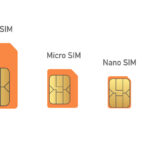
| SIM Slots | Single SIMIoT endpoint model; dual SIM available on other H900 variants | 2x Nano-SIM (4FF)Single modem — only one SIM active at a time; switching takes 30–60s for modem reboot |
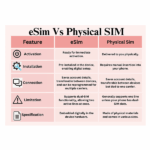
| eSIM | Optional (eUICC) | Peplink eSIM + BYO eSIM (2 profiles)Requires PrimeCare subscription for full eSIM management |
| Ethernet Ports | Gigabit LAN/WAN | 3× Gigabit (1 WAN + 2 LAN)1 port optionally assignable as 3rd LAN |
| WAN Paths / Failover | Cellular + Ethernet WAN + Wi-Fi WANThree-path failover; LCP + ICMP monitoring; load balancing | Cellular + Ethernet WANWi-Fi WAN requires PrimeCare; SpeedFusion hot failover requires PrimeCare or feature pack |
| Wi-Fi | OptionalBuild option; dual-band available | No Wi-Fi (HW1) / Optional Wi-Fi (HW2)Wi-Fi WAN requires PrimeCare subscription |
| RS232 / RS485 | Available as build optionTransparent serial-to-IP; Modbus RTU bridge; native hardware | Not available on BR1 Mini 5GUSB-to-serial adapter required as workaround; adds hardware and complexity |
| Digital I/O (DI/DO) | Available as build optionConfigurable DI/DO; event-triggered actions (SMS, VPN, NMS alert) | Not available4-pin connector has ignition sense pin (vehicle on/off detection); not configurable industrial DI/DO |
| Power Input | 5–40 V DC (5–60 V option)Dual input with auto-failover; covers 12V, 24V, 48V DC rails natively | 10–30 V DC (Micro-Fit) or 802.3at PoE (LAN1)Covers 12V and 24V DC; 48V DC requires external DC-DC converter |
| PoE Input | IEEE 802.3af/at compliant (build option)Standard PoE; works with any 802.3af/at switch | 802.3at PoE on LAN1Standard PoE input; well-implemented |
| GPS / GNSS | OptionalGPS/GLONASS/BeiDou add-on | Not includedNo GPS/GNSS on BR1 Mini 5G standard spec |
| Operating Temp | −35°C to +75°C | −40°C to +65°CSlightly wider cold range; lower hot ceiling |
| Enclosure / IP | Metal, IP30DIN-rail, wall, desktop mount | Metal, IP30Shock/vibration certified; fanless, ventless design |
| Authentication | RADIUS + TACACS+ + 802.1xFull AAA with accounting; zone-based object firewall; per-client filtering | Stateful firewall, VPN, IPsecSolid enterprise security; no 802.1x port security; no RADIUS/TACACS+ depth comparable to E-Lins |
| VPN | IPsec, L2TP, OpenVPN, WireGuard, DMVPN, ZeroTier, GRE, EoIP | PepVPN/SpeedFusion, IPsec, OpenVPN (WAN option with license)SpeedFusion hot failover / bonding / smoothing requires PrimeCare or feature pack |
| WAN Bonding | Load balancing across WAN paths | SpeedFusion — hot failover, smoothing, bandwidth bondingRequires PrimeCare subscription or feature pack; genuine competitive strength |
| Remote Management | E-Lins NMS (no per-device recurring fee)+ TR-069, SNMP v1/v2c/v3, SMS, Web GUI, SSH/CLI | Peplink InControl2Requires active PrimeCare subscription for full features after first year; strong management platform |
| OEM / ODM | Published OEM/ODM programCustom firmware branding, hardware config, supply partnership | Not publishedPartner/reseller program available; not equivalent to OEM embedding support |
| Private 5G / RedCap | 5G RedCap — purpose-built for private 5G IoT endpointsLower per-module cost; lower power draw; 5G SA core access | Full 5G (Release 16) — strong on public carrier networksNot specifically designed for private 5G RedCap deployment |
| Routing Protocols | OSPF, BGP, RIP, VRRP | Static routing, OSPF, BGPStandard enterprise routing feature set |
| Management Platform Fee | No recurring per-device fee | PrimeCare subscription required after year 1Feature pack license available as perpetual alternative for core SpeedFusion features only |
* Specifications sourced from manufacturer product pages and datasheet documentation, 2024–2025. Verify with the specific SKU and current firmware before procurement.
Which Device Belongs in Which Scenario

PLC / VFD Retrofit Connectivity
RS485 Modbus RTU, 24V or 48V DC, existing control cabinet. Native serial port, wide-voltage input, and DI/DO for alarm reporting. No external adapters needed.

Private 5G Campus IoT
5G RedCap endpoint for private network deployments. Lower per-module cost at scale, 5G SA core access, power efficiency. Designed for this exact use case.

OEM Embedded Gateway Products
Manufacturers building connected industrial equipment under their own brand. Custom firmware, suppressed third-party branding, hardware configuration flexibility — all available through the E-Lins OEM program.

Multi-WAN Bonding Applications
Deployments that genuinely need SpeedFusion hot failover and WAN smoothing for persistent session protection — live video, remote desktop, real-time control over unreliable cellular. Peplink’s core strength.

Existing Peplink InControl2 Fleets
Organizations already running InControl2 across a large device fleet, where adding 5G nodes to an existing managed infrastructure avoids platform fragmentation. The ecosystem argument is legitimate here.

OT Security Compliance Deployments
RADIUS/TACACS+ centralized auth, 802.1x port security, zone-based firewall. IEC 62443-aligned security architecture without requiring Linux networking expertise to configure.
Questions I Get Asked Most Often About This Comparison
The BR1 Mini 5G has a higher theoretical 5G speed. Does that matter for factory automation?
In my experience, almost never. Let me put some numbers around that. A typical PLC reporting production telemetry over Modbus generates somewhere between 1 KB and 50 KB of data per polling cycle. Even polling 100 registers every second from 10 PLCs simultaneously, you’re looking at a few hundred kilobits per second at most. A single HD surveillance camera streams at 2–5 Mbps. Even a dense factory IoT node aggregating dozens of sensors rarely sustains more than 10–15 Mbps continuously. The H900frc’s 5G RedCap ceiling of approximately 150 Mbps is between 10 and 100 times what most factory automation endpoints actually need. The BR1 Mini 5G’s higher theoretical peak gives you headroom you almost certainly will not use, in exchange for a device architecture that trades off the industrial hardware interfaces that you almost certainly will need. For the specific use case of factory automation, throughput ceiling is usually the last dimension I’m concerned about when comparing these two devices.
Can I use the Peplink BR1 Mini 5G for Modbus RTU integration if I add a USB-to-serial adapter?
Technically yes — a USB-to-serial adapter can extend a serial interface to a USB port, and the BR1 Mini 5G does have a USB port. In practice, I would be cautious about this approach in production factory deployments for three reasons. First, USB-to-serial adapters require driver support on the router’s OS, and not all adapters are compatible with all firmware builds — verifying and maintaining that compatibility over the router’s deployment lifecycle is an additional maintenance burden. Second, the USB connection is physically less secure than a terminal block or DB9 connector in a vibrating factory environment — over months of operation, the USB adapter can work loose. Third, if the router reboots unexpectedly (power glitch, firmware update), the USB enumeration sometimes does not restore cleanly, and the serial interface requires manual intervention to recover. For a proof-of-concept or a small pilot, this workaround is manageable. For a production deployment of 50 or 200 nodes that nobody wants to visit regularly, native serial integration is worth specifying from the start.
Is the E-Lins H900frc suitable for a deployment that needs SpeedFusion-equivalent WAN bonding?
The H900frc supports load balancing across multiple WAN paths — cellular, Ethernet WAN, and Wi-Fi WAN — which distributes traffic across available connections and provides failover when a path fails. What it does not replicate is SpeedFusion’s session-layer bonding: the ability to bond multiple cellular connections at a layer below TCP, keeping an individual application session alive through a cellular path interruption without the TCP layer detecting a connection failure. If your specific application needs that session-layer protection — a persistent VPN tunnel that cannot tolerate any interruption, a live video stream that needs frame-level smoothing across a marginal cellular connection — SpeedFusion is a genuine differentiator for the Peplink platform. For factory IoT applications where the data is store-and-forward, the polling cycle is measured in seconds, and brief connectivity gaps are acceptable — which describes the majority of industrial telemetry use cases — the load balancing and failover in the H900frc is adequate, and the factory-specific hardware interfaces are more relevant to the application’s actual requirements than session-layer bonding is.
What happens to BR1 Mini 5G management features if the PrimeCare subscription lapses?
This is a question worth asking before committing to the platform. Based on Peplink’s published documentation, some features that require an active PrimeCare subscription include: full InControl2 cloud management capabilities, eSIM profile management, advanced SpeedFusion features (hot failover, smoothing, bandwidth bonding) beyond basic VPN, increased VPN peer limits, and Wi-Fi WAN on some hardware versions. Basic VPN (PepVPN) is included without PrimeCare. If the subscription lapses on a large deployed fleet, the management capability reverts to local web UI access per device — which on a fleet of 200 routers spread across a factory floor means either renewing the subscription or managing devices individually. The feature pack license (MAX-BR1-MINI-FP) unlocks SpeedFusion features permanently without a subscription, but it does not include InControl2 cloud management. Understanding exactly which capabilities require active subscription versus which are permanently unlocked is important planning information for a multi-year deployment budget.
For a Chinese factory deploying on a domestic carrier network, which device has better compatibility?
Both devices support the major 5G frequency bands used by Chinese carriers (China Mobile, China Unicom, China Telecom), though the specific band support varies by SKU region. E-Lins, as a Shenzhen-based manufacturer, has strong familiarity with the Chinese carrier landscape and has products that have been validated across domestic carrier networks extensively. The H900frc should have China-market-specific frequency band configurations available. For the Peplink BR1 Mini 5G, confirm the specific SKU’s Chinese carrier band support — Peplink’s band configurations are region-specific and the North American or European SKU may not cover all the bands Chinese carriers use in inland regions. As always, carrier band verification is a mandatory pre-procurement step regardless of which device you are evaluating.
How does the E-Lins OEM program work in practice for a first-time OEM customer?
From conversations I’ve had with manufacturers who have gone through the process, the typical engagement starts with a technical requirements discussion: what interfaces are needed, what the firmware customization scope is, whether the enclosure needs modification, and what the anticipated annual volume looks like. E-Lins then works through a development phase that can include custom firmware UI builds, API integration with the customer’s cloud platform, and hardware configuration selection from the available option set. The timeline depends on the scope of customization — a firmware branding change with a custom cloud endpoint is relatively fast; a full enclosure redesign with custom IO configuration takes longer. Lead time and minimum order quantities are discussed as part of the commercial terms rather than being published fixed requirements. The key difference from simply buying a standard product is that there is an engineering engagement relationship involved, not just a purchase order. For manufacturers for whom that relationship makes sense commercially and technically, it is a genuinely differentiated path that most router brands do not offer.
Where I Land After Going Through All of This
When I started writing this comparison, I deliberately tried to approach it the way I approach actual client evaluations: start with the project requirements, not the brand preference, and let the requirements drive the conclusion. After working through the interface stack, the power architecture, the OEM/ODM question, the security requirements, and the total deployment cost structure, my conclusion is not that one device is universally better — it is that these two devices are genuinely optimized for different buyer profiles.
If your project involves any combination of RS232/RS485 serial integration, configurable DI/DO for alarm monitoring, 48V DC power bus compatibility, OEM embedding in a branded product, private 5G campus deployment at scale, or an OT security compliance requirement that maps to RADIUS/802.1x/zone-based firewall — the E-Lins H900frc is the more complete fit for factory automation, full stop. Those requirements are not edge cases — they are the normal requirements of industrial connectivity projects, and the H900frc was designed specifically to address them.
If your project is primarily about SpeedFusion WAN bonding, integrating a 5G node into an existing Peplink InControl2 fleet, or connecting a vehicle application where ignition sensing and the compact form factor are the primary hardware requirements — the BR1 Mini 5G is a strong choice, and its enterprise WAN credentials are well-earned.
Before you finalize either decision, three things worth confirming:
- Verify the specific SKU’s carrier band support against your deployment region’s carrier frequencies — do not assume the standard-market SKU covers all local bands.
- Calculate the three-to-five year total deployment cost including management platform subscriptions, any required accessories, and commissioning labor — not just per-unit hardware cost.
- If OEM embedding is even a possibility in your roadmap, raise it at the evaluation stage — it changes which vendor relationship you need, and that conversation is easier to have before you have purchased 200 units.
Running a Factory Automation Router Evaluation?
Tell E-Lins your serial interface requirements, power rail voltage, device count, automation protocol stack, and whether OEM embedding is in scope. We’ll give you a direct answer on whether the H900frc fits your project — and what configuration it needs to.
Contact Us