




































5G RedCap vs Full 5G Router: How to Choose the Right One for Your IoT Project
5G RedCap is a stripped-down, lower-power variant of 5G designed specifically for IoT — not a budget compromise, but a deliberate engineering trade-off. For the right category of device, it consumes less power, costs less to implement, and connects to 5G networks without the modem complexity that full 5G demands. For the wrong category, it leaves bandwidth and latency headroom on the table that the application actually needed. This guide explains exactly where that line is, what each standard delivers in practical terms, and how to map the choice between the E-Lins H900frc (RedCap) and the H900f (full 5G) to the specific demands of your deployment.
What Is 5G RedCap — and What Did 3GPP Actually Design It For?
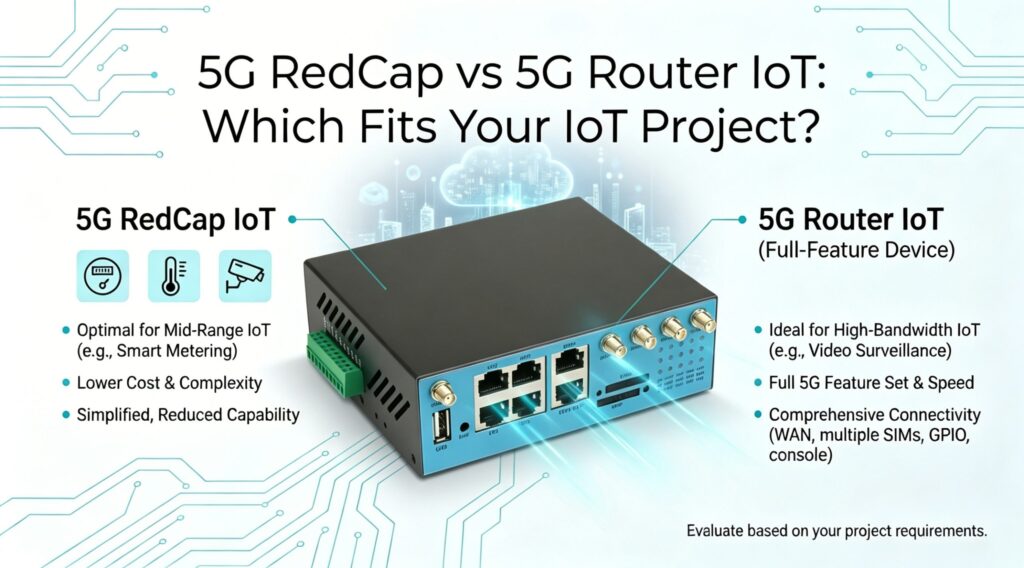
The central question many IoT project teams face today is 5G RedCap vs 5G router IoT — whether to choose a purpose-built RedCap gateway like the H900fRC or a full-featured 5G router like the H900f. The answer determines not only upfront cost and power consumption, but also whether the deployed device can handle future bandwidth demands, carrier redundancy, and the full range of 5G core features like network slicing and low-latency scheduling. Getting the decision right starts with understanding what 5G RedCap actually is — and what it was designed to do.
5G RedCap — formally called NR-Light in 3GPP Release 17 — is a category of 5G specification that reduces modem complexity, antenna count, bandwidth, and power consumption relative to full 5G NR, in exchange for a defined set of performance constraints. The goal was specific: make 5G accessible to device categories that need more than 4G LTE can reliably deliver — in terms of latency, network slicing, and 5G core integration — but do not need, and cannot practically support, the full throughput and radio complexity of a flagship 5G modem.
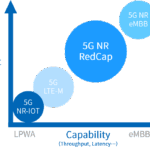
Before RedCap, the 5G ecosystem had a gap. LTE-M and NB-IoT served low-bandwidth, low-power sensor applications well. Full 5G NR served high-bandwidth applications — video, industrial automation with real-time control, connected vehicles — well. In the middle sat a large category of devices: wearables, mid-tier industrial sensors, surveillance cameras, asset trackers, and smart infrastructure equipment that needed reliable sub-100ms latency, more than 10 Mbps downlink, and integration with 5G core network services, but could not justify the cost, power draw, or antenna count of a full 5G modem. RedCap was designed to fill that gap.
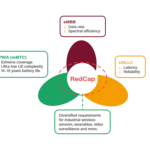
3GPP Release 17 RedCap targets three device categories: industrial wireless sensors (low power, moderate data rate), video surveillance (moderate bandwidth, always-on), and wearables (compact, battery-operated). These are the canonical use cases the standard was optimized for — not a coincidence that they map closely to what the H900frc is positioned for.
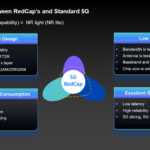
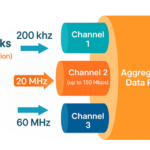
Technically, RedCap achieves its power and cost reduction through three main constraints compared to full 5G NR: a maximum bandwidth of 20 MHz in sub-6 GHz bands (versus up to 100 MHz for full 5G), a maximum of two receive antennas (versus four for full 5G), and a half-duplex FDD option that allows simpler, less expensive RF front-end designs. In exchange, the device retains access to the 5G NR air interface and 5G core network — meaning it supports 5G network slicing, 5G QoS frameworks, and the low-latency scheduling improvements that 5G introduced over LTE, even if it cannot achieve the raw multi-Gbps throughput of a full 5G device.
RedCap is not a compromise on network features — it fully connects to 5G SA (Standalone) core networks and accesses 5G network slicing and QoS mechanisms. It is not a version of NB-IoT or LTE-M. It is not limited to specific frequency bands — it operates across sub-6 GHz 5G spectrum. What it does constrain is maximum throughput (practical downlink peaks around 80–150 Mbps in field conditions, versus 500+ Mbps for full 5G) and maximum uplink (around 50 Mbps versus 200+ Mbps for full 5G). For applications that do not need those throughput ceilings, RedCap delivers equivalent 5G core connectivity at lower device cost and power draw.
The Quick Answer: Which One Should You Choose?
If your deployment fits the following profile, the H900frc RedCap router is likely the right specification: devices that connect periodically or stream at moderate data rates; battery-powered or power-constrained installations; deployments where 5G core network integration matters but multi-hundred-Mbps throughput does not; and private 5G network deployments where device cost per unit is a meaningful project variable.
If your deployment fits this profile instead, the H900f full 5G router is the right specification: always-on high-throughput applications such as live HD or 4K video; multiple simultaneous data streams from a single router; latency-sensitive industrial automation where sub-10ms end-to-end performance is a hard requirement; in-vehicle applications where the router must serve many concurrent connected devices; or any deployment where the ceiling of cellular throughput is a known constraint on application performance.
Quick Decision Reference
The sections that follow explain the reasoning behind these recommendations in detail — and address the cases that fall between these clear categories, where the right choice depends on specific project variables that only the deployment engineer can weigh.
Decision Checklist: Seven Questions That Determine Which Router You Need
Work through these questions before specifying either router. The answers will map directly to the comparison dimensions in the sections that follow.
- What is the peak data rate your application actually needs, not the maximum it could theoretically use? Distinguish between sustained throughput requirements and burst peaks that could be buffered.
- Is the device or installation power-constrained? Battery life, solar-powered enclosures, PoE budget limits, or vehicle auxiliary power limitations all change the calculus in favor of RedCap.
- Does the deployment involve a private 5G network, a public carrier network, or both? Private 5G campus deployments are a primary target for RedCap — the cost per connected endpoint matters more than on a public carrier SIM.
- How many simultaneous connected devices does a single router need to serve? A router acting as an aggregation point for many downstream devices needs the throughput headroom of full 5G; a device that is itself a single endpoint does not.
- Is dual SIM failover and three-line WAN redundancy a requirement? The H900f’s dual SIM and cellular/WAN/Wi-Fi failover stack is a full-redundancy architecture; confirm whether the H900frc offers the same level of redundancy for your deployment.
- What is the deployment environment’s temperature range and physical installation format? Both routers target industrial deployments, but confirm the specific environmental ratings match your installation conditions.
- Does the project have a defined cost-per-unit device budget that RedCap’s lower module cost would meaningfully affect? For single-device deployments the cost difference may be marginal; for large-scale IoT rollouts it compounds across hundreds or thousands of units.
Deep Comparison: Five Dimensions That Separate RedCap from Full 5G in Practice
Dimension 1: Throughput — How Much Bandwidth Do You Actually Need?
The throughput difference between 5G RedCap and full 5G NR is real and substantial in peak terms: RedCap is specified at a maximum downlink of 150 Mbps and uplink of 50 Mbps, while full 5G NR can reach 1 Gbps downlink and above in ideal conditions. In field deployments on commercial carrier networks, both numbers come down — full 5G sub-6 GHz in typical urban conditions delivers 200–500 Mbps downlink, and RedCap delivers 50–150 Mbps. The practical question is not which is faster in a laboratory, but whether the throughput RedCap delivers is sufficient for the application at hand.
For the majority of IoT device categories — environmental sensors reporting every 30 seconds, smart meters transmitting daily consumption summaries, asset trackers sending GPS coordinates, industrial instruments uploading process data — the answer is that RedCap’s throughput is not just sufficient but substantially more than the application requires. A temperature and humidity sensor generating 1 KB of data every 60 seconds consumes so little bandwidth that the throughput ceiling of the modem is entirely irrelevant to system performance. Even a moderate-resolution IP surveillance camera streaming at 2–4 Mbps is well within RedCap’s capability.
Full 5G becomes the correct specification when the application’s sustained data rate approaches or exceeds what RedCap can reliably deliver: multiple simultaneous 4K video streams, high-frequency time-series data acquisition from industrial instrumentation, software-defined radio applications, or any scenario where the router serves as a cellular aggregation point for a LAN with many active high-bandwidth devices. A router acting as the WAN gateway for a vehicle carrying twenty passenger Wi-Fi users all streaming concurrently needs full 5G headroom. A router connecting a single PLC to a SCADA polling server does not.
The question is not what the modem is capable of — it is what the application actually transmits. Most industrial IoT traffic could move comfortably through an LTE connection; the reason to choose 5G at all is usually latency, network slicing, or 5G core integration, not raw throughput. If those are your reasons, RedCap gives you all of them.
— IoT Network Planning PrincipleDimension 2: Power Consumption — How Much Does the Cellular Modem Cost to Run?
Power consumption differences between RedCap and full 5G modems flow directly from hardware complexity: fewer antennas, narrower bandwidth processing, simpler RF front-end. A full 5G NR modem processing 100 MHz of bandwidth with four receive chains consumes substantially more power than a RedCap modem processing 20 MHz with two receive chains, even at comparable data rates. The difference matters most in power-constrained deployments.
Battery-powered field devices are the obvious case: a sensor node with a target three-year battery life cannot sustain the power draw of a full 5G modem during active transmission periods, while a RedCap modem’s reduced peak current draw makes that battery budget achievable. Solar-powered remote monitoring installations — weather stations, environmental sensors, pipeline monitoring nodes — have a daily energy budget constrained by panel size and battery storage; a lower-power cellular modem extends what that budget can support. PoE-powered devices operating within IEEE 802.3af or 802.3at power budgets have a hard ceiling on available power that a full 5G modem may approach during peak transmission.
For mains-powered fixed installations where a standard DC adapter provides ample supply, power consumption is less determinative. The H900f’s datasheet specifies typical Tx/Rx current at 300mA at 12VDC — roughly 3.6W of typical operating power, which is well within what a standard industrial installation provides. In those contexts, the power advantage of RedCap is real but may not be the deciding factor. It is in battery, solar, and constrained PoE deployments where RedCap’s power efficiency becomes a specification requirement rather than a preference.
Dimension 3: Cost — Where the Savings Actually Come From
The cost advantage of a RedCap device over a full 5G device derives primarily from modem module cost. A full 5G NR modem module — the component inside the router that handles the cellular radio — costs more than a RedCap module because it requires more silicon to process wider bandwidths and more receive chains. At the router level, this difference translates into a purchase price differential that is modest for a single device but compounds substantially across large deployments.
For a single-device purchase — one router for one site — the cost difference between an H900frc and an H900f may be a secondary consideration relative to making the right technical specification. For a project deploying fifty nodes across a smart city infrastructure, or two hundred sensors across an agricultural IoT network, the per-unit cost difference scales to a meaningful budget variable. Private 5G network operators building out endpoint device fleets specifically cite per-device module cost as one of the primary reasons RedCap is strategically important: it makes 5G connectivity viable at device scale that full 5G module pricing would not support.
Avoid the false economy: specifying a RedCap router for an application whose throughput requirements will push against RedCap’s ceiling in normal operation will create performance problems that cost more to diagnose and remediate than the per-unit savings justified. The cost advantage of RedCap is real — but only for applications whose requirements fit within RedCap’s specifications. Confirm the throughput fit before treating cost as the primary selection criterion.
Dimension 4: Latency — When 5G Core Matters More Than 5G Throughput
One of the arguments for choosing RedCap over 4G LTE — even for low-bandwidth IoT applications — is 5G core network integration. A device connecting to a 5G SA (Standalone) core through a RedCap modem gains access to 5G network slicing, which allows the carrier or private network operator to allocate a dedicated logical network slice with guaranteed quality-of-service parameters to a specific device category. A temperature sensor and a real-time process control actuator that both connect to the same physical 5G base station can be on different network slices with different latency, reliability, and bandwidth guarantees, even though they share the same radio infrastructure.
This matters in industrial deployments where the same physical cellular network may need to serve both low-priority telemetry (where a few seconds of latency is irrelevant) and high-priority control traffic (where sub-50ms round-trip is a safety or process requirement). 4G LTE cannot provide network slicing; full 5G NR can but at higher device cost; RedCap can — retaining the 5G core network services that make latency differentiation possible at the network infrastructure level, at a device cost point that makes it viable for the sensor category of devices that previously would have used LTE.
For pure over-the-air latency at the radio level, both RedCap and full 5G NR improve on 4G LTE’s typical 30–50ms round-trip, achieving 10–20ms in typical 5G SA deployments. The difference in air-interface latency between RedCap and full 5G NR is not a design constraint of the RedCap specification — both target the same 5G NR radio interface timing. The latency advantage of choosing full 5G over RedCap is therefore primarily about throughput capacity under load: a modem with more radio bandwidth handles congestion more gracefully, and congestion is a primary source of latency variance in busy network conditions.
Dimension 5: Redundancy and Reliability Architecture
The H900f’s reliability architecture centers on its dual SIM design, which supports instant failover between two active SIM cards — potentially on different carriers — combined with three-line WAN redundancy across cellular, Ethernet WAN (supporting DSL, fixed IP, and DHCP), and Wi-Fi WAN. The router continuously monitors WAN path health using LCP and ICMP checks, and switches to the backup path within seconds of detecting a primary path failure, with automatic failback when the primary path recovers. Load balancing across WAN paths can also distribute traffic proactively rather than only responding to failures.
This redundancy architecture is the correct specification for deployments where connectivity loss has a direct operational cost: a remote monitoring station that must report alarms reliably regardless of carrier outages, a vending machine or payment terminal where downtime means lost revenue, or a vehicle application where the router must maintain connectivity throughout a route that traverses different carrier coverage areas. The dual SIM with dual-carrier capability specifically addresses the carrier reliability problem — no single carrier provides universal coverage, and a router that can maintain the connection on a backup SIM on a different carrier is fundamentally more resilient than one that cannot.
For IoT endpoint applications where the device itself is a single-purpose sensor or actuator — not a gateway serving multiple downstream devices — the priority shifts. A temperature sensor node that reports every 30 seconds can tolerate a brief connectivity gap; the data that was not transmitted during a 60-second outage is either buffered and sent when connectivity recovers, or it represents a data point that is acceptable to lose given the reporting frequency. In those contexts, single-SIM RedCap connectivity may be entirely sufficient, and the cost and complexity of dual SIM redundancy adds overhead that the application does not require.
The Two Routers: H900fRC and H900f Side by Side
Both routers share E-Lins’ industrial design philosophy — ruggedized metal cases, wide operating temperature ranges, broad DC voltage input, and the full VPN and security stack that enterprise and industrial deployments require. The differences between them are in the cellular modem specification and the redundancy architecture that follows from it.
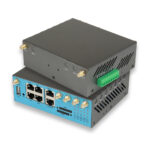
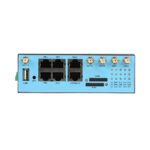
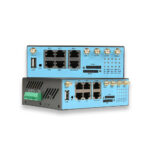
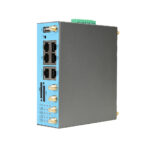
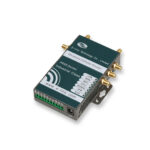
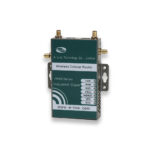
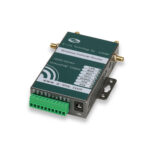
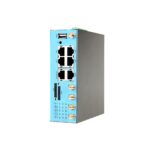
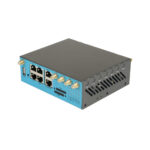
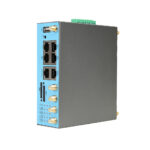
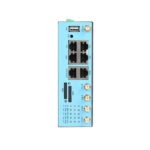
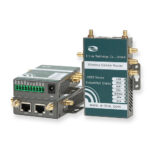
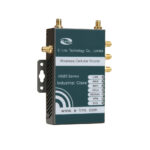
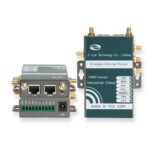
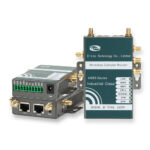
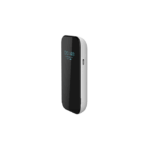
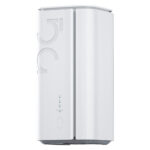
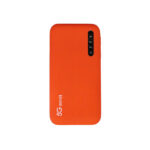
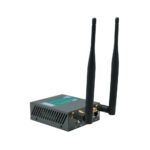
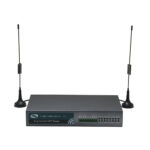
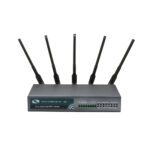
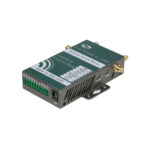
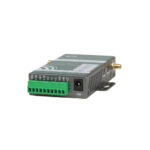
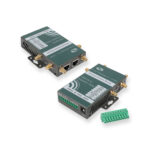
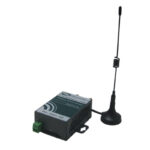
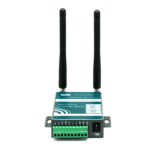
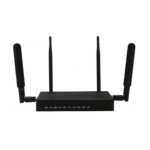
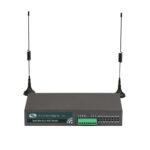
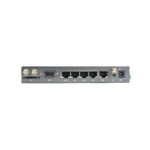
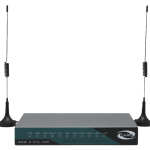
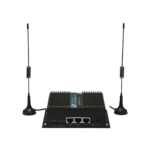
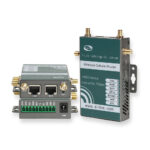
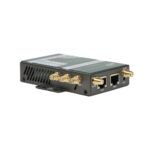
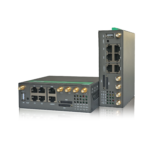
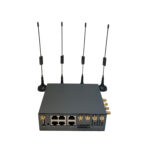
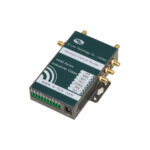
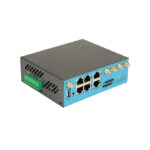
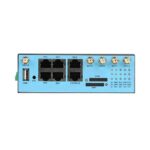
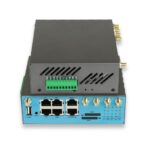
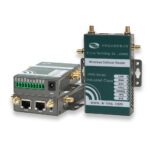
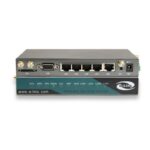
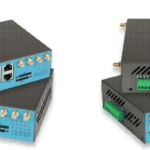
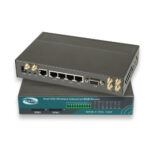
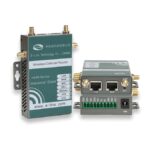
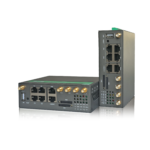
H900frc IoT 5G RedCap Router
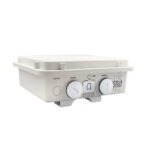
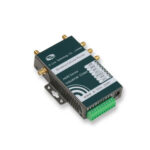
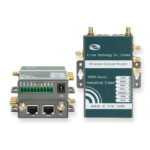
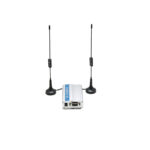
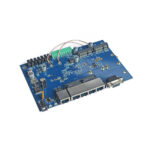
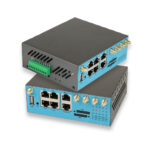
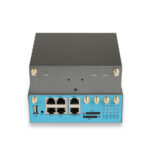
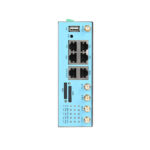
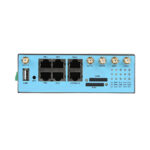
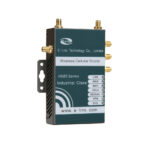
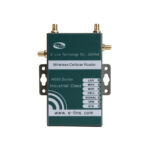
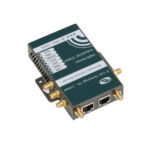
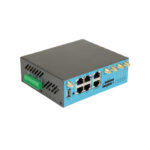
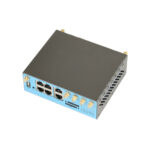
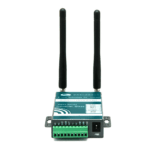
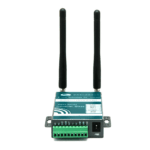
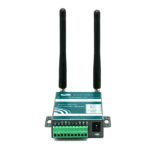
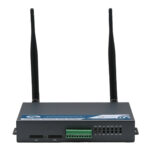
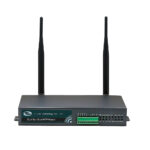
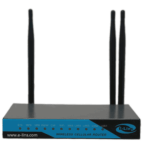
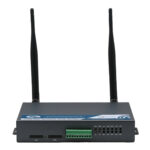
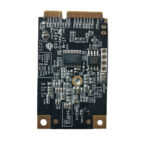
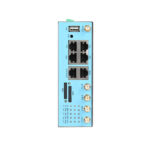
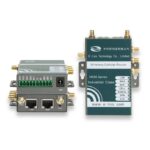
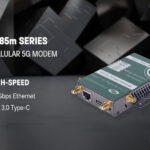
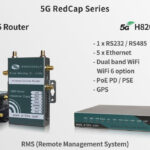
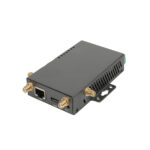
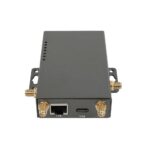
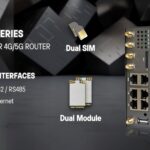
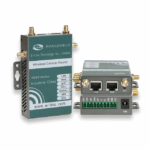
Purpose-built for IoT endpoints. 5G RedCap (NR-Light) modem with external detachable antennas. Targets private 5G networks, smart sensors, and moderate-rate surveillance.
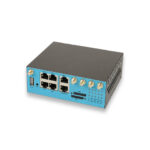
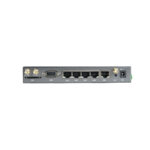
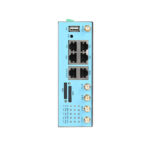
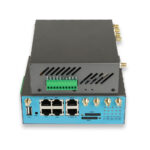
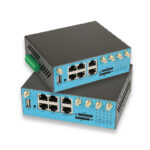
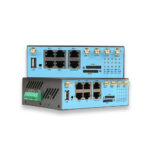
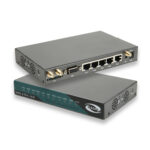
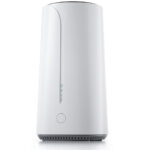
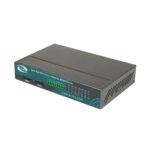
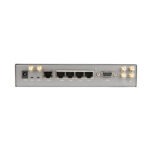
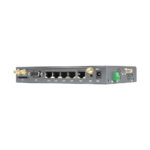
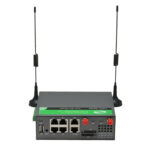
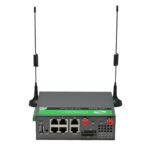
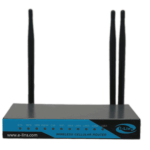
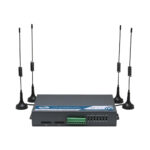
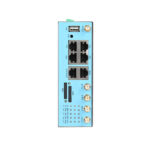
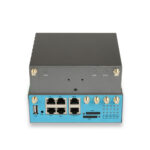
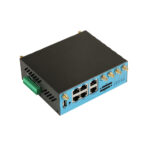
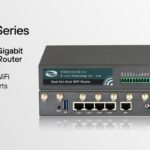
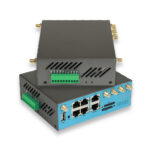
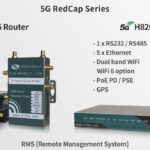
H900f Gigabit 5G Router
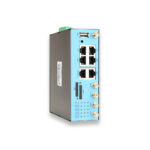
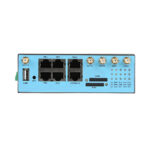
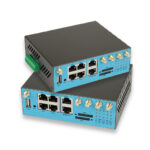
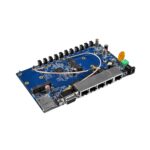
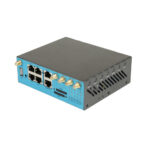
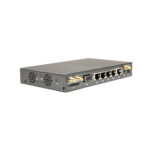
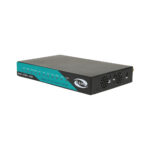
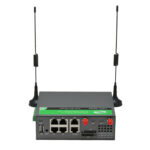
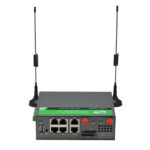
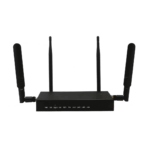
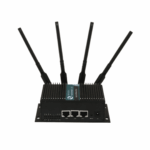
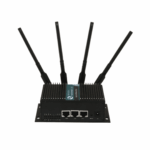
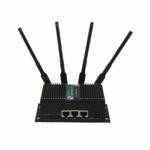
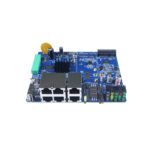
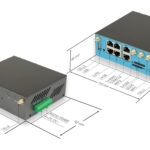
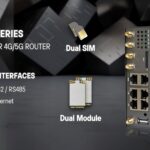
Full 5G SA/NSA with dual SIM, tri-band Wi-Fi, 5× Ethernet ports, and three-line WAN redundancy. For high-throughput, mission-critical, and multi-device deployments.
Both routers share the same security stack: RADIUS and TACACS+ authentication, 802.1x port security, zone-based object firewall with IP/FQDN/MAC host addressing, per-client web and IP filtering, and the full VPN suite including IPsec, L2TP, OpenVPN, WireGuard, GRE, DMVPN, and ZeroTier. Both support OSPF, BGP, RIP, and VRRP for enterprise routing integration. Both are manageable via the E-Lins cloud NMS, web GUI, SSH/CLI, SNMP v1/v2c/v3, SMS, and TR-069. Both operate from −35°C to +75°C and accept 5–40V DC input with reverse polarity and transient voltage protection per ISO 7637-2.

The H900f additionally offers optional serial RS232/RS485, GPS/GNSS, DI/DO ports, and PoE PD or PSE — a broader option set reflecting its positioning as a multi-application platform for vehicle, industrial, and infrastructure deployments. The H900frc’s external detachable antenna design specifically addresses deployments inside metal enclosures or equipment cabinets where the antenna needs to be routed outside the enclosure for signal access — a practical consideration in many IoT field installations.
Project Selection Guide: Matching the Router to the Deployment
Specify the H900fRC RedCap When…
- The deployment is on a private 5G network where per-device module cost is a project variable and most endpoints are low-to-moderate data rate devices.
- The installation is battery-powered, solar-powered, or PoE-powered within a constrained budget, and cellular modem power draw directly affects system viability.
- The application requires 5G core network integration — network slicing, 5G QoS — but sustained throughput above 100 Mbps is not a requirement.
- The device is a purpose-built IoT endpoint: a sensor, an asset tracker, a smart meter, a moderate-rate surveillance node, or a wearable health monitor.
- The installation environment places the router inside a metal enclosure where detachable external antennas are required to achieve acceptable signal levels.
- The project is deploying at scale — tens to hundreds of units — where per-unit module cost savings compound across the deployment.
Specify the H900f Full 5G When…
- The application streams live HD or 4K video, or aggregates multiple high-bandwidth data sources through a single router, requiring sustained throughput above 150 Mbps.
- The deployment requires dual SIM failover with automatic carrier switching and three-line WAN redundancy across cellular, Ethernet WAN, and Wi-Fi WAN.
- The router serves as a Wi-Fi access point for multiple concurrent users — passenger Wi-Fi in a vehicle, visitor access at a remote site — requiring tri-band ax Wi-Fi and the throughput to serve it.
- Optional hardware features are required: serial RS232/RS485 for legacy device integration, GPS/GNSS for position tracking, DI/DO for alarm signaling, or PoE PSE to power downstream devices.
- The deployment spans multiple carrier coverage areas and needs automatic SIM/carrier switching to maintain connectivity throughout — in-vehicle, mobile, or roaming deployments.
- The application is latency-sensitive industrial automation where sustained low latency under concurrent traffic load matters, and the router handles diverse traffic types simultaneously.
The ambiguous middle: a single-camera moderate-resolution surveillance deployment with a static power supply and a mains connection is a legitimate fit for either router. In that scenario, the deciding factors are whether dual SIM failover is needed for the site, whether the site will add higher-bandwidth devices in the future, and whether private 5G network compatibility is relevant. When no single factor is decisive, consult E-Lins with the specific deployment parameters rather than defaulting to either option based on price alone.
Full Specification Comparison: H900frc vs H900f
| Specification | H900fRC — 5G RedCap | H900f — Full 5G |
|---|---|---|
| 5G Standard | 5G RedCap (NR-Light, 3GPP Rel. 17)Sub-6 GHz, max 20 MHz bandwidth | 5G SA + NSASub-6 GHz and mmWave options; up to 100 MHz BW |
| Peak Downlink | ~150 Mbps (spec max) | 500+ Mbps typical; 1 Gbps+ theoretical |
| Peak Uplink | ~50 Mbps | 200+ Mbps |
| LTE Fallback | 4G LTE (carrier dependent) | 4G LTE FDD/TDD, 3.75G/3.5G/3G/2G |
| SIM Slots | Single SIM | Dual SIM — instant failover, dual carrier |
| WAN Redundancy | Cellular primary | Cellular + Ethernet WAN + Wi-Fi WAN (three-line) |
| Ethernet Ports | Gigabit LAN/WAN | 2× Gigabit + 3× Fast Ethernet (5 ports total) |
| Wi-Fi | — | 802.11a/b/g/n/ac/ax (Wi-Fi 6), dual-band or tri-band 2.4 + 5 + 5 GHz, up to 128 clients |
| Antennas | External detachable (SMA) — replaceable high-gain | External SMA connectors — 4–8 cellular + 2–4 Wi-Fi + 1 GPS |
| Power Draw | Lower — reduced modem complexity | Typical 300 mA @ 12VDC Tx/Rx; max 800 mA @ 12VDC |
| Power Input | DC | 5–40 V DC (5–60 V option); dual power inputs with failover; optional PoE PD or PoE PSE |
| Operating Temp | Industrial rated | −35 °C to +75 °C ambient |
| 5G Core (SA) | Yes — network slicing, 5G QoS | Yes — network slicing, 5G QoS |
| VPN | IPsec, L2TP/IPsec, GRE, OpenVPN, WireGuard, DMVPN, ZeroTier, EoIP | IPsec, L2TP/IPsec, GRE, PPTP, OpenVPN, WireGuard, DMVPN, ZeroTier, EoIP, VTI tunnel |
| Security | RADIUS, TACACS+, 802.1x, Zone-Based Firewall, per-client filtering | RADIUS, TACACS+, 802.1x, Zone-Based Firewall, per-client filtering, ALGs, SPI |
| Routing | OSPF / BGP / RIP / VRRP | OSPF / BGP / RIP / VRRP / Virtual Server / Port Forwarding |
| Management | E-Lins NMS, Web GUI, SSH/CLI, SNMP v1/v2c/v3, SMS, TR-069 | E-Lins NMS, Web GUI, SSH/CLI, SNMP v1/v2c/v3, SMS, TR-069, API |
| Optional Hardware | — | RS232/RS485 serial, GPS/GNSS, DI/DO × 4, PoE PD/PSE (802.3af/at/bt), E-SIM/eUICC, dual modem |
| Primary Use Cases | IoT sensors, private 5G endpoints, asset tracking, smart metering, moderate-rate surveillance | High-throughput video, in-vehicle, multi-user Wi-Fi, mission-critical failover, industrial multi-function |
| Cost Positioning | Lower per-unit cost — favorable for large-scale IoT rollouts | Higher per-unit cost — justified by throughput, redundancy, and option breadth |
Common Mistakes When Specifying 5G RedCap or Full 5G for IoT Projects
Over-Specifying Full 5G Because “More Is Always Better”
The most common misspecification in IoT cellular deployments is treating throughput headroom as inherently valuable regardless of what the application actually requires. Full 5G provides substantially more bandwidth than RedCap, and it costs more per device to deliver it. For an environmental monitoring node that sends a 500-byte packet every 30 seconds, the additional bandwidth of full 5G provides no operational benefit whatsoever — the application uses a fraction of what either standard provides, and the additional cost per unit compounds across the deployment without improving a single performance metric. Specify the router that meets the application’s requirements, not the one that exceeds them by the largest margin.
Selecting RedCap Without Confirming Carrier Network Support
5G RedCap is a 3GPP Release 17 standard, and carrier network support for RedCap is still rolling out as of 2024–2025. Before specifying an H900frc for a public carrier deployment, confirm with the specific carrier operating in your deployment geography that they have activated RedCap support on their 5G SA network in that coverage area. A RedCap device on a carrier that has not yet deployed RedCap support may fall back to 4G LTE, which may or may not meet the application’s requirements and which eliminates the 5G core network advantages that motivated the RedCap selection in the first place. For private 5G deployments, confirm RedCap support with the private network equipment vendor independently.
Treating RedCap as a Low-Power Alternative When the Device Is Mains-Powered
RedCap’s power advantage is real in battery-powered and power-constrained applications. In a mains-powered fixed installation with a standard DC adapter, the power draw difference between a RedCap modem and a full 5G modem is a fraction of a watt — meaningful across thousands of battery-powered nodes, but not a practical consideration for a single router plugged into a 12V supply in a control cabinet. In mains-powered contexts, base the decision on throughput requirements, redundancy needs, and carrier support rather than on power draw.
Ignoring the Antenna Configuration for the Physical Installation
The H900frc’s external detachable antenna design is specifically useful in metal enclosure installations where the router body is inside a cabinet that would block cellular signal. If the antenna cannot be routed out of the enclosure, or if the installation does not require this flexibility, the antenna architecture is a secondary consideration. Conversely, if the installation is inside a metal electrical cabinet and signal penetration through the cabinet wall is a concern — which it frequently is in industrial field installations — the H900frc’s detachable external antenna capability is an important practical advantage that should factor into the specification decision.
Planning a Dual-SIM Failover Requirement and Then Specifying RedCap
If the deployment requires dual SIM failover with automatic carrier switching as a redundancy requirement — which is a legitimate and common requirement for mission-critical remote sites — confirm whether the H900frc supports this before specifying it. The H900f’s dual SIM architecture with three-line WAN redundancy is a core design feature of that router. If carrier-level redundancy is a non-negotiable requirement for the site, verify that the RedCap variant meets that requirement or default to the H900f, where it is confirmed.
Real-World Deployment Scenarios: Which Router Fits Which Application

Smart Factory Sensor Network
Dozens of vibration, temperature, and pressure sensors on a private 5G campus. Low data rates per node, 5G network slicing for priority traffic separation. RedCap’s lower per-module cost makes the device fleet economically viable.

In-Vehicle Passenger Wi-Fi
Bus or rail router serving 20–40 concurrent passengers streaming video. Dual SIM for carrier failover across coverage zones. Full 5G throughput prevents the connection from becoming the bottleneck under concurrent load.

Advanced Metering Infrastructure
Smart electricity or water meters reporting consumption at defined intervals. Tiny per-transaction data payloads, large device count, battery or low-power supply. RedCap’s power efficiency and lower module cost are decisive.

Remote Site Mission-Critical Monitoring
Pipeline or substation site where connectivity loss triggers an alarm. Dual SIM across two carriers, Ethernet WAN fallback to a fixed line. Three-line redundancy ensures the monitoring path stays up when any single WAN source fails.

Urban Surveillance Camera Node
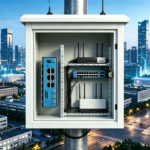
Single fixed IP camera at 2–4 Mbps inside a street pole cabinet. Detachable external antenna routed outside the metal enclosure. RedCap’s throughput is more than sufficient; the antenna flexibility is operationally important.

Automated Guided Vehicle (AGV) Control
Fleet of AGVs in a logistics warehouse requiring real-time position and command traffic. High update rates, low-latency requirements under concurrent load, and the full 5G core integration needed for deterministic network slicing.
Frequently Asked Questions
Can a 5G RedCap device connect to a standard public 5G network, or does it need a special RedCap network?
A RedCap device connects to standard 5G NR base stations — the same physical infrastructure that full 5G devices use. What it requires is that the carrier has activated RedCap device support in their 5G SA core network software. In carrier deployments that have enabled RedCap support, the H900frc connects to their 5G network and accesses 5G SA core services. In carrier deployments that have not yet activated RedCap support, the device may fall back to 4G LTE. This makes carrier support verification a necessary step before deploying the H900frc on a public network. For private 5G networks, the private network equipment must similarly support RedCap in its core configuration.
Is 5G RedCap faster than 4G LTE? Why not just use 4G LTE for IoT devices that don’t need high throughput?
RedCap delivers higher throughput than 4G LTE in typical conditions — roughly 50–150 Mbps downlink versus 20–100 Mbps for LTE in field deployments — but the throughput difference is not the primary reason to choose RedCap over LTE for IoT. The primary reason is 5G core integration: RedCap connects to a 5G SA core and accesses 5G network slicing, 5G QoS frameworks, and the lower scheduling latency that 5G NR introduces at the air interface. These capabilities allow a network operator to guarantee specific latency and reliability parameters for RedCap devices that simply cannot be delivered on an LTE network. For applications that need those guarantees — industrial control, critical infrastructure monitoring — RedCap over a 5G SA core is substantively better than LTE, even at comparable throughput levels.
The H900f has dual SIM — does this mean it can run two active cellular connections simultaneously for load balancing?
The H900f supports dual SIM for both failover and load balancing, depending on configuration. In failover mode, one SIM is active and the other is on standby, with automatic switching when the primary SIM loses connectivity. In load balancing mode, both SIMs can be active simultaneously with traffic distributed across both connections — increasing effective throughput and distributing usage across two carriers or two SIM data plans. The specific load balancing options — round robin, spillover, data usage-based, rate-based — are available as an option feature on the H900f. This makes dual SIM useful not only as a resilience mechanism but as an active throughput enhancement in deployments where a single SIM’s throughput or data allowance is a constraint.
Can the H900frc be used on a private 5G campus network, and what does RedCap support look like in that context?
Private 5G campus deployments are one of the primary target applications for RedCap, and the H900frc is specifically positioned for this use case. A private 5G network — running on CBRS spectrum in the US, local licensed bands in other markets, or shared spectrum — gives the network operator full control over the core network software configuration, which means they can activate RedCap device support independently of public carrier rollout timelines. Organizations deploying private 5G for industrial IoT — a factory floor, a logistics warehouse, a port terminal — can enable RedCap on their private core and deploy H900frc devices at each sensor or endpoint location, gaining 5G core network features at a device cost point that full 5G modules would not support at scale.
Both routers mention RADIUS and TACACS+ security. Is the security stack identical between the H900frc and H900f?
Both the H900frc and H900f include the full E-Lins enterprise security stack: RADIUS and TACACS+ authentication, 802.1x port security, zone-based object firewall with IP/FQDN/MAC address objects, per-client web and IP filtering, and the full VPN suite. The security architecture is not differentiated between the two models — it reflects E-Lins’ platform approach of including the full security stack regardless of the cellular modem specification. This means an IoT deployment that requires strong authentication and network segmentation on its field routers does not have to sacrifice security features to gain the cost and power benefits of RedCap.
My application needs 5G today but may need more throughput in two to three years. Should I future-proof by specifying full 5G now?
This is a legitimate planning consideration, but it deserves scrutiny rather than an automatic “yes.” The relevant questions are: what specific throughput will the future application require, and will it exceed RedCap’s ceiling? If the future application is streaming additional sensor data or adding more monitoring points of the same type, RedCap’s ceiling is unlikely to become a constraint. If the future application involves adding live video streams or significantly higher-rate data acquisition, full 5G’s headroom is a genuine future-proofing argument. Also consider that router hardware refresh cycles in industrial deployments typically run four to seven years, and the cellular modem technology landscape will have changed significantly in that time regardless of which standard is specified today. Specifying for the known three-year requirement is usually sounder than specifying for a hypothetical requirement — but if the full 5G feature set (dual SIM redundancy, Wi-Fi, serial ports) matches the current deployment needs anyway, the future-proofing argument is additional justification for a decision that was already correct on current requirements.
What is the typical deployment scenario where the H900frc’s detachable external antenna design matters most?
The detachable external antenna design of the H900frc is most valuable in two scenarios: installations inside metal enclosures where the router body is shielded from cellular signal and the antenna must be routed outside the cabinet wall, and deployments in locations with marginal cellular signal where replacing the standard antenna with a high-gain directional antenna pointed toward the nearest base station substantially improves link quality. Urban streetlight cabinets, industrial equipment enclosures, electrical switchgear panels, and similar metal-bodied installations all create this requirement. The SMA external connectors on both routers support antenna replacement, but the H900frc’s detachable design is specifically called out for IoT endpoint installations where this antenna flexibility is a routine deployment consideration rather than an edge case.
Conclusion: The Right 5G Standard Is the One Whose Constraints Match Your Application’s Requirements
The choice between 5G RedCap with the H900frc and full 5G with the H900f is not a question of which is better — it is a question of which is right for the specific application being deployed. RedCap is not a compromise; it is a standard engineered for a specific device category where its constraints are irrelevant and its advantages in power draw and device cost are material. Full 5G is not over-engineering; it is the correct specification when throughput headroom, dual SIM redundancy, multi-WAN failover, and the broader hardware option set are requirements that the application actually has.
Both routers share the same security architecture, the same VPN and routing stack, the same management infrastructure, and the same industrial environmental ratings. The cellular modem, the redundancy design, and the connected device count are where the decision turns. For the majority of IoT endpoint applications — sensors, trackers, meters, moderate-rate cameras — the H900frc delivers everything the application needs, and the lower per-unit cost and power draw are genuine advantages at deployment scale. For high-throughput, multi-device, or mission-critical-redundancy deployments, the H900f’s full feature set justifies the additional cost.
Before finalizing either specification, confirm the following:
- Verify the application’s actual sustained throughput requirement — not the theoretical maximum, but the data rate it generates in normal operation — against RedCap’s ceiling of approximately 150 Mbps downlink before defaulting to full 5G on throughput grounds.
- Confirm carrier or private network RedCap support in the specific deployment geography before specifying the H900frc for a network-dependent deployment.
- Determine whether dual SIM failover is a redundancy requirement for the site; if it is, confirm that the specified router supports it before finalizing the purchase order.
Evaluating 5G RedCap or Full 5G for Your Next IoT Deployment?
Tell E-Lins your application type, estimated data rates, power constraints, SIM redundancy requirements, and deployment scale. We will confirm whether the H900frc or H900f is the right fit — or recommend an alternative from the H900 series if neither is optimal for your project.
Contact Us