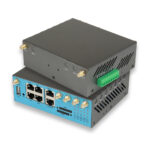
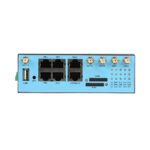
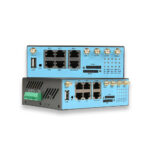
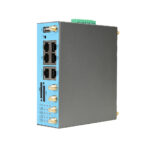
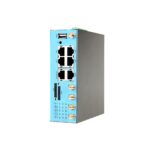

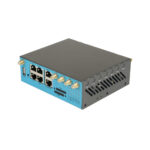
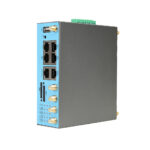
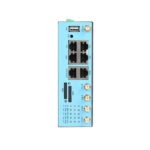

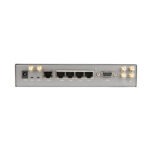
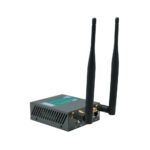
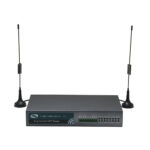
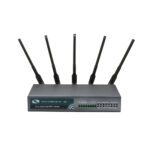
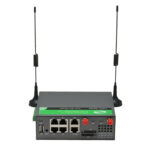
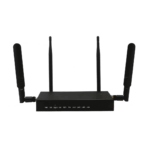
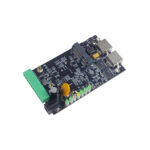
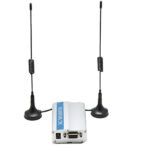
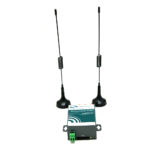
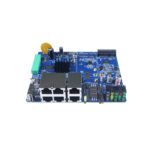
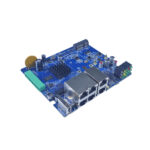
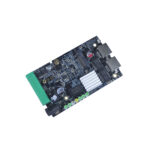
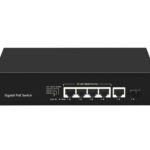
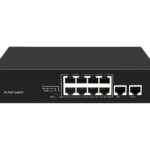












































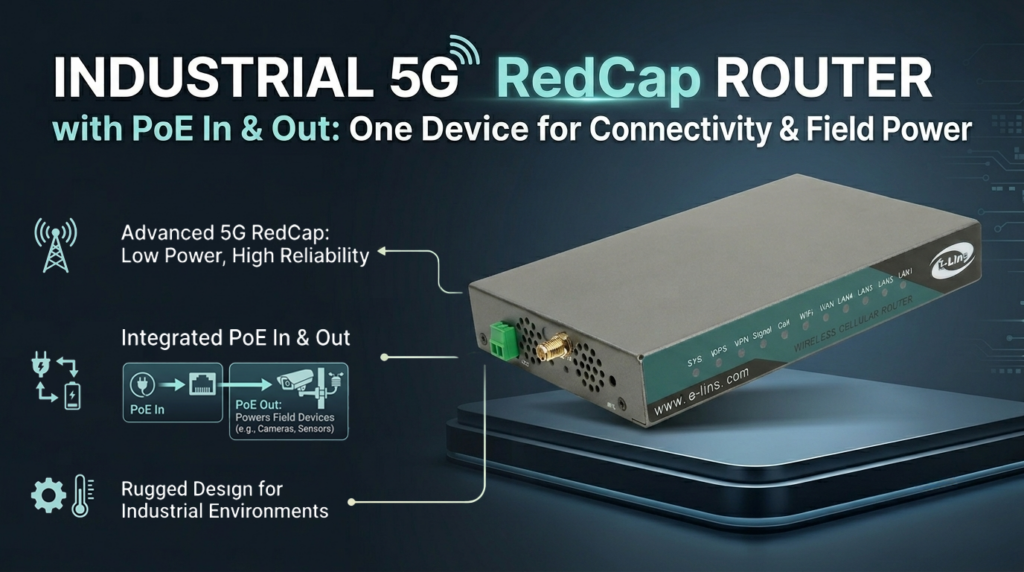
5G RedCap Router with PoE In and Out: One Device for Connectivity and Field Power at Industrial IoT Sites
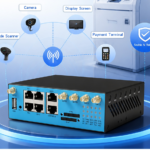
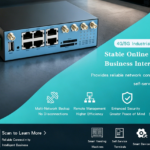
Most 5G RedCap routers support PoE In — they can be powered by an upstream Ethernet cable. The H820frc goes a step further: it supports both PoE In and PoE Out, meaning it can also deliver power to downstream IP cameras, sensors, and access points over Ethernet. For projects where RedCap bandwidth is the right cellular tier and PoE-powered field devices are part of the installation, this combination removes the separate PoE switch from the cabinet and the separate power cable from each device run.
What Is a 5G RedCap Router with PoE In and Out?
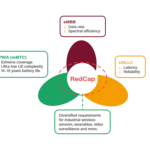
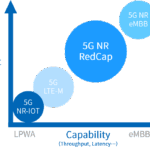
A 5G RedCap router with PoE combines two technologies that are rarely packaged together at this network tier. RedCap — short for Reduced Capability, standardised in 3GPP Release 17 — is the 5G specification designed for IoT and industrial applications that need more bandwidth than 4G LTE can reliably deliver, but where the full throughput and cost of flagship 5G is unnecessary. PoE, Power over Ethernet, allows the router to both receive power from an upstream switch and deliver power to downstream field devices over standard Ethernet cabling.
The significance of having both PoE In and PoE Out on a RedCap device is architectural. PoE In means the router itself can be installed without a separate DC power supply — useful for cabinet configurations where only an Ethernet cable is available at the mounting location. PoE Out means the router can power IP cameras, environmental sensors, wireless access points, or other PoE-capable devices connected to its LAN ports directly, without a separate PoE injector or PoE switch in the cabinet. The H820frc is one of the few 5G RedCap routers on the market that supports both modes.
The H820frc also carries RS232 serial integration, four DI/DO ports for hardware event handling, and SD-WAN — a combination that makes it relevant not just for straightforward camera-plus-router deployments but for industrial automation panels, utility monitoring cabinets, and multi-device field installations where legacy serial devices, hardware I/O, and intelligent WAN path management are all in scope simultaneously.
Key distinction: The H820frc supports two modes: PoE In (the device is powered by the upstream switch, removing the need for a separate DC power adapter) and PoE Out (the device supplies power to downstream cameras and sensors over Ethernet, removing the need for individual power adapters at each field device). The two modes are mutually exclusive by port role — the H820frc adapts to whichever mode the specific installation requires, rather than committing to one direction permanently.
Site Readiness Checklist Before Specifying a RedCap PoE Router
A RedCap router with PoE flexibility suits a specific tier of deployment. Confirming the following before specifying hardware avoids the most common mismatch between product capability and project requirement.
- What is the upstream bandwidth requirement per site — and does it consistently exceed what 4G LTE can deliver, or only occasionally peak above it?
- How many PoE-powered devices — cameras, sensors, access points — will the router need to supply simultaneously, and what is their combined maximum watt draw?
- Will the router itself be powered via PoE In from an upstream switch, or via DC terminal from a panel supply?
- Are any field devices connected over RS232 serial or RS485? If RS485 is required, confirm which variant of the H820frc is needed.
- Are DI/DO ports required for alarm relay, equipment status contact, or hardware event integration?
- Does the deployment use SD-WAN policies — traffic steering, link failover thresholds, or load balancing across cellular and WAN Ethernet paths?
- Has 5G RedCap network coverage been confirmed with the target carrier at the installation location? RedCap operates on 5G NR bands; coverage is still rolling out in many regions.
Why the RedCap and PoE Combination Changes the Cabinet Design
The conventional approach to deploying a multi-camera monitoring cabinet with cellular backhaul involves three separate devices: a cellular router for the WAN connection, a PoE switch to power the cameras and distribute data to them, and a DC power supply for the router itself. Each device adds cost, introduces its own failure mode, and requires its own management interface. In a distributed deployment across 50 or 100 sites, those three-device architectures are 150 to 300 managed endpoints, not 50 to 100.
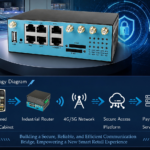
The H820frc compresses this to a single device in many deployment configurations. Its PoE Out capability eliminates the standalone PoE switch. Its PoE In option eliminates the separate DC power adapter at sites where the cabinet already has a PoE-capable switch upstream. Its 5G RedCap WAN provides the cellular backhaul. For a site with two or three cameras, a serial sensor, and an alarm relay contact, the H820frc is potentially the only active device in the cabinet, managing connectivity, device power, serial data, and hardware I/O simultaneously.
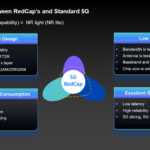
The RedCap bandwidth tier is also worth understanding precisely, because it determines whether this architecture is appropriate for the application or whether a full 5G router is needed. 5G RedCap for industrial IoT monitoring delivers roughly 150–220 Mbps peak downlink and 50–100 Mbps uplink — comfortably above what most multi-camera HD surveillance and IoT telemetry deployments consume in practice. Full 5G SA/NSA is more appropriate when sites require 4K multi-stream video, large-file edge computing uploads, or aggregate throughput from many simultaneous high-bandwidth devices. For the majority of industrial monitoring, metering, and automation deployments, RedCap’s bandwidth headroom is more than sufficient, and its cost advantage over full 5G hardware is material at scale.
In our experience supporting industrial IoT deployments, a typical two-camera HD surveillance cabinet generating continuous 1080p streams at 4 Mbps per camera uses approximately 8–12 Mbps of sustained uplink. A site adding environmental sensor telemetry and occasional remote PLC maintenance sessions rarely exceeds 20 Mbps average uplink. 5G RedCap’s 50–100 Mbps uplink capacity covers this with a factor-of-four headroom margin for peak events, firmware updates, and future device additions. Full 5G hardware is only justified when the site aggregate consistently pushes beyond 80–100 Mbps, which in industrial monitoring contexts typically means five or more simultaneous 4K video streams.
A utilities contractor deploying air quality and water quality monitoring stations across a Central Asian region came to us evaluating full 5G routers for their next 60-station rollout. Each station used two PoE environmental sensors, one IP camera, and a Modbus serial meter. Their existing 4G network was congesting during peak data synchronisation windows, but their average per-station traffic was under 8 Mbps. We recommended the H820frc: RedCap bandwidth resolved the congestion issue without the cost premium of full 5G hardware, PoE Out eliminated the standalone PoE injectors they were sourcing separately for each station, and the RS232 port covered the Modbus meter interface directly. Per-station hardware cost dropped by approximately 22% compared to the full 5G alternative they had been evaluating, and the cabinet BOM went from four items to one.
Important: 5G RedCap requires carrier network support on 5G NR frequencies. Before specifying RedCap hardware, confirm with the target carrier that RedCap service is commercially available at the installation sites. In regions where RedCap rollout is still in progress, a router with 4G LTE fallback ensures the device stays connected on the existing network while RedCap coverage expands — the H820frc supports automatic fallback to 4G for exactly this reason.
Key Features for 5G RedCap PoE Router Selection
The H820frc occupies a specific capability tier — above a basic 4G router, below a full 5G SA/NSA device, and with PoE flexibility that most RedCap routers do not offer. Selecting it correctly means understanding where each feature adds real operational value and where it is neutral for the specific project.
1. 5G RedCap SA/NSA with Automatic 4G LTE Fallback
RedCap operates on 5G New Radio bands in both Standalone and Non-Standalone modes. SA mode connects to a 5G core directly; NSA mode anchors on 4G LTE while using 5G for the radio link. The practical difference for most industrial deployments is carrier-dependent — SA gives lower latency and full 5G core features; NSA is more widely deployed as carriers continue their rollout. Automatic fallback to 4G LTE ensures that a site in an area with partial RedCap coverage stays connected without manual intervention, which is essential for unattended installations where a dropped link is not discovered until the next monitoring cycle.
2. PoE Out for Downstream Field Devices
The 5G RedCap router with Active PoE output for field sensors capability on the H820frc means that connected IP cameras, environmental sensors, and wireless access points can draw their operating power through the Ethernet cable from the router’s LAN port, without a separate power supply at each device. The practical benefit is most visible in deployments with two to four PoE-powered devices per site: the standalone PoE switch that would otherwise be needed is eliminated, the associated cabling between router and switch is eliminated, and the failure point introduced by that switch is eliminated. For a 50-site rollout, that is 50 fewer PoE switches to procure, install, and eventually replace.
“The PoE Out question almost always comes up after the router has been specified and the installer gets on site. They have a router that only does PoE In, two cameras that need power, and nowhere in the budget for a PoE switch. We added PoE Out to the H820frc specifically because that scenario is common enough in RedCap deployments — monitoring stations and small field cabinets where the assumption was ‘the cameras will sort themselves out’ and the reality is they need a power source. Specifying PoE Out at the router level closes that gap before the truck leaves the warehouse.”
— E-Lins application engineering team3. PoE In — Receiving Power from an Upstream Switch
Where the cabinet already contains a managed PoE switch serving other equipment, the H820frc can take its own power from that switch’s port — one fewer DC terminal connection, one fewer power adapter to source, and one fewer item to check when diagnosing a power fault. For installations in existing panels being upgraded from 4G to RedCap, PoE In allows the router to be installed without adding a new DC power supply to the panel design.
4. SD-WAN for Intelligent WAN Path Management
SD-WAN on the H820frc goes beyond simple cellular-or-Ethernet WAN failover. It allows traffic to be steered across available WAN paths based on policy rules — latency thresholds, packet loss tolerance, application type, or time of day. For a site with both a 5G RedCap cellular link and an Ethernet WAN connection, SD-WAN can send latency-sensitive PLC management traffic via whichever path is performing better at the moment, while bulk telemetry upload uses the lower-cost path, with automatic switchover if either path degrades below the defined threshold. This is materially different from simple failover logic and is relevant for sites where both WAN paths are in use simultaneously rather than one being purely a backup.
5. RS232 Serial Integration and DI/DO Ports
Industrial field equipment communicates over serial protocols that predate Ethernet by decades. Modbus RTU meters, DNP3 RTUs, SCADA polling devices, and legacy PLCs all commonly use RS232 interfaces. The H820frc’s RS232 port allows these devices to communicate over the cellular connection without a separate serial-to-Ethernet converter in the cabinet. The four DI/DO ports add hardware event integration: a door contact, equipment status relay, alarm trigger, or ignition sense line can feed directly into the router’s logic, generating an alert or triggering a watchdog action based on the physical state of the site. For a 5G RedCap IoT gateway with RS232 and digital I/O, this eliminates what would otherwise be a separate I/O module in the cabinet.
6. Wide-Voltage DC Input and Dual Power Failover
Industrial power supplies are not always stable. A solar-charged system may deliver anywhere from 11 V to 28 V depending on battery state and charging conditions. A panel DC bus may spike during load events. The H820frc’s wide-voltage input — 5–40 V DC standard, with a 5–60 V option — accommodates these variations without an intermediate DC-DC converter. Dual power inputs with automatic failover mean that a second supply rail, battery pack, or UPS can be connected, and the router switches to it automatically when the primary supply drops, keeping the cellular link active through a power interruption.
7. Hardware Watchdog and Remote Management
A RedCap router serving an unattended monitoring station cannot be manually rebooted when it freezes. Hardware watchdog recovery monitors the device’s connectivity state — cellular registration, tunnel health, WAN link status — and restarts the router automatically when failure is detected. Cloud NMS, SNMP, TR-069, and SSH access allow configuration changes, firmware updates, and diagnostics to be pushed to any device in the fleet without a site visit. For distributed deployments where on-site maintenance costs can consume 30–40% of operational budgets, remote management is not a convenience — it is the primary cost control mechanism after initial installation.
E-Lins H820frc: Industrial 5G RedCap Router with Flexible PoE
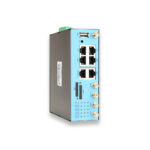
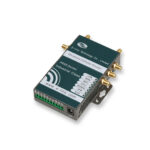
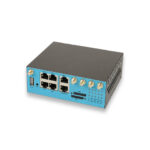
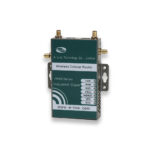
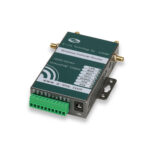
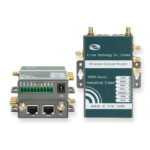
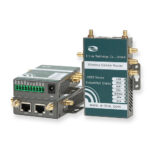
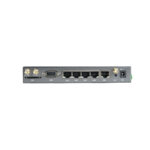
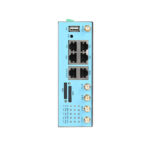
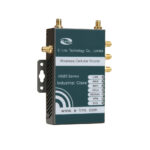
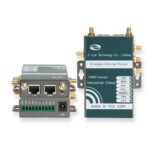
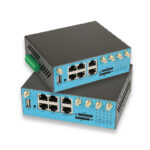
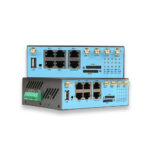
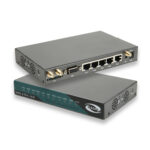
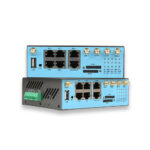
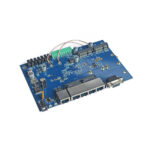
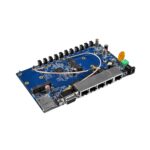
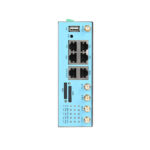
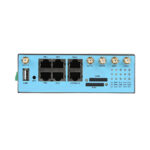
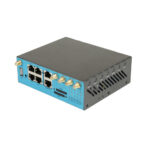
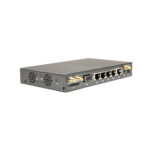
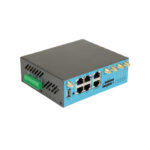
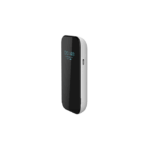
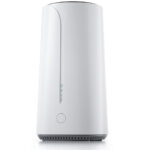
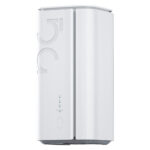
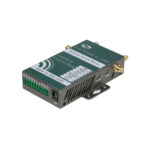
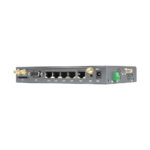
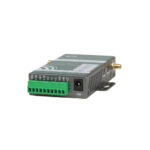
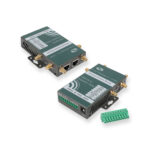
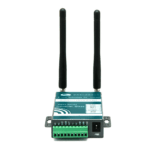
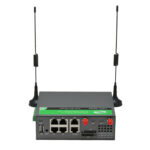
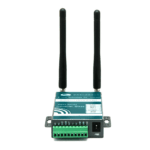
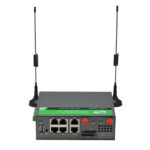
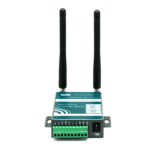
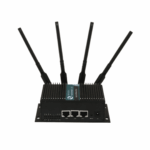
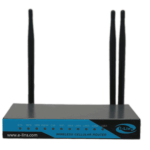
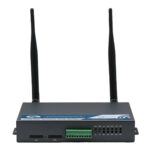
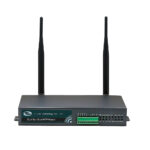
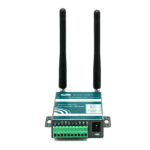
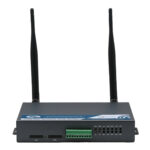
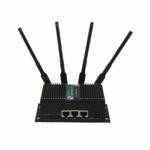
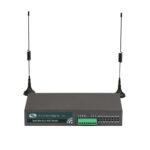
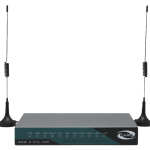
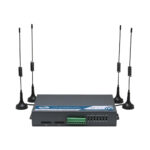
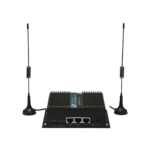
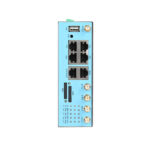
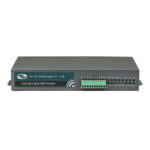
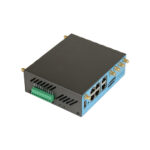
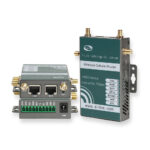
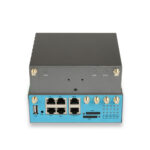
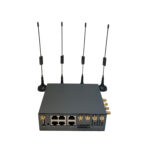
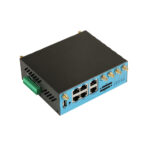
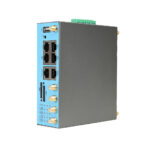
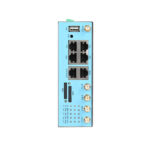
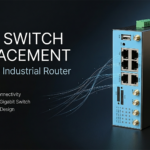
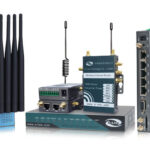
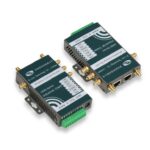
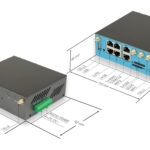
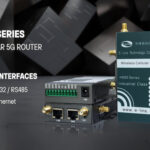
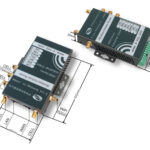
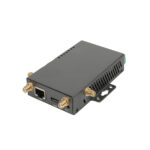
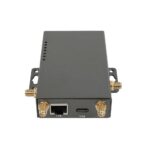
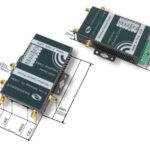
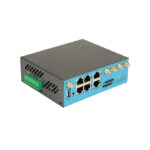
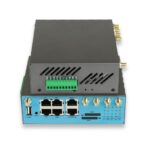
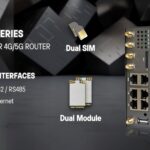
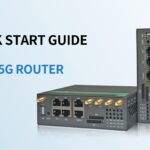
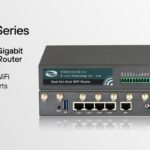
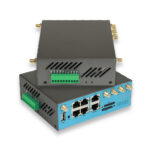
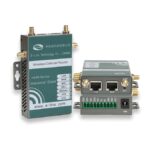
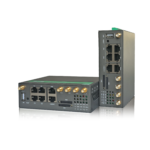
The H820frc is E-Lins’ industrial 5G RedCap router built in the robust H820 series body — larger and more interface-rich than the compact H685 family, designed for cabinet and panel installations where multiple field devices, serial equipment, and hardware I/O are all in scope alongside the cellular WAN connection. As a 5G RedCap PoE industrial router, its PoE In/Out mode flexibility sets it apart from the rest of the RedCap product line.
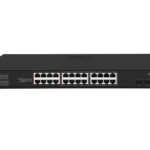
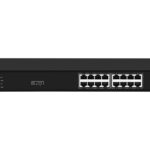
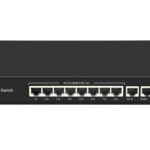
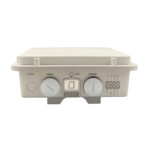
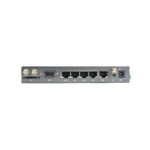
E-Lins H820frc Industrial 5G RedCap Router with PoE In/Out
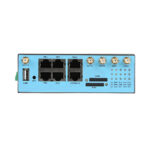
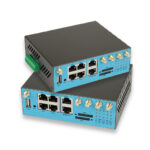
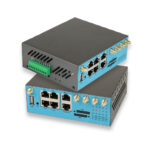
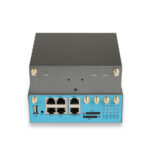
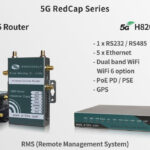
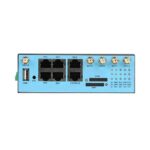
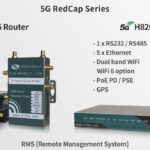
Industrial-grade 5G RedCap router with bidirectional PoE (In and Out), RS232 serial port, 4× DI/DO, SD-WAN, wide-voltage DC input, and full VPN suite. Designed for multi-device field cabinets and industrial IoT installations requiring RedCap bandwidth, flexible PoE, and hardware I/O integration in a single ruggedised unit.
How the H820frc Fits Relative to the Rest of the RedCap Line
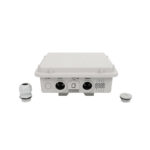
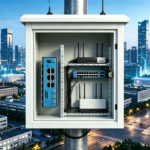
The clearest way to understand the E-Lins H820frc’s position in the product line is to compare it against the cabinet-based alternative on a specific installation. Take a traffic monitoring pole at a road intersection: four cameras, a cellular router, and a variable message sign controller. The cabinet-based approach needs a weatherproof enclosure sized to house the router and associated hardware, an outdoor power supply or conduit run from the nearest electrical point, external antennas routed through cable glands, and a maintenance programme for the enclosure seals. That is before the router itself is configured.
Within E-Lins’ RedCap product line, the H820frc occupies a distinct position. The H685frc is the compact embedded form factor — minimal footprint, designed for space-constrained OEM integration. The H900frc carries more Ethernet ports and richer interface density for larger cabinets. The E-Lins H820frc sits between these in physical size, but it is the only model in the current RedCap line that explicitly combines PoE Out mode with RS232 and DI/DO in a single unit — making it the most complete 5G RedCap PoE industrial router option for deployments where power delivery to field devices and serial/hardware I/O integration are both required.
The SD-WAN feature is also worth examining in the context of where RedCap deployments typically sit in a network hierarchy. Many industrial sites using RedCap as their primary WAN are also connected to a local Ethernet network — a substation ring, a building LAN, or a managed switch serving the same cabinet. SD-WAN allows the H820frc to use both paths intelligently: routing management traffic and alarms over whichever link has lower latency at the moment, while less time-sensitive telemetry takes the higher-capacity or lower-cost path. This is a meaningful operational capability for sites managed by a NOC team rather than individual field engineers.
The 15KV ESD protection and 1.5KV electromagnetic isolation are worth noting specifically for utility and energy deployments. Substations, transformer yards, and high-voltage switching environments generate transient voltages that can destroy unprotected electronics within months. E-Lins’ industrial-grade component specification — not a differentiating marketing claim but a measurable electrical protection standard — is what separates hardware that survives three years in a substation from hardware that fails in the first autumn storm season.

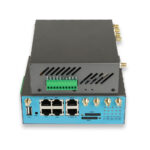
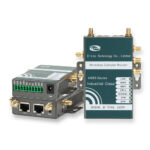
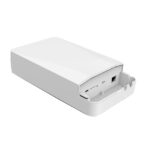
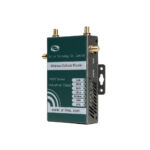
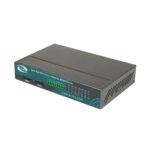
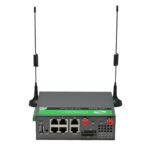
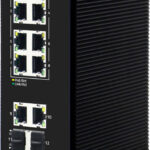
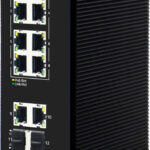
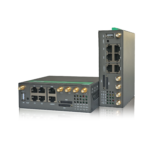
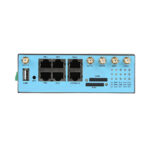
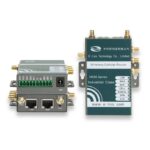
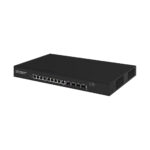
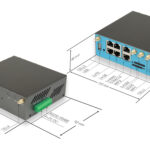
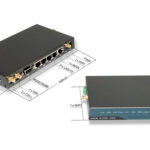
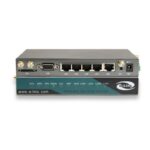
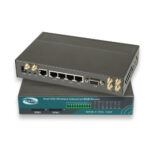
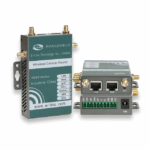
E-Lins H820frc — industrial 5G RedCap router with PoE In/Out, RS232, DI/DO, SD-WAN, and DIN-rail mounting for multi-device field cabinet deployments
Which Project Structure Suits the H820frc?
The H820frc suits deployments where the bandwidth of 4G LTE is becoming a constraint, where PoE-powered devices are part of the installation, and where serial field equipment or hardware I/O need to be integrated into the same cellular-connected cabinet. If none of those three conditions apply, a simpler product is probably the right choice.
Surveillance and Security Monitoring Cabinets
- Two to four IP cameras powered by PoE Out — no separate switch.
- RedCap uplink handles HD video without 4G congestion.
- DI/DO for door contacts, tamper alarms, and relay triggers.
- VPN protects camera feeds from public internet exposure.
- Watchdog recovery keeps cameras online at unmanned sites.
Utility and Environmental Monitoring Stations
- RS232 for Modbus RTU meters and legacy serial sensors.
- PoE Out powers IP sensors without separate adapters.
- DI/DO integrates alarm contacts and equipment status lines.
- Wide-voltage input compatible with solar charge controller rails.
- SD-WAN manages cellular and Ethernet WAN paths intelligently.
Industrial Automation Panels
- PLC, HMI, serial gateway, and camera in one cellular cabinet.
- PoE Out for panel inspection camera without extra power wiring.
- RS232 for serial PLC or protocol converter integration.
- VPN for secure remote PLC access and maintenance sessions.
- NMS fleet management across distributed production sites.
Smart Transportation and Traffic Infrastructure
- Traffic cameras on PoE Out, variable message sign on serial.
- RedCap bandwidth supports HD video without 4G bottleneck.
- DI/DO for loop detector or sensor integration at intersections.
- SD-WAN prioritises live camera feeds over background telemetry.
- Wide-temperature tolerance for all-weather roadside enclosures.
Comparison: 5G RedCap PoE Router vs 4G Router vs Full 5G Router
The H820frc sits at a specific cost-capability intersection. The table below helps clarify when it is the right tier and when the project is better served by staying on 4G or stepping up to full 5G.
| Factor | H820frc (5G RedCap + PoE In/Out) | 4G LTE Router + PoE Switch | Full 5G SA/NSA Router (e.g. H900f) |
|---|---|---|---|
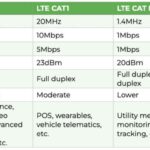
| WAN bandwidth | 150–220 Mbps down / 50–100 Mbps up (RedCap) | 50–150 Mbps down / 20–50 Mbps up (LTE Cat6/12) | 400–800 Mbps down / 100–200 Mbps up (5G NR) |
| Typical use case | HD surveillance, industrial monitoring, metering | Sensor telemetry, PLC access, light data | 4K multi-stream video, edge computing, high-density IoT |
| PoE Out | Built-in | Requires separate switch | Available on H900f variant |
| PoE In | Supported | Depends on router model | Supported |
| RS232 + DI/DO | Both included | Depends on router model | Depends on variant |
| SD-WAN | Supported | Basic failover only | Supported on some variants |
| Hardware cost per site | Mid-range — RedCap module less than full 5G | Lower — but add PoE switch cost separately | Higher — full 5G module premium |
| Best fit | Sites outgrowing 4G but not needing 4K/edge-class 5G, with PoE devices and serial field equipment | Light telemetry and monitoring, no bandwidth pressure | High-throughput video, edge AI, large multi-device 5G LANs |
Common Mistakes When Deploying a 5G RedCap PoE Router
Specifying RedCap Before Confirming Carrier Coverage
RedCap is a 5G NR technology and requires carrier network support on 5G bands. It is not available simply because a site has 4G LTE coverage from the same carrier. Before specifying H820frc hardware for a deployment, confirm with the target carrier that RedCap service has been commercially launched in the relevant region and is available at the planned installation locations. The H820frc falls back automatically to 4G LTE where RedCap is unavailable, which means it will still function — but deploying on the assumption that RedCap will arrive before the site goes live has caused commissioning delays on projects in regions where the rollout timeline slipped.
Calculating PoE Budget by Port Count Rather Than Total Watts
A router with PoE Out ports does not guarantee unlimited power per port. The total PoE power budget is shared across all active PoE Out ports simultaneously. Before specifying the H820frc for a multi-camera cabinet, calculate the aggregate worst-case power draw across all PoE devices — including infrared illumination active, PTZ motors running, and any PoE-powered wireless radios at full transmit power. If the aggregate exceeds the router’s total PoE budget, either reduce the device count, select lower-wattage cameras, or supplement with a dedicated PoE switch for the additional devices. Verify the H820frc’s PoE budget specification on the product page or directly with E-Lins before the order is placed.
Ignoring SD-WAN During Configuration
SD-WAN is listed as a feature of the H820frc, but leaving it at factory defaults effectively reduces it to basic failover behaviour — the same as a router without SD-WAN. For sites with both a cellular and Ethernet WAN path, defining traffic steering policies during commissioning — which applications use which path, what the failover thresholds are, how load balancing is weighted — is where the SD-WAN value is realised. This takes 20–30 minutes per site during initial configuration and is rarely worth skipping, particularly for sites where latency-sensitive industrial traffic (PLC polling, alarms, VPN management sessions) shares a WAN path with bulk telemetry upload.
Treating 4G Fallback as a Permanent Operating Mode
The H820frc’s automatic 4G LTE fallback is designed as a resilience mechanism, not a long-term substitute for RedCap connectivity. If sites are consistently operating on 4G fallback because RedCap coverage is unstable or not yet deployed, the bandwidth advantage that justified the RedCap hardware choice is not being realised. Sites in this state should be reviewed with the carrier — either to accelerate RedCap coverage confirmation or to assess whether the site’s traffic profile is adequately served by 4G, in which case a 4G router at lower cost may be more appropriate for that specific location.
Using RS232 Configuration Without Testing at Deployment Baud Rate
RS232 serial connections on industrial routers are frequently configured during bench testing at default baud rates, then discovered to be incompatible with the actual field device during installation. Before finalising the RS232 configuration on the H820frc, obtain the serial communication parameters — baud rate, data bits, parity, stop bits, flow control — from the field device’s technical documentation and confirm the router is configured to match. A mismatch between the router’s serial configuration and the Modbus meter or RTU at the other end is a fault that is difficult to diagnose remotely and straightforward to prevent at commissioning.
Application Scenarios for 5G RedCap Routers with PoE
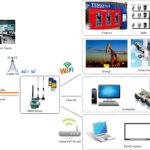
The E-Lins H820frc is most valuable at sites where the combination of cellular backhaul, device power delivery, serial integration, and hardware I/O would otherwise require multiple separate devices. As a 5G RedCap PoE industrial router, it consolidates what would be a three- or four-device cabinet architecture into a single DIN-rail unit. These are the deployment categories where that consolidation appears most consistently.

Remote Surveillance Cabinets
Two to four PoE-powered IP cameras, an alarm relay, and 5G RedCap uplink in a single cabinet. No separate PoE switch. DI/DO handles the door contact and tamper alarm. One management IP per site for the NMS fleet.

Environmental and Utility Monitoring
Air quality monitors, water level sensors, and Modbus meters at utility sites. RS232 handles legacy serial sensors. PoE Out powers IP sensors. Wide-voltage input works directly from solar charge controller rails.

Solar and Renewable Energy Sites
Inverter monitoring over serial, site surveillance cameras via PoE Out, and environmental sensors — all on one RedCap cellular uplink. Dual power input with solar charge controller compatibility and automatic failover to battery backup.

Traffic and Smart Road Infrastructure
Traffic cameras on PoE Out, VMS sign data over serial, loop detector inputs on DI ports. RedCap handles the HD video uplink that was congesting 4G. SD-WAN steers live camera feeds over the best available WAN path.

Industrial Automation Panels
PLC, HMI, serial gateway, and inspection camera in a single cellular-connected panel. RS232 handles PLC communication. PoE Out powers the inspection camera without adding a power adapter to the panel BOM.

Financial and Payment Terminals
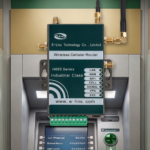
ATMs and payment kiosks with a surveillance camera (PoE Out), serial receipt printer or cash counter (RS232), and a tamper alarm relay (DI/DO) — all managed securely over a VPN-protected RedCap cellular connection with financial-grade encryption.
A traffic management integrator we supported in Southeast Asia was upgrading 34 roadside monitoring cabinets from 4G to 5G connectivity. Each cabinet housed two HD traffic cameras, one variable message sign controller on RS232, and a loop detector on a DI input. Their 4G uplink was congesting during peak traffic hours when cameras were streaming simultaneously. The E-Lins H820frc resolved the bandwidth issue with RedCap, consolidated the PoE switch they had been running per cabinet into the router itself, and maintained the RS232 and DI integration they needed. As a purpose-built 5G RedCap PoE industrial router, the H820frc reduced commissioning time per cabinet from approximately 3.5 hours to 2.2 hours — primarily because the PoE switch configuration step was eliminated — and the integrator reduced their per-cabinet spare-parts inventory from two device types to one.
Extended Reading
E-Lins H820frc Product Page — Full specification, images, and ordering information for the industrial 5G RedCap router with PoE In/Out.
IoT 5G RedCap Router Category — Browse the complete E-Lins RedCap router lineup across compact, standard, and feature-rich configurations.
Industrial 4G/5G PoE Router Category — Compare the full range of E-Lins PoE-capable industrial routers across both 4G and 5G generations.
H900f Dual SIM 5G Router — Full 5G SA/NSA with dual SIM and Active PoE Out for sites requiring higher throughput than RedCap delivers.
3GPP RedCap Technology Background — Technical background on 5G Reduced Capability from the standards body that defined it.
Project Inquiry — Share your site profile, device count, PoE load estimate, serial equipment list, and carrier region for a tailored recommendation.
FAQ
What is 5G RedCap and how does it differ from standard 5G?
5G RedCap (Reduced Capability) is a 3GPP Release 17 specification designed for IoT and industrial devices that need more bandwidth than 4G LTE but do not require the full throughput of flagship 5G enhanced mobile broadband. RedCap delivers roughly 150–220 Mbps peak downlink and 50–100 Mbps uplink — sufficient for HD surveillance, industrial monitoring, and moderate IoT data loads — with a lower module cost and power consumption than full 5G NR hardware. Standard 5G SA/NSA targets 400+ Mbps downlink and is appropriate for 4K video, edge computing, and high-density device networks.
Can the H820frc both receive power via PoE In and deliver power via PoE Out simultaneously?
The H820frc supports both PoE In and PoE Out — but typically in separate operating configurations rather than simultaneously on the same device in the same installation. PoE In is used when the router itself is powered from an upstream PoE switch. PoE Out is used when the router powers downstream devices from its LAN ports. In most cabinet installations, the router is powered via DC terminal or PoE In, while its LAN ports deliver PoE Out to cameras or sensors. Confirm the specific simultaneous operation capability with E-Lins for your installation design before specifying both in the same circuit.
Does the H820frc require a 5G RedCap-capable carrier SIM to function?
No. The H820frc falls back automatically to 4G LTE when 5G RedCap coverage is unavailable. A standard 4G SIM plan works on the device, and it will use 4G until RedCap coverage is available at the installation location. However, to benefit from RedCap bandwidth, the SIM plan must be on a carrier that has commercially launched RedCap service in the deployment region. Confirm this with the carrier before deployment if RedCap performance is part of the project specification.
What serial protocols does the RS232 port support on the H820frc?
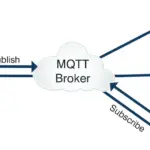
The RS232 port on the H820frc supports transparent serial-to-IP tunnelling, which is compatible with Modbus RTU, DNP3, proprietary serial protocols, and any application that communicates over a standard RS232 physical layer. Protocol conversion (serial to MQTT, serial to TCP, or similar) may require additional configuration or a middleware layer depending on the platform the serial data is being forwarded to. Confirm the specific protocol conversion requirement with E-Lins if Modbus TCP or other translated protocols are needed at the central system.
How does SD-WAN on the H820frc differ from basic WAN failover?
Basic WAN failover switches from one WAN path to another when the primary path fails — a binary switch triggered by link loss or ping timeout. SD-WAN on the H820frc allows policy-based traffic steering across multiple available WAN paths simultaneously: different application types can be routed to different paths based on latency, packet loss, or cost policies, and failover thresholds can be set per-application rather than globally. For a site with both cellular RedCap and a fixed Ethernet WAN, SD-WAN can actively use both paths at once rather than treating one as a passive backup.
What is the difference between the H820frc and the H685frc in the RedCap product line?
The H685frc is a compact, embedded-class RedCap router — minimal footprint, designed for space-constrained OEM integration, single-SIM, with PoE In support. The H820frc is built in the larger H820 series body with more interface density: PoE Out capability (not just In), RS232 serial, DI/DO ports, and SD-WAN support. The H820frc is the right choice when the site requires PoE Out to downstream devices, serial field equipment integration, or hardware I/O alongside the RedCap cellular connection. The H685frc suits embedded or compact panel installations where the host system manages routing and the router provides cellular access in minimum space.
Can the H820frc operate on a solar power system?
Yes. The wide-voltage DC input (5–40 V standard, 5–60 V option) is compatible with 12 V and 24 V solar charge controller output voltages without an intermediate DC-DC converter. Dual power input with automatic failover allows a secondary battery bank or backup supply to maintain connectivity if the primary solar rail drops during low-light periods. For off-grid environmental monitoring and utility sites, this configuration is common and well-supported by the hardware design.
How many cameras can the H820frc power via PoE Out?
The number depends on each camera’s wattage and the router’s total PoE Out power budget. IEEE 802.3af cameras (up to 15.4 W each) and 802.3at cameras (up to 30 W each) draw different amounts, and PTZ cameras with infrared enabled can reach their rated maximum at night. Calculate the total worst-case aggregate watt draw across all cameras and confirm it falls within the H820frc’s PoE budget specification — available on the product page or from E-Lins directly. As a practical guide, two to four standard HD dome cameras are within the typical budget of an industrial-class PoE Out router; PTZ cameras or cameras with high-power IR may reduce this count.
What happens if a RedCap SIM is used in a region without RedCap coverage?
The H820frc automatically registers on 4G LTE when RedCap 5G NR coverage is unavailable, using the same SIM card. The SIM plan needs to support 4G data for fallback to function — confirm this with the carrier. The router will operate on 4G with 4G-equivalent bandwidth until it detects RedCap coverage, at which point it re-registers on the 5G NR network automatically. No manual intervention is required.
Is the H820frc suitable for projects that will eventually upgrade from RedCap to full 5G?
Not directly — the H820frc uses a RedCap cellular module and cannot be field-upgraded to full 5G SA/NSA hardware. If the project trajectory involves a future step to full 5G throughput requirements, the H900f or H685f (full 5G SA/NSA variants) should be considered from the outset. However, if the upgrade trigger is bandwidth — and the site’s traffic profile remains within RedCap’s capability range for the project’s planned lifespan — the H820frc is appropriate for the full deployment period. Full 5G becomes justified when aggregate per-site traffic consistently pushes beyond 80–100 Mbps or when 4K multi-stream video or edge AI workloads are added to the site scope.
Conclusion: The Right Bandwidth Tier, the Right Power Flexibility, One Device
The practical case for a 5G RedCap router with PoE is not about chasing the latest network generation — it is about matching the hardware to what the site actually needs. For deployments where 4G LTE is becoming a bandwidth constraint but full 5G hardware cost is difficult to justify, RedCap is the appropriate tier: meaningfully faster uplink than LTE, at a module cost that reflects the IoT-optimised specification rather than the premium of flagship 5G.
The E-Lins H820frc adds PoE Out mode to that equation — a capability that is absent from most other RedCap routers and that eliminates the standalone PoE switch from the cabinet in deployments with two to four powered field devices. As a 5G RedCap PoE industrial router, and combined with RS232 serial integration, four DI/DO ports, SD-WAN, and 15KV ESD protection, it is the single-device solution for the specific cabinet profile that appears most frequently in industrial monitoring: cellular backhaul, powered cameras, serial sensor or meter, alarm I/O, and intelligent WAN management — all in one DIN-rail mounted unit.
Before specifying the H820frc, confirm the following:
- Verify 5G RedCap commercial availability with the target carrier at each installation site — and confirm the 4G fallback plan for sites where RedCap rollout is still pending.
- Calculate aggregate PoE Out load at maximum device draw, including IR illumination and radio transmit power, and verify the total falls within the router’s PoE budget.
- Obtain the serial communication parameters for every RS232 field device before commissioning — baud rate mismatches found on-site add unnecessary hours to the installation.
Ready to Move from 4G to 5G RedCap at Your Field Sites?
Tell E-Lins your bandwidth requirement, PoE device count, serial equipment list, carrier region, and power supply type. We will confirm whether the H820frc fits or recommend the right RedCap configuration for your specific deployment.
Contact Us