




































































1)Introduction
In an era dominated by 5G headlines, the 4G modem remains one of the most commercially significant and technically mature connectivity technologies in the world. Billions of devices—from smartphones and routers to smart meters and vehicle telematics systems—still rely on LTE (Long Term Evolution) networks for stable, cost-effective, and globally available cellular connectivity.
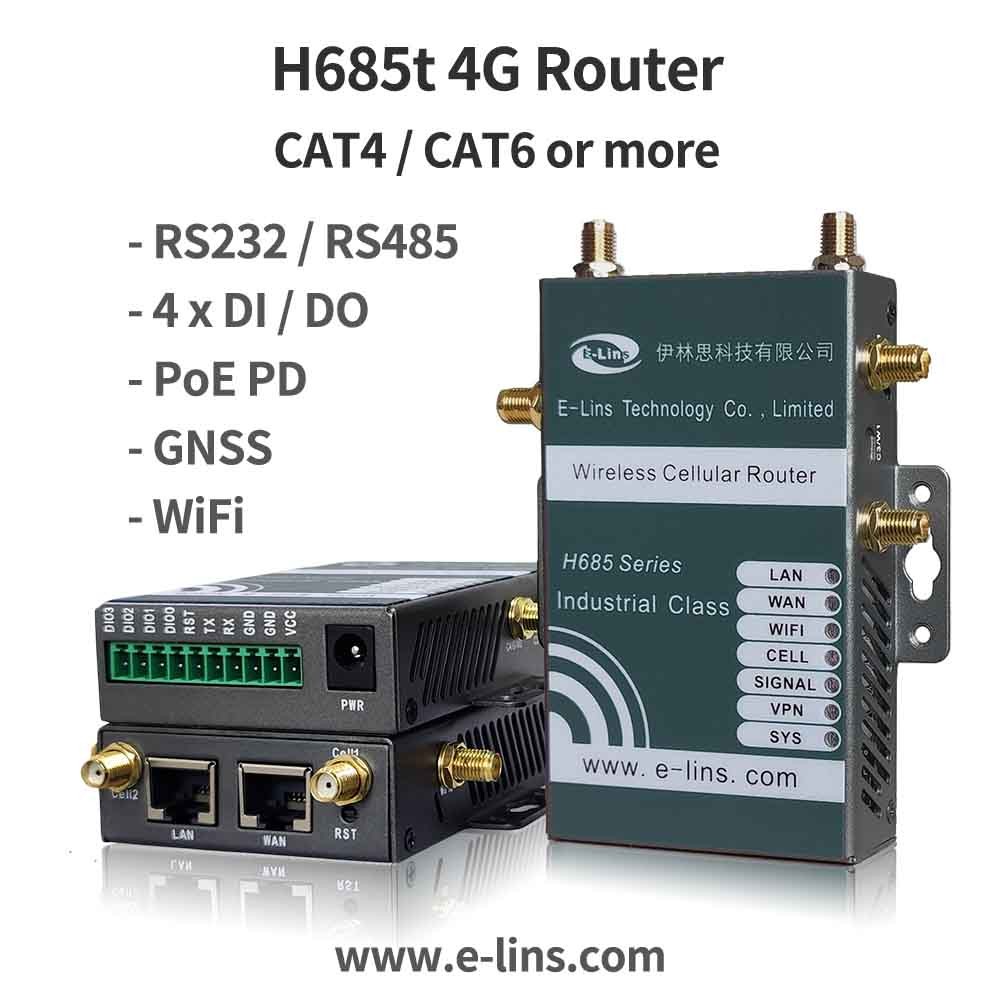
Behind every LTE-connected device is a highly sophisticated modem subsystem responsible for radio communication, signal processing, power optimization, mobility management, and security.
This article provides:
A deep technical breakdown of 4G modem architecture
Key LTE technologies and performance mechanisms
Engineering trade-offs in modem design
Typical deployment case studies across industries
Future outlook of LTE
2)A comprehensive FAQ section
1. LTE Standardization and Ecosystem Foundation
4G LTE was standardized by the 3rd Generation Partnership Project (3GPP). LTE began with Release 8 and evolved through:
Release 8 – Baseline LTE
Release 10 – LTE-Advanced
Release 13+ – LTE-Advanced Pro and IoT features
Unlike 3G networks, LTE is:
Fully packet-switched (All-IP)
Designed for high spectral efficiency
Optimized for broadband data
This architectural shift is what enables LTE modems to achieve both high throughput and relatively low latency.
2. 4G Modem Architecture: Inside the Silicon
A modern 4G modem is not a single block—it is a tightly integrated system composed of multiple subsystems.
2.1 High-Level Functional Blocks
A typical LTE modem contains:
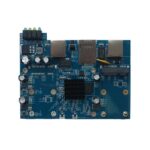
Baseband Processor
RF Transceiver
Power Management Unit (PMU)
RF Front-End (external components)
SIM Interface
Security Engine
Antenna Control Logic
2.2 Baseband Processor: The Digital Core
The baseband processor handles all digital signal processing tasks, including:
OFDMA modulation/demodulation
Channel estimation
Turbo decoding
HARQ (Hybrid Automatic Repeat Request)
Carrier aggregation management
MAC and RLC scheduling
LTE uses OFDMA in the downlink and SC-FDMA in the uplink. This allows efficient spectrum utilization and improved uplink power efficiency.
Baseband computation requires:
High-speed DSP cores
Hardware accelerators for Turbo decoding
Real-time scheduling engines
The processing must occur in microseconds to meet LTE timing constraints.
2.3 RF Transceiver: Analog-Digital Bridge
The RF transceiver converts:
Digital baseband signals → RF radio waves
RF radio waves → Digital baseband signals
Key requirements:
Multi-band support (700 MHz to 2.6 GHz and beyond)
FDD and TDD support
Low phase noise
High linearity
The RF stage strongly influences real-world throughput.
2.4 Power Management Engineering
One of LTE’s most impressive engineering achievements is its ability to deliver high throughput without destroying battery life.
Key power-saving techniques:
Discontinuous Reception (DRX)
The modem sleeps between network activity cycles.
Adaptive Transmit Power
Transmit power scales based on signal strength.
Envelope Tracking
Improves RF amplifier efficiency.
Idle Mode Optimization
Minimizes energy during network standby.
For IoT deployments, LTE-M devices can operate for 5–10 years on battery power.
3. LTE Categories and Performance Scaling
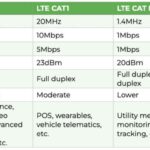
LTE categories define modem capability.
| Category | Downlink | Uplink | Typical Use Case |
| Cat 1 | 10 Mbps | 5 Mbps | IoT |
| Cat 4 | 150 Mbps | 50 Mbps | Smartphones |
| Cat 6 | 300 Mbps | 50 Mbps | Mid-range devices |
| Cat 12 | 600 Mbps | 100 Mbps | High-end LTE |
| Cat 18 | 1.2 Gbps | 150 Mbps | LTE-Advanced Pro |
Higher categories achieve gains through:
Carrier Aggregation (CA)
2×2 or 4×4 MIMO
256-QAM modulation
4. Key Technologies Enabling LTE Modem Performance
4.1 Carrier Aggregation (CA)
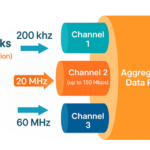
Carrier aggregation combines multiple spectrum blocks into one logical channel.
Example:
2 × 20 MHz carriers = 40 MHz total bandwidth
This increases throughput without requiring new spectrum.
4.2 MIMO (Multiple Input Multiple Output)
2×2 MIMO doubles spatial streams.
4×4 MIMO further increases spectral efficiency.
MIMO improves:
Data rates
Reliability
Signal robustness in urban environments
4.3 256-QAM
Higher-order modulation encodes more bits per symbol.
64-QAM → 6 bits/symbol
256-QAM → 8 bits/symbol
But higher QAM requires stronger signal quality.
4.4 Mobility and Handover
LTE modems must maintain connectivity while:
Moving at highway speeds
Transitioning between base stations
Switching between frequency bands
5. Real-World Deployment Case Studies
Case Study 1: Rural Broadband via LTE Router
In regions without fiber infrastructure, LTE routers provide fixed wireless access.
Deployment challenges:
Weak signal strength
Long-distance cell towers
Antenna optimization required
Solution:
Cat 6 LTE modem with 2x carrier aggregation
High-gain external antennas
Smart band selection
Result:
50–100 Mbps stable home broadband
Case Study 2: Smart Metering with LTE-M
Utility companies deploy millions of smart meters.
Requirements:
Long battery life (10+ years)
Deep indoor coverage
Low data usage
Solution:
LTE Cat-M1 modem
Power saving mode (PSM)
Narrow bandwidth operation
Benefits:
Reduced maintenance cost
Reliable meter reading
Nationwide coverage
Case Study 3: Automotive Telematics
Connected vehicles rely on LTE for:
Navigation updates
Emergency eCall services
Fleet tracking
Requirements:
Wide temperature tolerance (-40°C to 85°C)
High reliability
Long lifecycle (10–15 years)
LTE modems in automotive systems are designed for extended durability and multi-band global compatibility.
Case Study 4: POS Payment Terminals
Retail POS systems require:
Always-on connectivity
Secure transactions
Low data volume
LTE Cat 1 modems provide:
Sufficient bandwidth
Strong encryption
Lower cost compared to higher categories
6. Security Architecture in LTE Modems
LTE includes multiple security layers:
SIM-based authentication
Mutual network authentication
AES encryption
Integrity protection
Secure key exchange
Hardware security engines inside modems accelerate encryption operations.
7. Integration: Discrete vs Integrated LTE Modems
Integrated Modem (SoC-based)
Advantages:
Smaller footprint
Better power efficiency
Lower BOM cost
Used in:
Smartphones
Consumer electronics
Discrete LTE Modem
Advantages:
Flexible architecture
Independent upgrades
Easier certification in industrial design
Used in:
Routers
Industrial gateways
Automotive systems
8. Why 4G Modems Remain Relevant
Even with 5G deployment, LTE continues to dominate because:
Global coverage is mature
Infrastructure investment is complete
Device cost is lower
IoT does not require gigabit speeds
Many countries will maintain LTE beyond 2035
For many enterprise applications, LTE is the optimal balance between cost, reliability, and performance.
9. Future Outlook of LTE Modems
While peak innovation has slowed, LTE continues evolving in:
LTE-M
NB-IoT
Improved power efficiency
Enhanced carrier aggregation
Long-term industrial lifecycle support
4G and 5G will coexist for many years in hybrid network deployments.
3)FAQ – 4G Modem Deep Dive
1. Is 4G LTE still relevant in 2026?
Yes. LTE remains widely deployed and is critical for IoT, industrial systems, and rural connectivity.
2. What LTE category should I choose?
It depends on your speed requirements and power constraints. IoT devices often use Cat 1 or Cat-M1, while routers may require Cat 6 or higher.
3. How does carrier aggregation improve speed?
It combines multiple frequency blocks into one logical data channel, increasing bandwidth.
4. Is LTE secure for financial transactions?
Yes. LTE includes encryption, SIM authentication, and secure key management mechanisms.
5. Can LTE support HD video streaming?
Absolutely. Cat 4 and above can handle HD streaming easily under good signal conditions.
6. What determines real-world LTE speed?
Factors include:
Signal strength
Network congestion
Number of aggregated carriers
Device antenna design
Modem category
7. How long will LTE networks operate?
Most analysts expect LTE to remain active well into the 2030s, especially for IoT and industrial use.
Conclusion
The 4G modem is one of the most refined and globally deployed communication technologies ever developed. While attention has shifted toward 5G, LTE continues to power billions of devices across industries.
From high-speed consumer routers to decade-long IoT deployments, the 4G modem represents a perfect blend of:
Technical maturity
Global scalability
Cost efficiency
Proven reliability
For many applications today, LTE is not just “good enough”—it is the optimal solution.
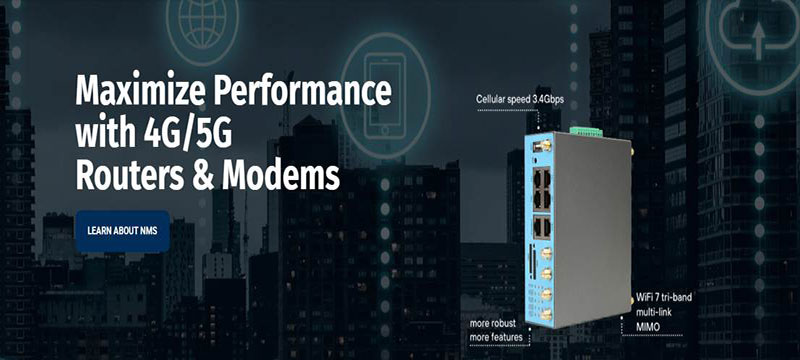
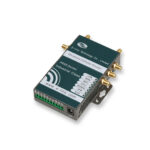
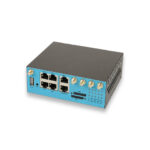
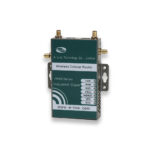
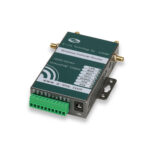
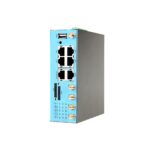
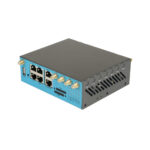
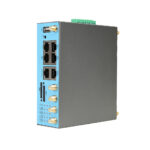
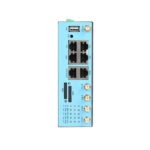
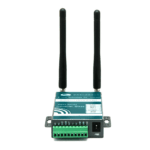
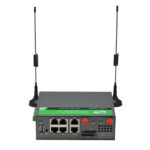
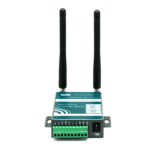
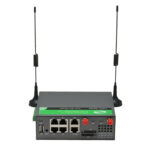
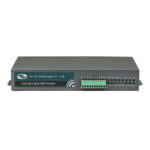
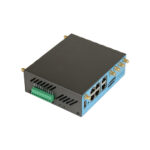
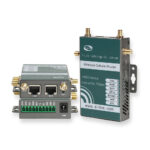
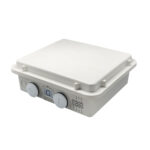
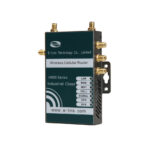
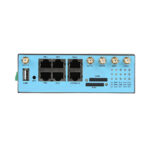
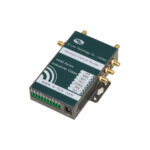
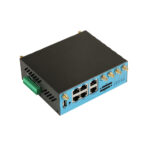
Are you source a 4G Modem? E-Lins will be a good choice for you, please do not hestitate to contact with E-Lins for more details.