


































































E-Lins vs Teltonika Industrial Routers: Which One Is Right for Your IoT Project?
I have spent a significant part of the last several years in a product testing lab and on job sites in four continents, evaluating industrial routers for clients ranging from smart city integrators to oil field automation engineers. The question “which brand should we use?” comes up on almost every project kickoff call — and more often than not, two names are on the table: Teltonika and E-Lins. Both are serious industrial manufacturers. Both have earned their reputations in demanding deployments. But they make different trade-offs, and the right choice between them depends almost entirely on what your specific project actually requires. This guide is the one I wish had existed when I started doing these comparisons from scratch.
Why This Comparison Matters — and What Most Buyer Guides Get Wrong
When someone types E-Lins vs Teltonika into a search engine, they are usually trying to answer one of two questions: “I already know Teltonika — is E-Lins a credible alternative?” or “I’m starting from scratch — which of these two directions is right for my project?” Both are valid questions, and I have been asked some version of both dozens of times by integrators, procurement teams, and OT engineers.
The comparison guides that already exist on the internet tend to treat this as a spec sheet exercise — list the rows, tick the boxes, declare a winner. In my experience, that approach almost always misleads the buyer, because the differences that actually matter are not the ones that fit neatly into a comparison table. They are things like: how the router behaves at −30°C after six months in a field cabinet, whether the management platform works for a team that does not have a Linux engineer on staff, whether the 5G model will connect to a specific carrier’s SA network in a specific country, and whether the vendor’s support team can answer a protocol-level serial integration question at 2 AM when a deployment is going wrong.
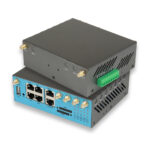
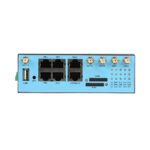
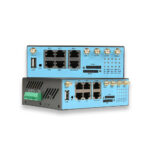
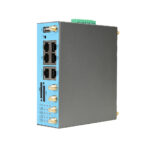
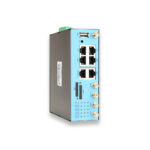
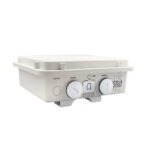
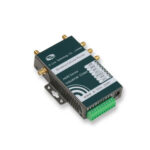
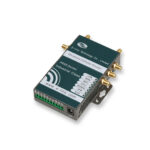
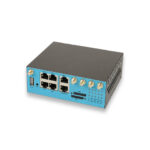
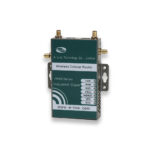
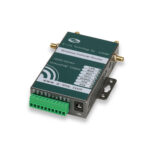
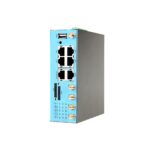
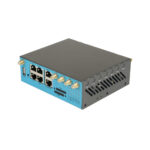
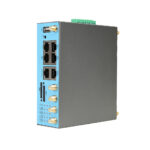
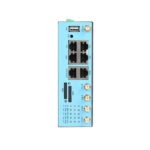
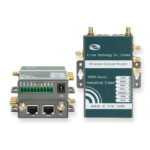
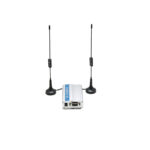
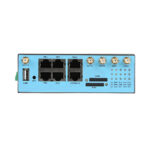
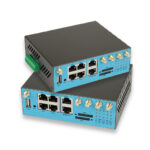
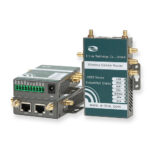
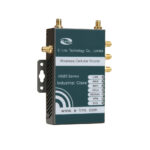
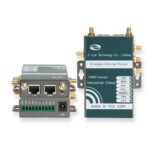
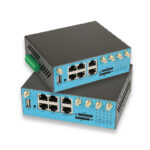
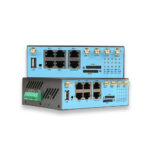
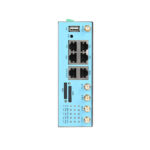
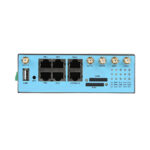
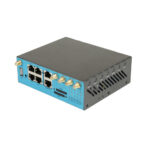
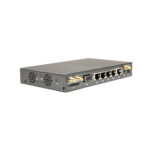
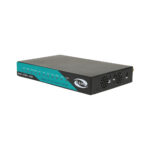
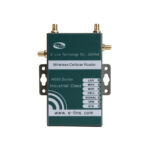
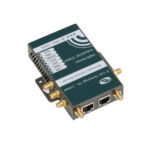
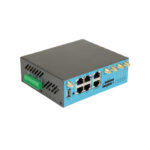
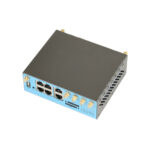
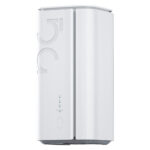
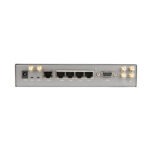
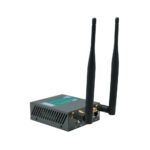
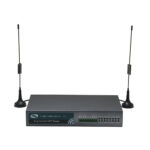
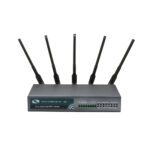
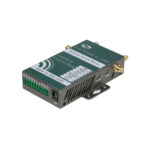
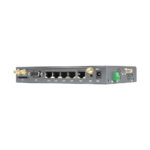
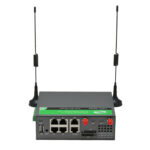
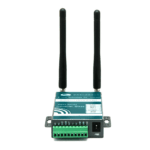
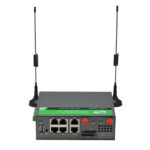
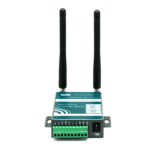
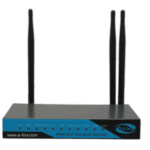
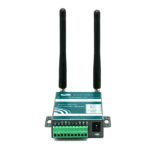
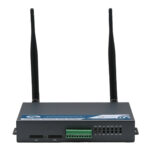
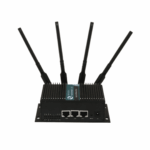
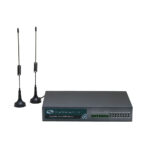
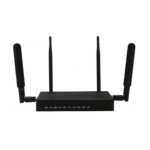
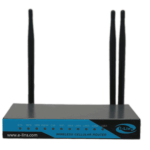
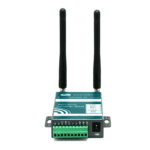
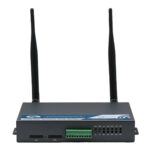
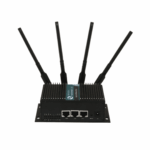
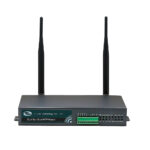
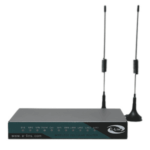
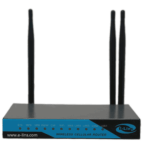
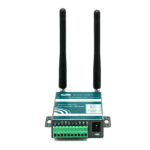
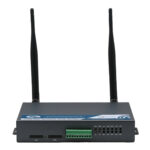
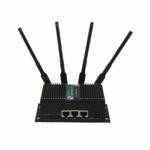
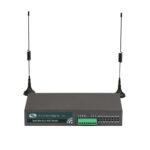
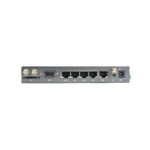
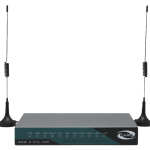
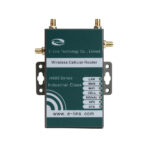
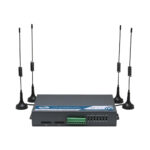
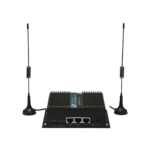
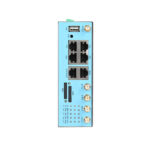
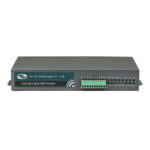
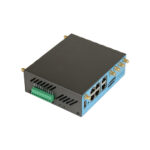
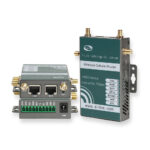
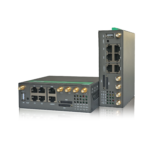
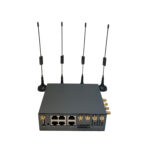
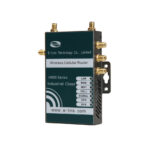
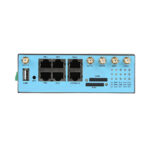
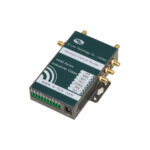
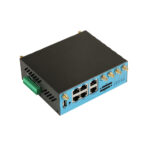
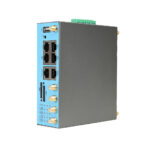
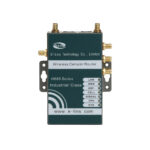
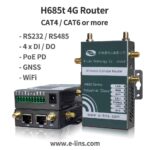
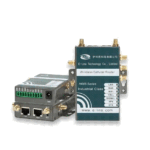
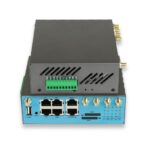
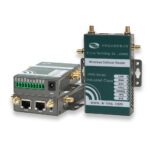
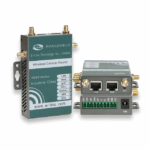
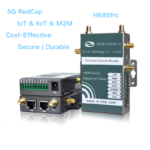
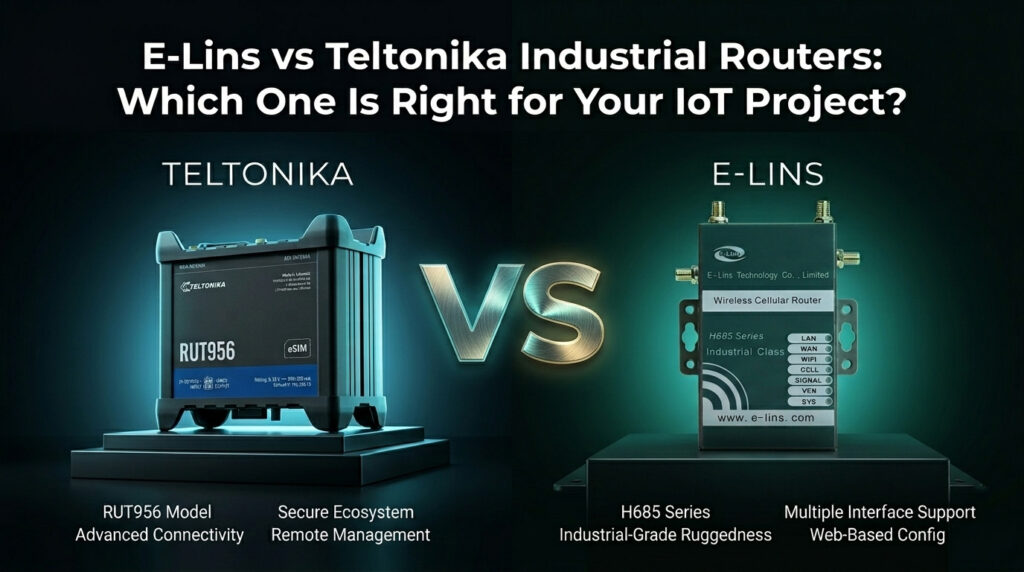
So I am going to do both things here: give you the detailed spec comparison table that you need for procurement documentation, and explain the context around each row that a table alone cannot convey. We will compare Teltonika’s three most commonly specified models — the RUT241 (compact 4G LTE), the RUT956 (4G with serial/IO), and the RUTX50 (5G flagship) — against E-Lins’ H685f (compact 5G with full security stack) and H900frc (5G RedCap IoT router). These are the five models I am asked about most frequently in cross-brand evaluation contexts.
Disclosure: I work with the E-Lins applications engineering team and have done extensive hands-on evaluation of E-Lins products. I have also deployed and evaluated Teltonika devices on client projects. This comparison is as objective as I can make it — I will tell you where Teltonika’s ecosystem has genuine strengths, and I will tell you where E-Lins has clear advantages. Neither company serves every use case equally well, and pretending otherwise would be a disservice to the engineers reading this.
Project Requirements Checklist: Answer These Before Comparing Brands
Before you read another word of this comparison, work through these questions. Your answers will make the brand decision significantly less ambiguous — in many cases, they will make it obvious before you even look at a spec sheet.
- Do you need 5G, or will 4G LTE serve the application? If 4G is sufficient, the comparison narrows dramatically and cost-per-unit becomes the primary differentiator.
- Do you need RS232 or RS485 serial ports to integrate legacy field devices? Not all models in either lineup include these — confirm before shortlisting.
- Is RADIUS/TACACS+ centralized authentication a requirement — for compliance or for multi-technician credential management at scale? This is a meaningful differentiator between platforms.
- What is your team’s Linux and networking expertise? The management platforms differ significantly in their interface philosophy, and the right choice depends on who will be operating the devices day-to-day.
- Is the deployment on a private 5G network, a public carrier network, or both? Private network compatibility and RedCap support may tip the decision before anything else.
- What is the operating temperature range of the installation environment? Both manufacturers claim wide ranges, but verify the specific model’s rating against your worst-case condition.
- How many nodes will you manage, and do you have an existing TR-069 ACS or cloud NMS infrastructure? Management platform ecosystem lock-in is a real consideration at scale.
- What are the power supply conditions at the installation? Wide-voltage input range and PoE options differ between models in ways that matter for field integration.
Understanding the Two Manufacturers: Where They Come From and What They Prioritize
Teltonika Networks — The European IoT Ecosystem Builder
Teltonika Networks is a Lithuanian company that has built one of the most recognizable industrial router brands in Europe and increasingly globally, primarily on the strength of its RutOS software platform and its Remote Management System (RMS). The RUT series — particularly the RUT950/RUT955 and their successors — became widely deployed in fleet management, energy metering, and field automation because they combined reliable hardware with an OpenWrt-based firmware that a sufficiently skilled integrator could extend and customize significantly.
What Teltonika does particularly well is ecosystem depth. The RMS platform has genuine enterprise management capability, the RutOS wiki documentation is among the most comprehensive in the industrial router industry, and the active community forum means that almost any integration challenge someone has encountered has a documented solution. For integrators building repeatable solutions on a well-understood platform, the Teltonika ecosystem is genuinely valuable. Teltonika RutOS industrial router ecosystem for IoT integrators has earned its reputation through years of deployment experience and documentation investment.
The trade-offs are also real. The RMS is a subscription-based management platform — RMS credits are consumed for device management, which adds a recurring cost per device that compounds at scale. The RUTX50 5G flagship, while capable, carries the price premium typical of a European-branded industrial device with an established ecosystem. And while RutOS’s flexibility is a strength for skilled engineers, it can be a steeper learning curve for teams that want a more approachable management interface.
E-Lins Technology — The China-Based OEM Platform with Enterprise Security
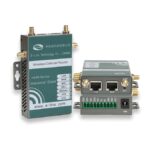
E-Lins is a Shenzhen-based manufacturer with a different commercial positioning: a broad lineup of industrial routers built around an enterprise security and management feature set that is unusually complete for the price tier. The H685f and H900frc represent two of their most frequently specified models for new deployments, and they share a platform that includes RADIUS/TACACS+ centralized authentication, 802.1x port security, zone-based object firewall, the full VPN suite, and cloud NMS management at no recurring per-device license fee.
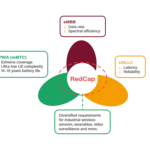
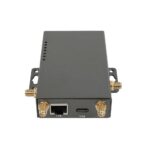
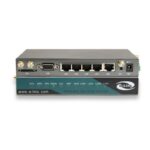
Where E-Lins competes most directly with Teltonika is in the combination of 5G capability, hardware interface completeness (serial, DI/DO, PoE), and security stack depth at a price point that is typically lower than equivalent Teltonika models. The H685f’s form factor — super-mini, suitable for OEM embedding in third-party products — is a specific design advantage for integrators building connected equipment rather than installing standalone routers. And the H900frc’s 5G RedCap capability addresses the cost-per-node problem in large-scale private 5G deployments in a way that the current Teltonika lineup does not have a direct equivalent for.
The honest trade-off on the E-Lins side is ecosystem maturity. The RMS is a well-established platform with years of integrator investment behind it; E-Lins’ NMS is a capable cloud management tool but does not yet have the same depth of community documentation and third-party integration examples. For projects where the management platform’s feature depth is less critical than per-unit hardware cost and connectivity specification, that trade-off is entirely acceptable. For projects where the management platform is as important as the hardware, it deserves more scrutiny.
“I’ve spec’d Teltonika on projects where the integrator had RMS already deployed and wanted to add units to an existing managed fleet — the ecosystem lock-in argument is legitimate there. I’ve spec’d E-Lins on projects where the RADIUS/TACACS+ authentication requirement was non-negotiable, the budget was fixed, and the team did not need an OpenWrt development environment. In my experience, the project parameters usually make the choice clearer than any general-purpose brand comparison does.”
— E-Lins Application Engineering, on cross-brand evaluation methodologySix Dimensions Where the Choice Between E-Lins and Teltonika Actually Turns
1. Cellular Generation: 5G vs 4G — and Which Models Actually Deliver It
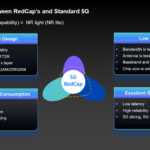
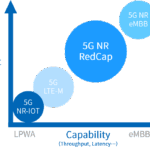
This is the comparison dimension where the model selection within each brand matters more than the brand itself. Teltonika’s RUT241 and RUT956 are 4G LTE devices — solid performers at LTE Cat 4 and Cat 4 respectively, but not 5G. The RUTX50 is Teltonika’s 5G flagship, capable of 5G Sub-6 GHz SA/NSA with up to 3.3 Gbps peak downlink — genuinely impressive headline numbers. The E-Lins H685f is a 5G SA/NSA device with 4G fallback. The H900frc is a 5G RedCap (NR-Light, Release 17) device. 5G RedCap vs full 5G industrial router comparison is a meaningful choice that I cover in depth elsewhere — the short version is that RedCap is not a compromise for IoT applications whose data rates fall well within its ~150 Mbps ceiling, and its lower power draw and module cost matter for large-scale deployments.
In practical terms for a project evaluation: if you need 5G and are comparing on that basis, you are comparing the RUTX50 against the H685f or H900frc — not against the RUT241 or RUT956. Those are different conversations for different project requirements.
2. Security Stack: Where the Difference Is Structural, Not Just a Feature List
Both platforms have firewalls. Both support VPN. Both have access control. But the depth of the security stack differs in ways that matter for OT environments and compliance-driven deployments. The E-Lins platform — across H685f and H900frc — includes RADIUS and TACACS+ centralized authentication with full accounting, 802.1x port-level access control, and a zone-based object firewall that organises policy around named network zones rather than individual IP addresses. This combination maps directly to IEC 62443 SL-2 access control and audit requirements in a way that reduces the compliance configuration burden for deployments in regulated industries.
Teltonika’s RutOS includes RADIUS authentication, TACACS+, and a strong stateful firewall. The RUT956 datasheet specifically lists TACACS+ and RADIUS as supported features. What differs is the firewall architecture: RutOS uses the OpenWrt iptables/nftables framework, which is extremely powerful for engineers comfortable with it, but does not present the same zone-based policy abstraction that makes E-Lins’ firewall more approachable for teams who are not Linux networking experts. Neither approach is wrong — they reflect different user skill level assumptions.
In a controlled evaluation for a water utility deployment requiring centralized RADIUS authentication across 45 field routers, I compared the configuration workflow for RADIUS setup on RutOS (RUT956) versus the E-Lins H685f. On RutOS, RADIUS configuration requires navigating to the System → Administration section and configuring RADIUS server parameters in the authentication module — achievable but requiring familiarity with OpenWrt’s configuration structure. On the H685f, the same configuration is completed in the Security → AAA section with a straightforward form interface. Both achieved the same outcome. Configuration time per device in the hands of a technician unfamiliar with either platform: approximately 12 minutes on RutOS, approximately 6 minutes on H685f. Across 45 devices, that differential is meaningful in commissioning labor cost.
3. Hardware Interfaces: Serial, DI/DO, and PoE — Who Has What
This is where model selection within Teltonika’s lineup matters significantly. The RUT241 has a single digital input/output but no serial interface — it is designed for connectivity, not deep field device integration. The RUT956 steps up considerably: it includes RS232/RS485 serial, 4 digital I/O, and GNSS — making it the right Teltonika model for legacy PLC integration and field automation. The RUTX50 has a single digital input/output but no RS232/RS485 serial — a surprising omission at its price point that catches people off guard when they assume the flagship model includes everything the mid-range model offers.
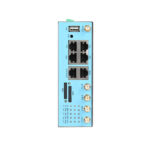
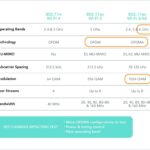
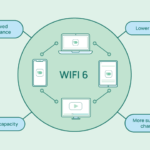
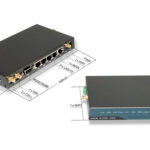
The E-Lins H685f includes RS232/RS485, DI/DO, and PoE In — and in its Wi-Fi 6 variant, adds dual-band 802.11ax for dense device environments. The H900frc’s interface configuration varies by build option. Industrial IoT router with RS232 RS485 serial port and DI/DO is a specific requirement for retrofit connectivity projects that the RUT956 and H685f both address well, and the RUTX50 does not.
4. Management Platform: RMS Credits vs NMS Subscription Model
Teltonika RMS is a well-engineered remote management platform with strong real-world adoption. It operates on a credit system: managing a device consumes RMS credits, which are purchased in bundles. For a small fleet of ten devices, the RMS credit cost is negligible. For a deployment of 200 field routers managed continuously over three years, the credit cost is a line item worth calculating before the project is scoped. RMS also offers strong features that integrators value: remote console access (RMS Connect), FOTA, device grouping, and configuration templates.
E-Lins’ cloud NMS is included at no recurring per-device license fee — the management platform is part of the product rather than a separately priced service. It supports multi-site monitoring, firmware OTA updates, cell signal status viewing, batch configuration push, and uptime alerting. New upgrades include visual statistics charts for module status and router online duration, device registration management, and access permission control, alongside multiple minor experience optimizations. A secure tunnel link is established between the cloud platform and routers, enabling one-click access to the router’s native web UI and SSH terminal without requiring public IPs on field devices. It does not yet carry the full extended remote operation toolkit (session recording, independent port forwarding, remote file transmission, etc.) featured in RMS Connect-style platforms.
For projects with existing RMS deployments where adding E-Lins devices would mean running two management platforms in parallel — that is a legitimate argument for staying with Teltonika on that project. For greenfield deployments where no management platform preference exists, the absence of a per-device recurring license fee on the E-Lins side is a meaningful long-term cost consideration.
5. Power Input: Wide Voltage, PoE, and Dual Input Failover
Both manufacturers specify wide-voltage DC inputs that suit industrial power environments. The RUTX50 accepts 9–50 V DC and also offers passive PoE input via LAN1 (Mode B, 9–30 V, explicitly not compatible with IEEE 802.3af/at standards). That last point matters in practice: passive PoE is not the same as standard PoE. You cannot power the RUTX50 from a standard 802.3af/at PoE switch without a passive injector configured to the correct voltage. The E-Lins H685f accepts 5–40 V DC (60 V option) with dual power inputs and automatic failover between them, and the PoE input on the Wi-Fi 6 variant is compliant with IEEE 802.3af/at — meaning it works with any standard PoE switch without additional hardware.
For outdoor and pole-mount applications where a standard PoE switch at street level powers devices at height, the IEEE 802.3af/at compliance difference is practically significant. For panel-mounted industrial cabinet installations powered from a DC rail, it is irrelevant. Know your power delivery architecture before treating the PoE spec as a checkbox.
6. OEM and Custom Deployment: Form Factor, Branding, and Firmware
E-Lins explicitly supports OEM and ODM customization — firmware branding, hardware modification, and custom enclosure options for manufacturers integrating cellular connectivity into their own products. The H685f’s super-mini form factor is one of the smallest in the industrial 5G router category, which is specifically relevant for OEM embedding. Teltonika does not publish an OEM/ODM program in the same explicit terms, though its hardware is widely integrated by system builders. For manufacturers who need to present a router with their own brand, firmware, and custom configuration, E-Lins’ OEM capability is a meaningful differentiator.
Detailed Specification Comparison: E-Lins H685f & H900frc vs Teltonika RUT241, RUT956 & RUTX50
The table below reflects publicly available specifications from manufacturer datasheets and product pages, verified as of 2024–2025. I have added notes where spec sheet claims require real-world context to be meaningful.
| Spec | E-Lins H685f 5G Compact |
E-Lins H900frc 5G RedCap IoT |
Teltonika RUT241 4G LTE Compact |
Teltonika RUT956 4G LTE + IO/Serial |
Teltonika RUTX50 5G Flagship |
|---|---|---|---|---|---|
| Cellular Generation | 5G SA/NSA+ 4G/3G/2G fallback | 5G RedCap (NR-Light)3GPP Rel.17; ~150 Mbps DL | 4G LTE Cat 4150 Mbps DL / 50 Mbps UL | 4G LTE Cat 4150 Mbps DL / 50 Mbps UL + GNSS | 5G Sub-6 GHz SA/NSAUp to 3.3 Gbps DL (4×4 MIMO) |
| 4G LTE Fallback |
Yes — LTE FDD/TDD, 3G, 2G |
Yes — LTE Cat fallback | Native — LTE Cat 4 | Native — LTE Cat 4 | LTE Cat 20 fallbackUp to 2.0 Gbps DL |
| SIM Slots | Single SIM | Single SIMIoT endpoint model | Single SIMeSIM version available (RUT241 eSIM) | Dual SIMAuto-failover + load balance | Dual SIM + eSIMUp to 7 eSIM profiles + 2 physical SIMs |
| WAN Redundancy |
Cellular + Ethernet WAN + Wi-Fi WANThree-line failover |
Cellular primary+ Ethernet WAN option | Cellular + Ethernet WAN | Cellular + Ethernet WANWi-Fi WAN via STA mode | Cellular + Ethernet WAN + Wi-Fi WANFull three-path failover |
| Ethernet Ports |
2× Gigabit (WAN + LAN) |
Gigabit LAN/WAN | 2× 10/100 MbpsNot Gigabit | 4× 10/100 MbpsNot Gigabit | 5× Gigabit1× WAN + 4× LAN |
| Wi-Fi | Wi-Fi 6 (802.11ax) dual-bandWi-Fi 6 variant; standard variant also available |
OptionalIoT endpoint focus | 802.11b/g/n (Wi-Fi 4)2.4 GHz only, up to 300 Mbps | 802.11b/g/n (Wi-Fi 4)2.4 GHz only, up to 300 Mbps | 802.11ac Wave 2 (Wi-Fi 5)Dual band, up to 867 Mbps, MU-MIMO |
| Serial Interface |
RS232 / RS485Serial-to-IP tunneling; Modbus RTU bridge | Build optionVaries by configuration | — (none) | RS232 + RS485Modbus RTU, DNP3, transparent mode | — (none)Absent on 5G flagship; USB-to-serial adapter workaround |
| Digital I/O | 4× DI/DO | Build option | 1× DI, 1× DOVia 4-pin power connector | 4× configurable DI/DOFull IO for field automation | 1× DI, 1× DOVia 4-pin power connector; limited vs RUT956 |
| GNSS / GPS | OptionalGPS/GLONASS/BeiDou add-on | Optional | — | Built-inGPS, GLONASS, BeiDou, Galileo | Built-inGPS, GLONASS, BeiDou, Galileo, QZSS |
| Power Input | 5–40 V DC (60 V option)Dual input + auto-failover; IEEE 802.3af/ at PoE PD option |
DC inputWide voltage range | 9–30 V DCPSU included; passive PoE option | 9–30 V DCPSU included; passive PoE option | 9–50 V DCPassive PoE via LAN1 (Mode B, NOT IEEE 802.3af/at) |
| PoE | PoE In 802.3af/ at (PD)Standard-compliant; works with any PoE switch |
IEEE 802.3af/at PoE (PD)Standard feature on this model | Passive PoE In optionVaries by SKU | Passive PoE In optionNon-standard voltage | Passive PoE via LAN1NOT 802.3af/at compatible — requires passive injector |
| Operating Temp |
−35°C to +75°C | −35°C to +75°C | −40°C to +75°C | −40°C to +75°C | −40°C to +75°C |
| Authn | RADIUS + TACACS+ + 802.1xFull AAA with accounting; zone-based firewall |
RADIUS + TACACS+ + 802.1x | RADIUSVia RutOS; limited TACACS+ depth | RADIUS + TACACS+RutOS-based; X.509 certs supported | RADIUS + TACACS+RutOS-based; X.509 certs supported |
| Firewall | Zone-based object firewallIP/FQDN/MAC objects; per-client filtering |
Zone-based object firewall | Stateful SPI + iptablesRutOS-based; powerful but CLI-heavy | Stateful SPI + iptablesDDoS prevention, port scan prevention | Stateful SPI + iptablesSame RutOS firewall framework |
| VPN Protocols |
IPsec, L2TP, GRE, OpenVPN, WireGuard, DMVPN, ZeroTier, EoIP |
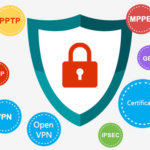
IPsec, L2TP, GRE, OpenVPN, WireGuard, DMVPN, ZeroTier | OpenVPN, IPsec, WireGuard, ZeroTier, PPTP, L2TP | OpenVPN, IPsec, WireGuard, ZeroTier, PPTP, L2TP, DMVPN, SSTP | OpenVPN, IPsec, WireGuard, ZeroTier, PPTP, L2TP, DMVPN, SSTP, Tinc, Tailscale |
| Industrial Protocols |
Modbus TCP/RTU bridgeVia serial port; MQTT, SNMP | MQTT, SNMP | Modbus TCP, MQTT broker/client, SNMP | Modbus TCP+RTU, DNP3, MQTT, SNMP, OPC UA | Modbus TCP, MQTT, SNMP, OPC UA, DNP3, DLMS/COSEM |
| Routing Protocols |
OSPF, BGP, RIP, VRRP |
OSPF, BGP, RIP, VRRP | BGP, OSPF, RIP, policy routing | BGP, OSPF, RIP, EIGRP, NHRP, policy routing | BGP, OSPF v2, RIP, EIGRP, NHRP, policy routing |
| Remote Management |
E-Lins NMS (no per-device fee)+ TR-069, SNMP v1/v2c/v3, SMS, Web, SSH |
E-Lins NMS + TR-069, SNMP, SMS | Teltonika RMSCredit-based subscription per device; strong feature set | Teltonika RMSCredit-based; includes RMS Connect remote console | Teltonika RMSCredit-based; FOTA, device groups, templates |
| OEM / ODM | SupportedFirmware branding, custom hardware config |
Supported | Not published | Not published | Not published |
| Form Factor / Size |
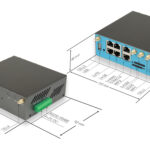
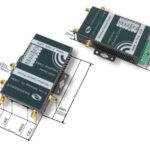
Super-mini (100×60×21 mm)Suitable for OEM embedding |
Compact IoT endpoint | Compact (93×65×24 mm) | Standard (124×95×28 mm) | Standard (132×95×44 mm) |
| Mounting | DIN-rail, Wall, Desktop |
DIN-rail, Wall, Desktop | DIN-rail, Wall | DIN-rail, Wall | DIN-rail, Wall, Flat surface |
| Enclosure | Alloy metal, IP30 |
Metal, IP30 | Plastic, IP30 | Plastic, IP30 | Aluminium, IP30 |
| Typical Price Positioning |
Mid-rangeLower than equivalent Teltonika 5G |
Lower per-unit costRedCap module cost advantage | Entry-levelCompetitive on 4G price | Mid-rangeStrong value at 4G with IO | Premium5G flagship pricing; add RMS credits for TCO |
* Specifications sourced from manufacturer datasheets and product pages, 2024–2025. Always verify with the specific SKU before procurement, as configurations vary within each model family.
Project Selection Guide: Which Router for Which Situation
Choose E-Lins H685f When…
- 5G SA/NSA is a requirement and the RUTX50’s price point is above the project’s per-unit budget.
- RADIUS/TACACS+ centralized authentication with accounting is a compliance requirement, and the team wants a straightforward configuration interface rather than an OpenWrt CLI workflow.
- The deployment requires a zone-based object firewall that maps to IEC 62443 zone architecture without requiring expert firewall rule writing.
- The form factor needs to fit inside an AGV electronics bay, an OEM product enclosure, or a compact field cabinet where 100×60 mm matters.
- The project involves RS232/RS485 serial integration with legacy PLCs alongside 5G cellular backhaul in a single compact device.
- There is no existing Teltonika RMS deployment that would create management platform fragmentation by introducing a different brand.
Choose E-Lins H900frc When…
- The deployment is on a private 5G network where per-device module cost matters at scale, and most endpoints are IoT sensors or low-to-moderate data rate devices.
- 5G core network integration — network slicing, 5G QoS — is needed but sustained throughput above 150 Mbps is not a requirement.
- Battery power or PoE-constrained power budgets make cellular modem power draw a meaningful variable.
- The project is deploying at scale — 50+ nodes — where per-unit cost differences compound to a significant budget variable.
- The same enterprise security stack (RADIUS, 802.1x, zone-based firewall) is required on IoT endpoint devices, not just gateway routers.
Choose Teltonika RUT956 When…
- 4G LTE performance is sufficient for the application, and the project benefits from Teltonika’s mature ecosystem documentation and community support.
- The deployment requires RS232/RS485 serial and 4× DI/DO and built-in GNSS — the RUT956 uniquely combines all three in the Teltonika lineup.
- The integrator team has existing RutOS expertise and an active RMS subscription that would benefit from adding units to an existing managed fleet.
- The application uses DNP3 or OPC UA protocols at the router level — RutOS’s native industrial protocol stack is deeper than most competing platforms.
- The project is in a region where Teltonika’s carrier certification coverage is specifically confirmed and E-Lins’ carrier certifications have not been verified.
Choose Teltonika RUTX50 When…
- 5G with maximum throughput headroom (up to 3.3 Gbps peak) is a genuine requirement — for multi-camera video aggregation, high-frequency data acquisition, or real-time industrial automation demanding the absolute ceiling.
- The deployment needs eSIM + dual physical SIM + 5G in a single device for maximum carrier flexibility across geographies.
- Built-in GNSS is required on the 5G device — the RUTX50 includes it; the H685f requires it as an option.
- Five Gigabit Ethernet ports are needed for connecting multiple LAN devices without an additional switch at the installation.
- The project’s management model already uses Teltonika RMS at scale and adding a different management platform would create operational overhead.
Three Real Project Experiences That Shaped My Thinking on This Comparison
A regional water utility was replacing aging 3G routers across 45 pump stations and water treatment sites. The specification requirements were: 4G LTE with failover, RS232 for legacy SCADA RTU integration, centralized authentication (a new compliance requirement following a security audit), and remote firmware management. The initial shortlist included the Teltonika RUT956 and the E-Lins H685f.
Both models met the connectivity and serial port requirements. The deciding factor came down to the authentication workflow. The utility’s IT team — competent but not Linux specialists — needed to configure RADIUS authentication on 45 devices. We ran a parallel configuration test: a junior IT technician with the same 30-minute orientation on each platform, configuring RADIUS authentication plus basic firewall rules. On RutOS (RUT956), the technician took an average of 14 minutes per device across five test units. On the H685f, average time was 7 minutes. Across 45 units, that differential represented approximately 5.25 hours of commissioning labor saved. The utility chose the H685f. Eighteen months later, the fleet is running without a single authentication-related support incident.
A logistics company was retrofitting 4G connectivity onto a mixed-age truck fleet — vehicles ranging from 2 to 11 years old — to feed a new fleet management and route optimization platform. The requirement was simple on the surface: 4G cellular, GNSS, DIN-rail or bracket mount, −40°C cold-start capability. The integrator had an existing Teltonika RMS deployment managing a separate customer’s fleet, and strongly preferred to avoid a second management platform.
The RUT956 was the natural choice here. While the E-Lins H685f also supports an optional GNSS module, deploying a separate second management platform would generate extra operational workload, and the integrator’s technical support team lacked sufficient manpower to maintain this dual-system maintenance architecture. This was a Teltonika project, and the right one. I specify both brands — the goal is to match the project requirements, not to advocate for one vendor.
A German automotive supplier was deploying a private 5G campus network across a production facility, connecting AGVs, fixed sensors, and process monitoring equipment. The network team had selected a private 5G infrastructure vendor; the device selection was open. The RUTX50 was on the initial shortlist due to its 5G capability and the team’s Teltonika familiarity. The H900frc entered the evaluation based on its 5G RedCap specification, which the private 5G infrastructure vendor confirmed was supported on their core network configuration.
The device count at full build-out was projected at 200 endpoints. At full 5G module pricing, the RUTX50 carried a per-unit cost that made the 200-unit fleet significantly more expensive than the same fleet using H900frc units. The management platform question was resolved by the private network infrastructure vendor having its own device management capability. The H900frc’s 5G RedCap specification was sufficient for the factory’s data rates — no endpoint needed more than 40 Mbps sustained throughput. The project deployed H900frc for the sensor and AGV endpoints, with two H685f units serving as gateway routers for zones requiring RS232 serial legacy device integration. Total project cost was approximately 28% lower than the equivalent all-RUTX50 configuration, with equivalent connectivity performance for the actual application data rates.
Use-Case Fit: Which Router Belongs in Which Application

SCADA / PLC Remote Monitoring
RS232/RS485 serial, DI/DO, and reliable 4G/5G backhaul. Both models fit. H685f wins on security stack depth; RUT956 wins if GNSS and existing RMS are requirements.

AGV / AMR Onboard Router
Super-mini form factor, 5G + Wi-Fi 6, wide-voltage DC, RS232 for legacy navigation controllers. H685f Wi-Fi 6 variant is purpose-built for this. No Teltonika equivalent at this form factor with 5G + Wi-Fi 6.

Private 5G Campus IoT
5G RedCap endpoint for private network deployments. Lower module cost at scale, 5G core integration, power efficiency. No direct Teltonika RedCap equivalent in the standard lineup.

Vehicle Fleet Telematics
Built-in GNSS, wide-temperature, RMS fleet management. RUT956 for 4G fleets with existing RMS. RUTX50 for 5G high-throughput vehicles. Teltonika’s GNSS integration and RMS are genuine strengths here.

High-Throughput 5G Applications
Up to 3.3 Gbps peak, LTE Cat 20 fallback, 5× Gigabit Ethernet. For multi-camera 4K video aggregation, high-frequency data acquisition, or applications that genuinely need the 5G throughput ceiling.

OEM Embedded Connectivity
Super-mini form factor, OEM/ODM customization, 5G SA/NSA, EN 18031 certified. For manufacturers building connected products who need 5G cellular as an embedded component with custom firmware and branding.
Common Mistakes in E-Lins vs Teltonika Evaluations
Comparing the RUT956’s IO Features to the RUTX50’s Flagship Status
I see this regularly in competitive evaluations: someone assumes the RUTX50 must have everything the RUT956 has, because it is Teltonika’s flagship model. In fact, the RUTX50 has one DI and one DO, compared to the RUT956’s four configurable DI/DO ports. And the RUTX50 has no RS232/RS485 serial interface — the RUT956 does. The 5G flagship is optimised for connectivity performance, not field IO integration. If your application needs serial and four IO ports, and also needs 5G, the Teltonika product that ticks all boxes does not currently exist — which creates an opening for the H685f that teams sometimes miss because they assumed the flagship covers everything.
Ignoring the RMS Credit Cost in the 3-Year TCO Calculation
RMS credits are often overlooked in initial procurement budgeting because the per-device per-month cost is modest at small scale. At a fleet of 50 managed devices over three years, the RMS subscription cost accumulates to a meaningful line item. At 200 devices over five years, it is a project-level budget consideration. I am not arguing that RMS is not worth the cost — for many deployments it clearly is, because the feature depth and ecosystem maturity save more in operational effort than the credits cost. But it needs to be in the calculation, not left out until someone asks “why is our opex higher than projected?”
Assuming E-Lins Is Only for Low-Budget Deployments
The perception that Chinese-manufactured industrial routers occupy only the budget tier persists in some procurement environments, particularly in European markets where Teltonika has stronger brand recognition. The H685f’s RADIUS/TACACS+/802.1x/zone-based firewall security stack is not a budget feature — it is a capability that exceeds what many “premium” European-branded routers offer at comparable price points. Evaluating E-Lins on security and management depth rather than country of manufacture produces a more accurate comparison than price tier alone.
Making a Brand-Level Decision Instead of a Model-Level Decision
The most common mistake in this comparison is the most basic one: choosing “Teltonika” or “E-Lins” as if both manufacturers produce homogeneous product lines. The RUT241 and the RUTX50 are dramatically different devices for dramatically different applications. The H685f and H900frc are different in the same way. Industrial cellular router selection for IoT projects should always start at the model level — what specific interfaces, protocols, connectivity standards, and management requirements does this project have? — before the brand decision follows from the answer.
Frequently Asked Questions
Can E-Lins routers be managed through Teltonika RMS, or do they require E-Lins’ own NMS?
E-Lins routers cannot be managed through Teltonika RMS — RMS is a proprietary Teltonika platform that only supports Teltonika hardware. E-Lins routers are managed through the E-Lins NMS platform, or through standard protocols that are platform-agnostic: TR-069 (which allows management through any ACS platform, including carrier-operated systems), SNMP v1/v2c/v3, and SSH/CLI. For projects deploying a mixed E-Lins and Teltonika fleet, this means running two management platforms in parallel — a legitimate operational consideration that should factor into the decision for deployments where management platform consolidation is a priority.
Does the Teltonika RUTX50 support the same RS232/RS485 serial integration that the RUT956 provides?
No. The RUTX50 does not include RS232 or RS485 serial ports. It has a USB 2.0 port that can support a USB-to-serial adapter as a workaround, but this is not a native serial interface and adds hardware and configuration complexity. If your application requires native RS232/RS485 serial integration with a PLC, RTU, or legacy field device, the RUT956 is the appropriate Teltonika model — not the RUTX50. The E-Lins H685f includes native RS232/RS485 alongside 5G cellular, which addresses the gap between the two Teltonika models for applications requiring both 5G and serial.
Is the E-Lins H900frc’s 5G RedCap capability directly comparable to the RUTX50’s full 5G?
They are not the same 5G specification, and understanding the difference is important for project specification. The RUTX50 uses a full 5G NR modem capable of up to 3.3 Gbps downlink with 4×4 MIMO across the full 5G sub-6 GHz bandwidth. The H900frc uses a 5G RedCap (NR-Light, 3GPP Release 17) modem with a peak downlink of approximately 150 Mbps and reduced modem complexity. Both connect to 5G SA core networks and support 5G network slicing. The right choice depends entirely on the application’s data rate requirement. For most IoT sensor, asset tracking, smart metering, and moderate-rate surveillance applications, 150 Mbps is vastly more than the application uses, and RedCap’s lower power draw and module cost are genuine advantages. For high-throughput video aggregation or multi-session data acquisition, the RUTX50’s full 5G headroom is the appropriate specification.
How does the E-Lins zone-based object firewall compare to Teltonika’s RutOS firewall in practical configuration terms?
Both platforms provide stateful packet inspection and access control. The architectural difference is in how firewall policy is expressed. Teltonika’s RutOS uses the OpenWrt iptables/nftables framework — extremely powerful and fully featured for engineers comfortable with Linux networking, but presenting a CLI-heavy configuration model for complex rules. E-Lins’ zone-based object firewall allows policy to be defined between named zones (a SCADA zone, a field device zone, a WAN zone) rather than between individual IP addresses, with hosts definable as objects by IP, FQDN, or MAC address. This zone-based abstraction maps more directly to IEC 62443 zone-conduit security architecture, and it is more approachable for teams that are not Linux firewall specialists. For a skilled Linux network engineer, RutOS’s firewall is more flexible. For an OT security engineer following IEC 62443 design principles, E-Lins’ zone-based model is more directly useful.
For a new IoT deployment with no existing router brand preference, what is the most honest starting recommendation?
Start from the project requirements, not the brand. If the requirements include 5G, serial port integration, and RADIUS/TACACS+ authentication with a non-Linux-specialist team doing configuration — the H685f is the cleaner fit. If the requirements are 4G LTE with GNSS, four DI/DO ports, and deep industrial protocol support (DNP3, OPC UA), with a team experienced in RutOS — the RUT956 is the natural choice. If the requirements are maximum 5G throughput with eSIM flexibility and an existing RMS investment — RUTX50. If the project is a large-scale private 5G IoT endpoint deployment — H900frc. There is no universal answer because the two manufacturers make genuinely different trade-offs that serve different project profiles well. Run the checklist at the top of this article, map the answers to the selection guide, and the right model will be clearer than any general brand comparison can make it.
Are E-Lins routers certified for use on major global carriers, or is there a risk of connectivity issues on specific networks?
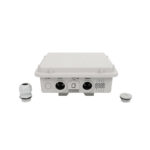
E-Lins routers carry carrier certifications for major global carriers including deployments documented with Vodafone, TATA, Reliance, EE, and O2 on the H820QO outdoor CPE series. Specific model certifications vary by SKU and region — as with any industrial cellular router purchase, confirm the specific model’s carrier certification for the target deployment country before procurement. Teltonika publishes a detailed carrier certification list on their wiki for each model, which is a genuine documentation strength. E-Lins’ certification documentation is available through their sales and applications team. For projects with a specific carrier certification requirement in a specific country, request certification confirmation from whichever vendor is being evaluated before shortlisting rather than after.
Can the H685f or H900frc integrate with existing Modbus TCP/RTU SCADA systems the way the RUT956 can?
Yes, though the implementation path differs slightly. The H685f’s RS232/RS485 serial port supports transparent serial-to-IP tunneling, which bridges Modbus RTU from a legacy serial device into the IP network for a Modbus TCP master on the SCADA side — the standard approach for serial Modbus device integration over cellular. This covers the majority of field device integration scenarios. The RUT956’s native RutOS Modbus gateway adds an additional capability: the router itself can act as a Modbus master, polling registers from serial slave devices and publishing the data to MQTT, which enables a data aggregation architecture without requiring SCADA polling to reach the serial device directly. For SCADA architectures that need the router to act as a Modbus data broker — not just a transparent serial bridge — RutOS’s native Modbus gateway is a meaningful additional capability. For architectures where transparent serial-to-IP is sufficient, both platforms serve equally well.
Conclusion: The Right Answer to E-Lins vs Teltonika Is Almost Always “It Depends on the Project”
I started doing E-Lins vs Teltonika evaluations expecting to find a clear winner. After years of it, I have concluded that framing was never quite right. These are two manufacturers making genuinely different design and ecosystem trade-offs, and the comparison is most useful when it illuminates which trade-offs your specific project can live with and which ones it cannot.
Teltonika’s strengths are real: an ecosystem with deep documentation, an established RMS management platform that integrators have invested in, native support for OPC UA and DNP3 at the router level, and a −40°C temperature rating that beats E-Lins’ −35°C floor. If you are adding devices to an existing Teltonika RMS deployment, or you need built-in GNSS on a 5G device, or your team’s expertise is built around OpenWrt, the Teltonika choice is well-supported.
E-Lins’ strengths are equally real: a security stack with RADIUS/TACACS+/802.1x/zone-based firewall that exceeds what most competing routers offer at similar price points, a super-mini 5G form factor with Wi-Fi 6 that has no direct Teltonika equivalent, 5G RedCap capability for private network IoT at scale, OEM/ODM customization for embedded product manufacturers, and no per-device recurring management fee. If your project fits any of those strengths, the E-Lins case is compelling on the merits, not just on price.
Three things to verify before finalising either choice:
- Confirm carrier certification for the specific model and region before procurement — do not assume either brand’s certification list covers your deployment country without checking.
- Calculate the three-year total cost of ownership including RMS credits for Teltonika deployments and NMS setup for E-Lins deployments, not just the per-unit hardware cost.
- Confirm that the specific model you are specifying has the IO, serial, and protocol interfaces your application requires — the model-level differences within each lineup are larger than the brand-level differences between them.
Running a Competitive Evaluation for an IoT Deployment?
Tell E-Lins your application type, required interfaces (serial, DI/DO, PoE), cellular generation, device count, operating environment, and management requirements. We will map your requirements to the right E-Lins model — or tell you honestly if a Teltonika model fits your specific project better.
Contact Us