





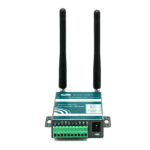
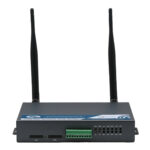
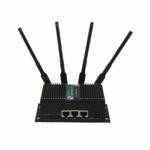
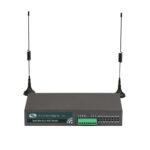
































A Technical Guide to Deploying 5G SIM Modem
The promise of 5G—multi-gigabit speeds, sub-10ms latency, and massive device density—is enticing, but deploying it in the real world requires careful planning. The 5G SIM modem is the endpoint of this promise, but its performance is heavily influenced by deployment strategy, environmental factors, and network configuration.
This guide serves as a technical playbook for engineers and project managers, covering critical aspects such as frequency band compatibility, power management, interface selection, and security hardening for mission-critical 5G deployments.
1) The Foundation: Frequency Band Compatibility and Carrier Aggregation
One of the most technically challenging aspects of deploying 5G modems globally is navigating the fragmented spectrum landscape.
1. Navigating the “Band War” for Global Deployments
A 5G SIM Modem that works perfectly in Germany might struggle to register on a network in Japan if it lacks the correct band support. Engineers must adhere to a “core bands + regional customization” strategy. For example, a modem destined for North America must support n2, n5, n66, and n77, while deployments in Asia might prioritize n28, n41, and n79. High-end modems now offer “global band support,” covering a vast array of frequencies (e.g., n1 to n79) to ensure a single hardware stock-keeping unit can be deployed worldwide.
2. Understanding 5G Modes: NSA vs SA
Deployers must understand the two primary modes of 5G operation:
- NSA (Non-Standalone): This is the initial deployment model where the 5G radio connects to the existing 4G LTE core network. It’s faster to deploy but doesn’t unlock all 5G features.
- SA (Standalone): This features a completely new 5G core, enabling ultra-low latency, network slicing, and massive IoT support. When selecting a modem, ensure it is “Standalone network-ready” to future-proof your investment.
2) Powering the Edge: Low-Power Design for Remote Sites
Many 5G industrial applications are in locations where grid power is unreliable or unavailable. New-generation modems are engineered with sophisticated power management.
1. Solar-Ready and Ultra-Low Power Consumption
Modems like the InDTU324 or the FX86E are designed for remote telemetry. They feature very low power consumption in standby mode (e.g., 40 mW or <3mA), which is critical for solar-powered installations. These devices can enter deep sleep states while maintaining a “wake-on-interrupt” capability, waking only to transmit sensor data and preserving battery life for years.
2. Power over Ethernet (PoE) for Flexible Placement
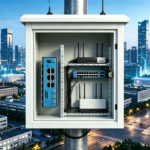
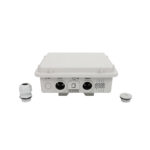
For locations where power is available but outlets are inconvenient, Power over Ethernet (PoE) support is a game-changer. Modems like the Ubiquiti UniFi 5G Max can be powered directly via an Ethernet cable from a PoE switch, allowing them to be placed in optimal signal locations (like rooftops) without needing a nearby power outlet.
3) Connectivity and Control: Essential Interfaces for Industrial Integration
A 5G SIM Modem in an industrial setting must speak the language of the machines it serves.
1. Bridging the Legacy Gap: Serial Ports and Protocol Conversion
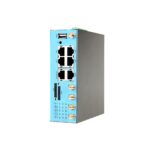
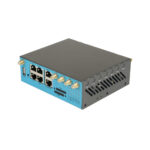
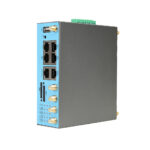
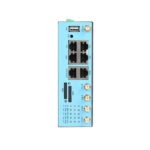
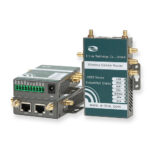
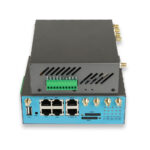
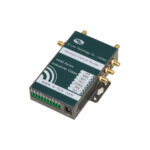
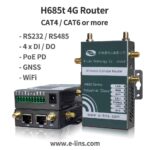
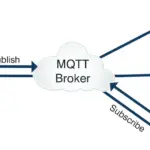
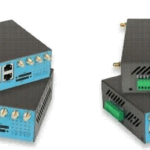
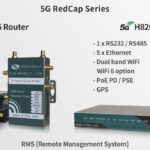
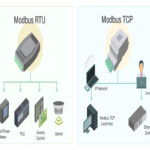
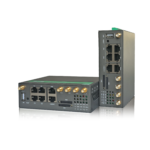
Much of the world’s industrial equipment, from PLCs to flow meters, still communicates via RS232 or RS485 using Modbus RTU. Advanced industrial 5G modems include these serial ports and feature built-in protocol conversion engines. They can read Modbus RTU data, encapsulate it into Modbus TCP or MQTT packets, and transmit it securely over the 5G network, effectively digitizing brownfield sites without requiring expensive machinery overhauls.
2. Gigabit Ethernet for Bandwidth-Intensive Apps
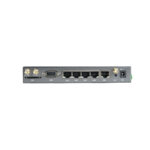
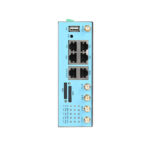
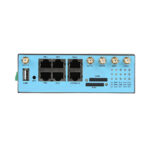
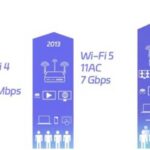
With 5G speeds reaching 3.4 Gbps, the Ethernet port must keep up. Modern 5G modems now feature multi-gigabit Ethernet ports (2.5GbE) to ensure the wired connection doesn’t become a bottleneck for high-bandwidth applications like 4K/8K video surveillance for security or real-time quality inspection.
4) Security and Management in the 5G Era
As connectivity increases, so does the attack surface. 5G SIM modems incorporate defense-in-depth strategies to protect operational technology.
1. Hardened Security Features
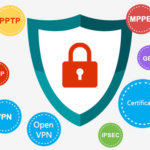
Security starts at the hardware level with secure boot processes that ensure the device only runs trusted firmware. Data in transit is protected by VPN tunnels (IPsec, OpenVPN, GRE) and modern encryption standards like TLS 1.3. This is essential for preventing eavesdropping or man-in-the-middle attacks on sensitive SCADA data traveling over public networks.
2. Remote Management and FOTA
Managing a fleet of hundreds or thousands of remote modems requires centralized control. Modern solutions are paired with cloud management platforms that allow administrators to monitor connection status, push configuration changes, and deploy Firmware Over-the-Air (FOTA) updates via secure HTTPS from a single dashboard. This ensures the entire deployed base remains secure and up-to-date without costly truck rolls.
5) Conclusion
Deploying a 5G SIM Modem is a strategic exercise that goes beyond simply inserting a card. By carefully considering band compatibility, power requirements, industrial interfaces, and robust security, organizations can harness the full potential of 5G. Whether enabling a private network for a smart factory or connecting a solar-powered weather station in the Arctic, the right deployment strategy ensures that the 5G modem serves as a reliable, secure, and future-proof cornerstone of digital operations.
6) Frequently Asked Questions (FAQ) About 5G Modem Deployment
1. Q1: What does “Dual SIM Dual Standby” (DSSS) mean in a 5G modem?
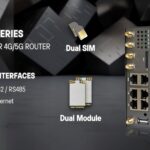
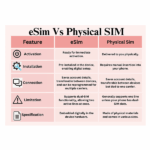
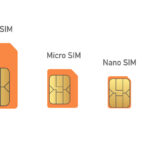
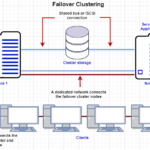
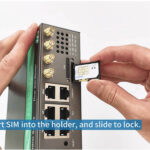
A: DSSS allows both SIM cards to be active simultaneously, monitoring the network. If the primary connection fails, the modem executes a “failover” to the secondary SIM almost instantly, ensuring a highly reliable connection. Some modern modems also allow you to combine a physical nano-SIM and an embedded eSIM for ultimate redundancy.
2. Q2: How do I choose the right antenna for my 5G modem deployment?
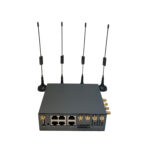
A: Antenna choice depends on your environment. For remote areas with weak signals, high-gain directional antennas (like Yagi) are recommended to lock onto a distant tower. For mobile applications (like vehicles or trains), omnidirectional antennas are best. Many industrial modems feature SMA connectors for external antennas, allowing you to bypass the internal antenna for better placement.
3. Q3: What is the typical operating temperature range for industrial 5G modems?
A: Industrial-grade 5G modems are designed for extreme environments. You can expect them to operate reliably in temperatures ranging from -30°C to +75°C (-22°F to +167°F). Some rugged models are tested to even wider ranges, such as -40°C to +85°C, to meet military standards (MIL-STD-810H).
4. Q4: Can a 5G modem support private networks like CBRS?
A: Yes. Many advanced 5G modems, particularly those aimed at industrial and utility markets, explicitly support private network frequencies. Look for support for bands like n48 (CBRS) in the US or B106 (Anterix), which allow organizations to deploy their own dedicated, secure 5G networks on licensed or shared spectrum.
5. Q5: What is the real-world power consumption of a 5G modem for a solar-powered site?
A: Consumption varies by usage. During active data transmission, a modem might draw 200-300mA, but in idle or low-power modes, advanced industrial modems can drop to a standby current of less than 3mA. For solar-powered sites, choosing a modem with low-power states and efficient power management is critical for long-term autonomy.
6. Q6: My facility has a mix of new and old equipment. Will a 5G modem connect to my legacy PLCs?
A: Absolutely, provided you select the right model. Look for industrial 5G modems that feature RS232 or RS485 serial ports and support Modbus RTU to Modbus TCP conversion. This allows them to read data from legacy programmable logic controllers (PLCs) and sensors and tunnel that data securely over the modern 5G network
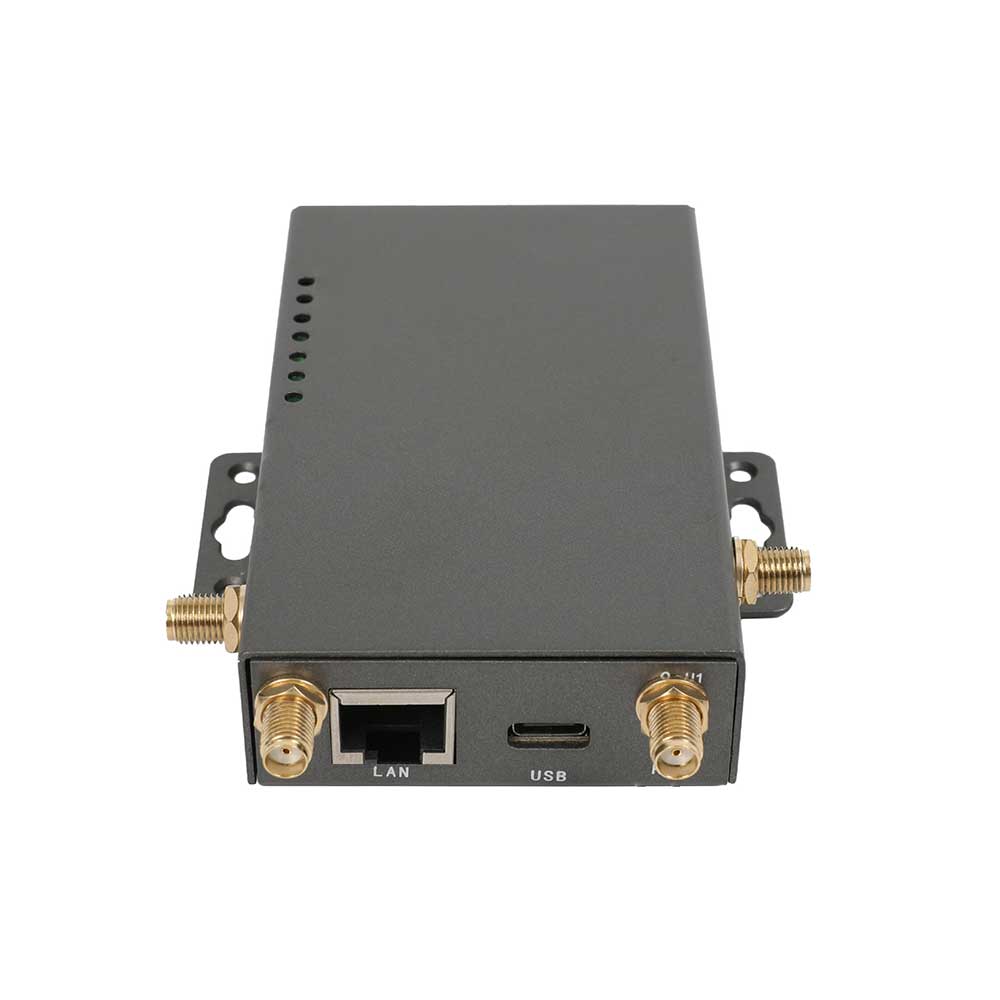
Are you source a 5G SIM Modem? E-Lins will be an excellent choice for you. Founded since 1999, specialized on manufacturing 5G SIM Modems.