














































































Today, we are talking about high gain antennas. Here I want to introduce a strong one. A Yagi–Uda antenna, commonly known as a Yagi antenna, is a directional antenna consisting of multiple parallel elements in a line, usually half-wave dipoles made of metal rods.
Yagi–Uda antennas consist of a single driven element connected to the transmitter or receiver with a transmission line, and additional “parasitic elements” which are not connected to the transmitter or receiver: a so-called reflector and one or more directors.
The Yagi–Uda antenna consists of a number of parallel thin rod elements in a line, usually half-wave long, typically supported on a perpendicular crossbar or “boom” along their centers. There is a single driven element driven in the center (consisting of two rods each connected to one side of the transmission line), and a variable number of parasitic elements, a single reflector on one side and optionally one or more directors on the other side. The parasitic elements are not electrically connected to the transmitter or receiver, and serve as passive radiators, reradiating the radio waves to modify the radiation pattern. Typical spacings between elements vary from about 1⁄10 to ¼ of a wavelength, depending on the specific design. The directors are slightly shorter than the driven element, while the reflector(s) are slightly longer. The radiation pattern is unidirectional, with the main lobe along the axis perpendicular to the elements in the plane of the elements, off the end with the directors.
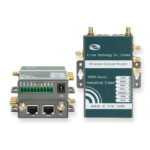
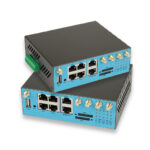
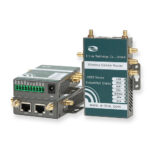
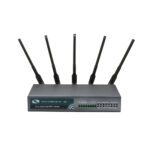
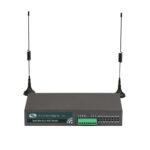
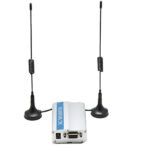
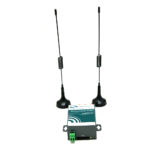
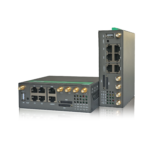
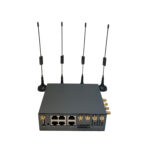
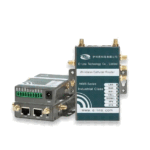
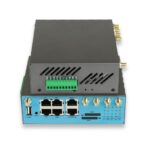
It’s also a good choice for you when you use E-Lins routers in rural area. This antenna will gain better reception than standard antennas for routers.