
The 5G SIM Modem Redefines Industrial Connectivity
Why the 5G SIM Modem is the Catalyst for Industry 4.0 and Beyond
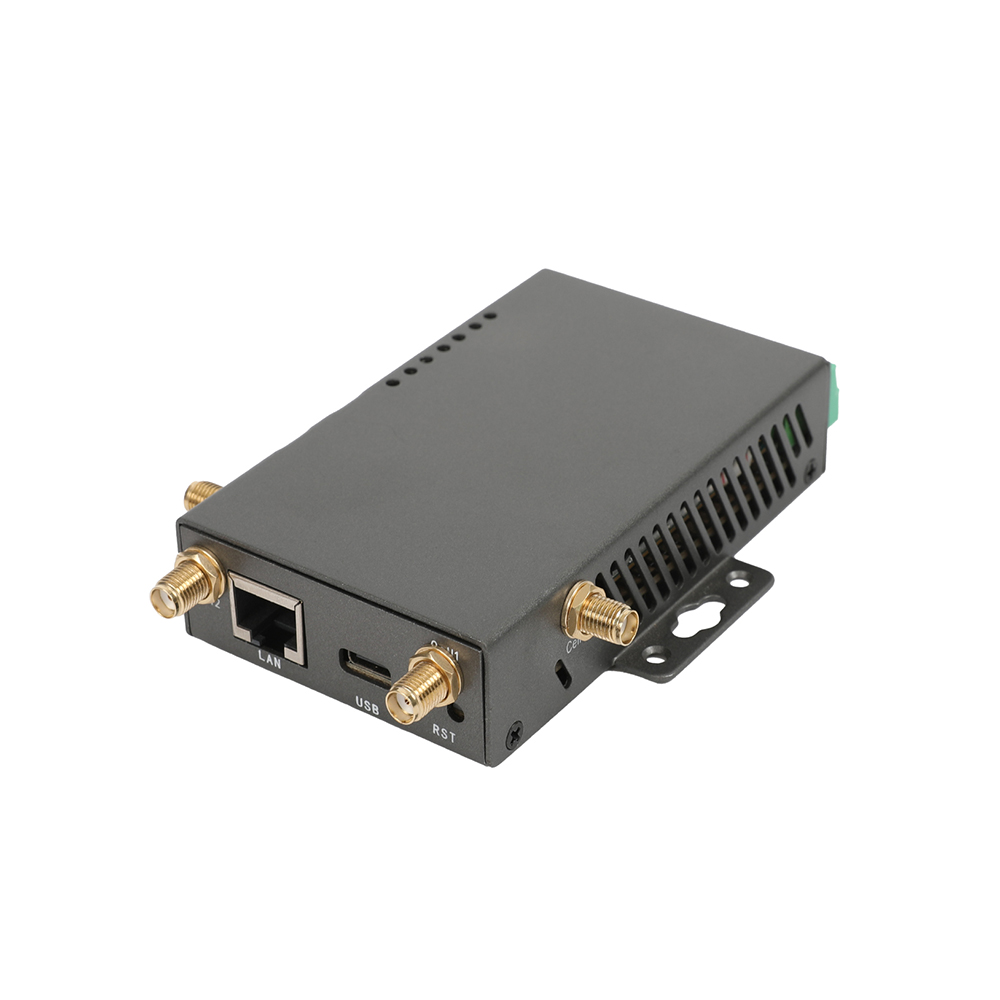
The digital transformation of industry has found its ultimate enabler: the 5G SIM modem. As we move further into the second half of the 2020s, the limitations of 4G LTE are becoming increasingly apparent for applications demanding instantaneous response and massive device density. The 5G SIM modem is not merely an incremental upgrade; it is a fundamental shift in how machines communicate.
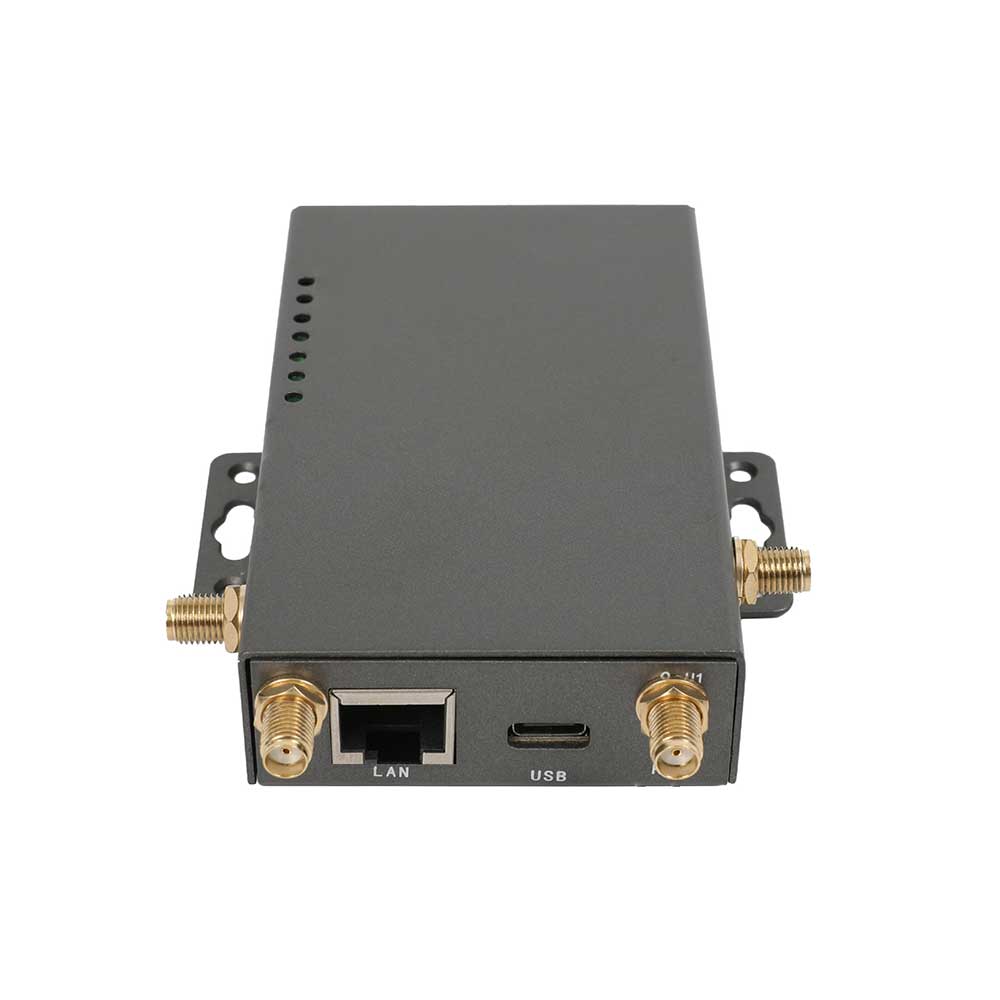
Unlike its predecessors, a 5G SIM modem leverages New Radio (NR) technology to deliver three transformative capabilities: Enhanced Mobile Broadband (eMBB) for multi-gigabit speeds, Ultra-Reliable Low Latency Communications (URLLC) for real-time control, and Massive Machine-Type Communications (mMTC) to support dense IoT deployments. This article explores the technical anatomy of these devices, the emergence of 5G RedCap, and how they are solving real-world challenges in automated production, private networks, and remote infrastructure.
1) The Technical Leap: From 4G to 5G NR
To appreciate the power of a 5G SIM modem, one must understand the fundamental technological differences that separate it from 4G hardware. It is not simply a matter of inserting a 5G SIM into an old router.
1. New Radio Architecture and Spectrum Utilization
4G networks are built on LTE technology, while 5G employs the entirely new NR standard. This difference impacts network architecture, spectrum allocation, and signal processing. 5G SIM modems are designed to operate across a tri-band spectrum strategy:
- Low-band (Sub-1 GHz): Provides wide coverage and deep indoor penetration, similar to 4G.
- Mid-band (Sub-6 GHz): The “sweet spot” offering a balance of speed (hundreds of Mbps) and coverage, ideal for urban and suburban industrial parks.
- High-band (mmWave): Delivers breathtaking speeds (1-10 Gbps) over short distances, perfect for dense manufacturing floors and stadiums.
Modern 5G modems utilize Massive MIMO (Multiple Input, Multiple Output) antenna arrays and beamforming technology. This allows them to handle multiple data streams simultaneously and direct signals precisely to connected equipment, reducing interference and boosting efficiency.
2. Hardware Compatibility: Why You Can’t Use a 4G Modem
A critical point for enterprises is hardware incompatibility. A 4G modem router will fail to respond when a 5G SIM card is inserted due to hardware and software limitations. The chipsets, antennas, and firmware in 4G devices are optimized for LTE and cannot interpret the NR signal. To leverage 5G, a dedicated 5G SIM modem with compatible components is non-negotiable.
2) The Game Changer: 5G RedCap Modems
One of the most significant developments in the 2025-2026 period is the commercialization of 5G RedCap modems. Often referred to as “NR-Light,” this technology bridges the gap between high-end eMBB and low-power wide-area networks.
1. Right-Sizing 5G for the Mid-Tier IoT
Not every industrial application needs 1 Gbps speeds, but many need more than what 4G LTE Cat-4 can offer. 5G RedCap modems, such as the Semtech FX86E, are designed precisely for this mid-tier. They offer:
- Optimized Throughput: Providing sufficient bandwidth for industrial video monitoring and telemetry without the cost and power draw of mmWave.
- Long Battery Life: Enabling years of operation on solar or battery power for remote sensors.
- Form Factor: A compact design (e.g., 82 x 60 x 32 mm) that allows for easy integration into existing equipment without a complete redesign.
2. Instant Connectivity and Pre-Certification
For OEMs and system integrators, time-to-market is critical. New-generation 5G RedCap modems come pre-certified with major global carriers. Features like “AutoConnect” allow the modem to power up and establish a connection immediately, selecting the optimal carrier based on the inserted nano-SIM. This eliminates months of development and certification work required when embedding a raw cellular module.
3) Private Networks and the Future of Secure Communication
The demand for data sovereignty and security is driving a massive shift toward private 5G networks. The 5G SIM modem is the endpoint enabler for this trend.
1. Dedicated Spectrum for Critical Infrastructure
Industries like utilities, oil and gas, and manufacturing are increasingly turning to private wireless networks using dedicated spectrum such as CBRS (Citizens Broadband Radio Service) in the US or Anterix B106 for utilities. Advanced 5G modems now include support for these frequencies, allowing organizations to deploy networks with enhanced control, security, and guaranteed SLAs.
2. Multi-Network Flexibility
Modern 5G SIM modems offer unparalleled flexibility. They support deployment on public cellular networks for broad coverage and private networks for sensitive on-site operations, all within a single SKU with worldwide band support. This dual-mode capability ensures that assets like automated guided vehicles (AGVs) or pipeline sensors remain connected whether they are inside a private facility or roaming across a wide-area public network.
4) Application Deep Dive: Revolutionizing Automated Production Lines
In the wave of Industry 4.0, the 5G cellular modem router has become a core component of automated production lines.
1. Real-Time Equipment Interconnection
On a modern factory floor, sensors, controllers, and robots must exchange data in real-time. A 5G SIM modem acts as the “information bridge,” collecting production data—equipment status, quality parameters—and transmitting it to the cloud or on-premise servers with minimal latency. This enables flexible production scheduling and real-time quality control.
2. Predictive Maintenance and Digital Twins
With the high-speed, low-latency data pipelines provided by 5G, technicians can remotely monitor equipment health. By analyzing data streams, AI algorithms can predict maintenance needs before a breakdown occurs, reducing downtime. Furthermore, this data feeds digital twin simulations, allowing manufacturers to optimize processes in a virtual space before applying changes to the physical line.
5) Conclusion
The 5G SIM modem is far more than a faster pipe for data. It is a sophisticated edge device that enables a new era of connectivity, from the factory floor to the remote oil field. With innovations like RedCap optimizing the cost-performance ratio and private network support ensuring security, these modems are the foundational blocks upon which the intelligent, automated future is being built.
6) FAQ about 5G SIM Modems.
1. Q1: What is the difference between a 5G SIM modem and a 5G router?
A: While the terms are often used interchangeably, a modem focuses primarily on providing mobile data connectivity to a single device or sensor via Ethernet, ideal for data logging and SCADA integration. A router typically includes the modem functionality but adds routing capabilities, Wi-Fi, and switch ports to share the cellular connection among multiple devices, often including advanced firewalls and DHCP servers.
2. Q2: Can I use my existing 4G SIM card in a 5G modem?
A: Yes, you can. 5G modems are backward compatible with 4G LTE networks. If 5G coverage is unavailable, the modem will automatically fall back to 4G or even 3G to maintain connectivity. However, to access 5G speeds and low latency, you will need a 5G data plan from your carrier.
3. Q3: What is 5G RedCap, and why is it important for industrial users?
A: 5G RedCap, also known as NR-Light, is a 3GPP Release 17 standard designed for IoT devices that need moderate speeds, lower power consumption, and longer battery life than standard 5G. It’s perfect for industrial sensors, wearables, and video surveillance, bridging the gap between high-end 5G and low-power NB-IoT.
4. Q4: What is the advantage of dual-SIM and eSIM in 5G industrial modems?
A: Dual-SIM allows for automatic failover; if the primary carrier experiences an outage, the modem seamlessly switches to a secondary network, ensuring 99.9% uptime for mission-critical applications. eSIM support adds another layer of flexibility, allowing carriers to be provisioned remotely without physically swapping SIM cards, which is ideal for large-scale, globally distributed deployments.
5. Q5: Are 5G modems rugged enough for outdoor industrial use?
A: Yes. Industrial-grade 5G modems are built to survive extreme conditions. They typically feature wide operating temperature ranges (e.g., -40°C to +75°C), MIL-STD-810H military-grade certification for shock and vibration, and high ingress protection (IP30, IP67, or higher) against dust and water. Some models are even rated for hazardous locations (C1D2).
6. Q6: Do I need a 5G modem if I only have 4G coverage in my area?
A: Investing in a 5G modem can still be a smart move for “future-proofing.” As carriers continue to invest in 5G infrastructure, your modem will be ready to take advantage of the new coverage as it rolls out. In the meantime, it will operate perfectly on the existing 4G LTE networks.
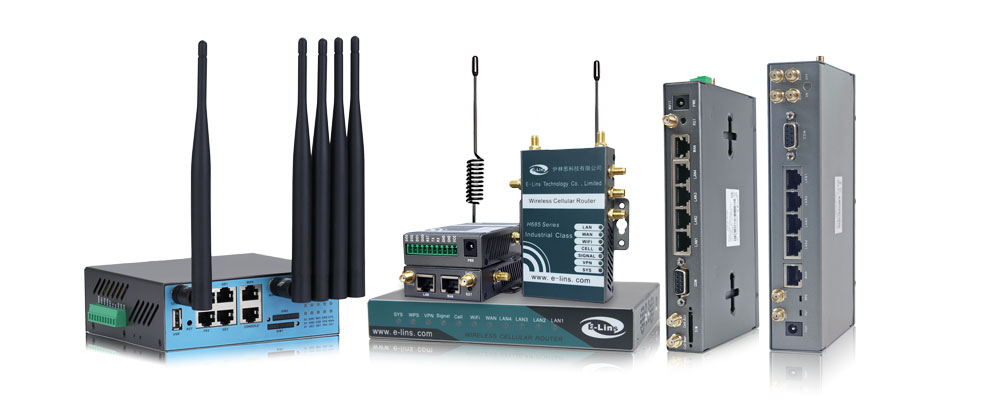
Are you ready to deploy an industrial 5G SIM Modem? Take a quick view of E-Lins, a IoT expert providing many excellent industrial 5G SIM Modem.