
MQTT: How Powers the Internet of Things
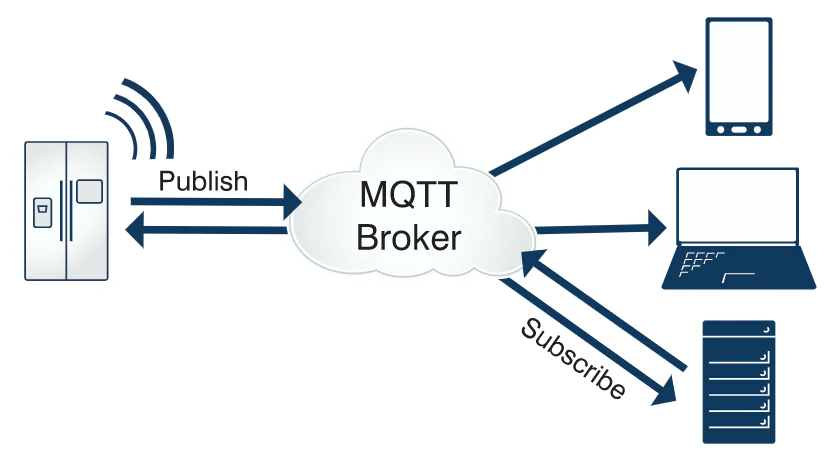
Imagine a world where billions of devices—from smart thermostats and wearables to industrial sensors and autonomous vehicles—need to talk to each other seamlessly, often over unreliable networks with limited power. HTTP, the protocol of the web, is too heavy and chatty for this task. Enter MQTT (Message Queuing Telemetry Transport), the unsung hero and de-facto standard for IoT communication.
At its core, MQTT is a brilliantly simple, lightweight publish/subscribe (pub/sub) messaging protocol. Think of it as a highly efficient postal system for machine data. Instead of devices constantly asking each other for updates (“Do you have new data?”), they subscribe to topics they care about. When another device has information (publishes) on that topic, the message is instantly delivered to all interested subscribers by a central broker. This decouples the data producers from the consumers, making systems incredibly scalable and resilient.
Why is MQTT so Perfect for IoT?
- Lightweight & Efficient: MQTT messages have minimal overhead. A simple message can be as small as just 2 bytes, conserving precious battery life and bandwidth.
- Bi-Directional & Real-Time: The pub/sub model enables instant, push-based communication. A sensor can publish an “alert,” and a server, a dashboard, and other devices can all react simultaneously.
- Designed for Unstable Networks: MQTT includes built-in assurance of delivery through Quality of Service (QoS) levels: 0 (fire and forget), 1 (at least once), and 2 (exactly once). It also features a Last Will and Testament (LWT), allowing a device to notify others if it disconnects ungracefully.
- Scalable by Design: The broker manages all connections and message distribution. Adding a million new subscribers doesn’t burden the data publisher; the broker handles the fan-out.
The Key Components:
- Publisher: Any device that sends (publishes) a message to a topic.
- Subscriber: Any device that listens to (subscribes to) a topic to receive messages.
- Broker: The heart of the system. It receives all messages, filters them by topic, and distributes them to the correct subscribers. Popular brokers include Mosquitto, HiveMQ, and EMQX.
- Topic: A hierarchical string (e.g., factory/floor1/machine/temperature) that acts as an address for filtering messages.
A Simple Use Case: A smart home temperature sensor (sensor/living room/temp) publishes a reading of 22.5°C. The central HVAC controller is subscribed to that exact topic and receives the message instantly. Simultaneously, a user’s phone app, subscribed to sensor/+/temp (using a wildcard), also gets the update for its dashboard.
In conclusion, MQTT’s elegance lies in its simplicity. By solving the fundamental challenges of constrained device communication with a robust pub/sub model, it has become the essential glue that holds the vast, interconnected world of IoT together. For any developer venturing into IoT, MQTT is the first protocol to master.
FAQs for MQTT:
1)What is MQTT?
MQTT is a lightweight, publish-subscribe network protocol designed for constrained devices and low-bandwidth, high-latency, or unreliable networks. It is ideal for Internet of Things (IoT) and Machine-to-Machine (M2M) communication.
2)How does the MQTT publish/subscribe model work?
Instead of communicating directly with a device, clients (publishers or subscribers) connect to a central broker. Publishers send messages to specific topics, and subscribers receive messages from topics they are interested in. The broker handles all message routing.
3)What is an MQTT Broker?
The broker is the server that receives all messages from publishers, filters them, determines which subscribed clients are interested, and then forwards the messages to those subscribers. Examples include Mosquitto, HiveMQ, and EMQX.
4)What are MQTT Topics?
Topics are UTF-8 strings that act as addresses for message routing. They are structured hierarchically with forward slashes (/) as separators (e.g., home/livingroom/temperature). Subscribers can use wildcards (+ for a single level, # for multiple levels) to subscribe to multiple topics.
5)What are MQTT QoS Levels and why are they important?
Quality of Service (QoS) defines the guarantee of delivery for a message. There are three levels:
QoS 0 (At most once): Fastest, no guarantee (“fire and forget”).
QoS 1 (At least once): Guarantees delivery, but duplicates may occur (acknowledged delivery).
QoS 2 (Exactly once): Highest assurance, guarantees delivery exactly once (most overhead).
What is the “Last Will and Testament (LWT)” feature?
LWT is a message configured by a client during connection. If the client disconnects ungracefully (e.g., due to network failure), the broker will automatically publish this predefined message to a specified topic, alerting other clients of the abnormal disconnection.
6)What is MQTT-SN (MQTT for Sensor Networks)?
MQTT-SN is a variation of the protocol designed specifically for wireless sensor networks (WSN) with non-TCP/IP communication links (e.g., ZigBee). It addresses constraints like shorter message lengths and uses a gateway to bridge to a standard MQTT broker.
7)Is MQTT secure?
The core MQTT protocol itself does not provide encryption or strong authentication. Security is achieved by:
Running MQTT over TLS/SSL (often called MQTTS) to encrypt the connection.
Using client IDs, usernames, and passwords for authentication.
Implementing authorization at the broker level to control client access to topics.
8)What is the difference between MQTT and HTTP for IoT?
MQTT is event-driven, uses a persistent connection (reducing overhead), and allows efficient many-to-many communication via the broker. HTTP is request-response based, requires a new connection for each request, and is better suited for client-server web interactions. MQTT is generally more efficient for frequent small messages from many devices.
9)What are some common use cases for MQTT?
MQTT is used in scenarios requiring efficient, real-time data exchange with many remote devices. Common examples include:
Smart home automation and sensor data.
Industrial telemetry and SCADA systems.
Asset tracking and logistics.
Connected vehicles and fleet management.
Mobile push notifications and chat applications.
For MQTT IoT 4G Router & 5G Router, you can check with E-Lins, the China best 4G Router & 5G Router Manufacturer.