


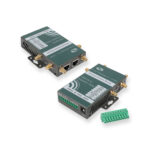
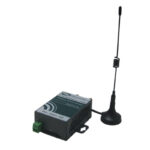
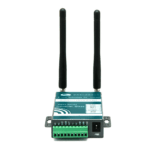
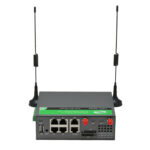
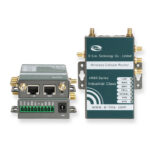
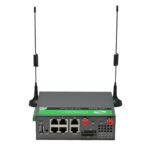

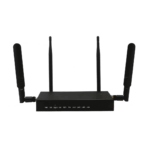
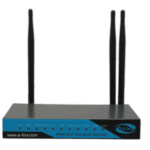

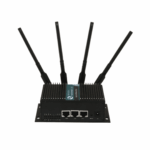

















































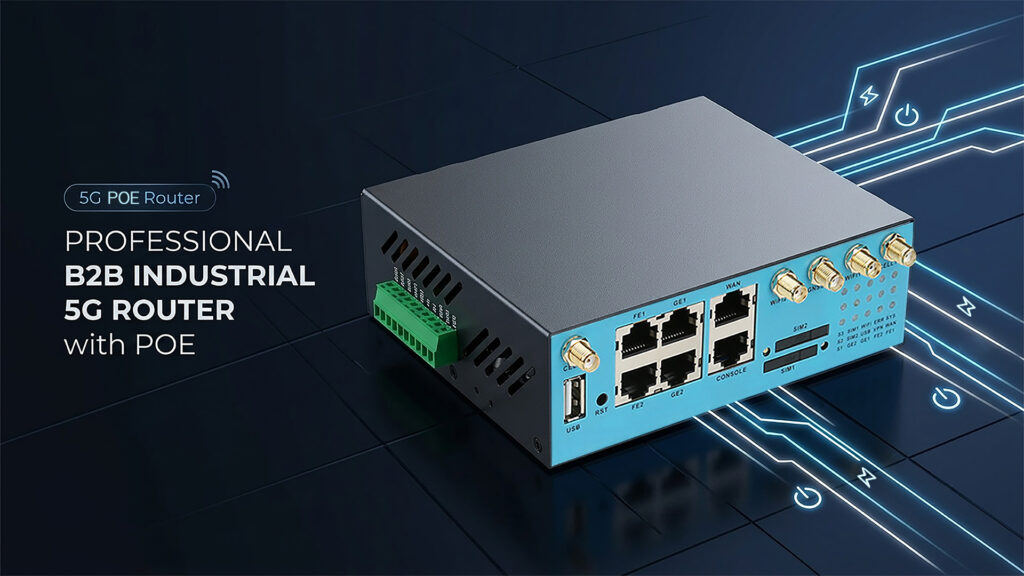
Industrial 5G Router with PoE: Connecting Field Devices Without Extra Power Infrastructure
Most remote field sites have exactly one problem in common: too many devices that need power, and not enough conduit runs to get it there. A 5G router with Active PoE output solves this not by adding hardware, but by removing it — delivering both data and power to IP cameras, wireless access points, and industrial sensors over a single Ethernet cable the router is already running anyway.
What Is an Industrial 5G Router with PoE?
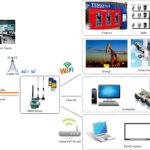
An industrial 5G router with PoE combines a cellular WAN connection with the ability to power downstream Ethernet devices through the same cable that carries their data. Instead of running a separate power line to each IP camera, wireless access point, or IoT sensor at a remote site, the router supplies both the network connection and the electrical power through standard Cat5e or Cat6 cabling — using the IEEE 802.3af/at standard that governs how much current a PoE port can deliver safely.
There are two distinct functions that buyers sometimes confuse. PoE In means the router itself can be powered by a PoE injector or PoE switch upstream — useful when only an Ethernet cable reaches the router’s mounting location and a separate power adapter would be inconvenient. PoE Out, also called Active PoE, means the router actively powers other devices connected to its Ethernet ports. For remote field sites where IP cameras, environmental sensors, or wireless nodes need to be added without new electrical work, PoE Out is the capability that changes the economics of the installation.
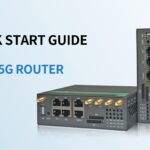
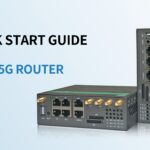
The H900f sits in E-Lins’ dual-SIM 5G router with Active PoE output category — a product tier that is genuinely rare in industrial cellular networking. Most compact 5G routers offer PoE In at best. Combining 5G WAN, dual SIM redundancy, five Ethernet ports, and outbound PoE in one device removes the need for a separate PoE injector, a separate switch, or additional wiring runs that make remote installations expensive and fragile.
Simple distinction: PoE In — someone else powers the router. PoE Out — the router powers your cameras, sensors, and access points. Most industrial field deployments need PoE Out, but many buyers order a router that only supports PoE In and realize the difference during installation.
“In probably 40% of the remote cabinet enquiries we handle, the customer has already bought a router with PoE In thinking it covers both directions. They find out during commissioning that their cameras still need separate power. It is one of the most consistent specification errors we see — and the easiest to prevent by reading one line of the datasheet before ordering.”
— E-Lins field application engineerSite Readiness Checklist Before Specifying PoE
PoE simplifies installation, but a few site details must be confirmed before it delivers that simplicity in practice. Missing any of these can turn a straightforward deployment into a cable-length problem discovered on-site.
- What is the total power draw of every device the router’s PoE ports must supply — camera watts, sensor milliamps, access point watt ratings?
- What is the cable run length from the router to each downstream device? PoE power delivery degrades beyond 100 m on Cat5e/Cat6.
- How many PoE-powered devices are needed simultaneously, and does the router’s total PoE power budget cover them all at once?
- Which PoE standard does each downstream device require — IEEE 802.3af (15.4 W), 802.3at (30 W), or 802.3bt (60–90 W)?
- Is dual SIM redundancy required at this site, or is one carrier connection sufficient for the uptime target?
- What are the cellular carrier bands available at the installation location, and has signal been tested inside the final enclosure?
- What VPN architecture will be used for remote access to cameras, PLCs, or platform management systems at this site?
Why PoE Changes the Economics of Remote Site Installation
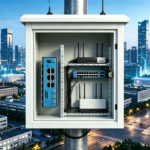
A remote cabinet in a utility substation, a roadside traffic monitoring pole, or a construction site perimeter might need two IP cameras, a cellular router, and a weather sensor. Without PoE, each camera needs its own power cable — which means conduit, junction boxes, weatherproof cable glands, and an electrician who may charge a day rate for what amounts to a few hours of work. On a site 90 km from the nearest city, that day rate is not trivial.
With a 5G PoE router for IP camera deployment, the same installation uses one cable per camera. The router runs on its own DC supply — either from a solar charge controller, a panel DC bus, or a PoE injector from an upstream switch — and powers the cameras from its outbound PoE ports. The camera cable carries data to the router and power from it. One run. One gland. One termination per camera.
The practical difference compounds at scale. A site with six cameras and no PoE needs six data cables plus six power cables — twelve cable runs, twelve terminations per camera location. The same site with PoE needs six data cables total. Installation time roughly halves. Fault points halve. The enclosure can be smaller because fewer connectors penetrate it. Maintenance is simpler because every camera is on a cable the router can diagnose from its management interface.
PoE Budget Planning at Remote Sites
The most common PoE planning mistake is counting ports rather than watts. A router with four PoE-capable Ethernet ports does not necessarily deliver full 802.3at power (30 W) on all four simultaneously. The router has a total PoE power budget — typically 60–120 W for industrial-class devices — shared across all active PoE ports. A site with four cameras drawing 15 W each (60 W total) needs a router whose PoE budget is confirmed to cover that load before specifying the hardware.
Camera wattage also varies more than spec sheets suggest. A fixed dome camera might draw 8–12 W in normal operation, but a PTZ camera with infrared illumination enabled can exceed 20 W. The budget should be calculated at maximum load, not typical load, because a power shortfall discovered when all cameras activate their IR at dusk is difficult to diagnose remotely.
In our own lab measurements using a 60 m Cat5e run, a 25 W 802.3at camera received 22.8 W at the endpoint — an 8.8% loss from cable resistance alone. At 90 m on the same cable, delivery dropped to 21.1 W. The camera continued operating normally in both cases because its minimum operating threshold was 18 W, but a different unit with a 23 W minimum threshold would have been unreliable beyond 65 m. This is the measurement most field teams skip, and the one that explains the most post-installation complaints about cameras that “randomly restart.”
A water utility customer in Southeast Asia deployed 14 remote pump station monitoring cabinets over an 18-month period. Each cabinet originally used a separate 4G router, a PoE switch, and individual power adapters for two cameras — five powered components per site. After switching to the H900f for the final seven cabinets, they reported saving approximately 2.5 hours of installation labour per site, the time previously spent routing and terminating the extra power cables. Component count per cabinet dropped from five to one. The project manager noted that fewer cable penetrations also meant fewer weatherproofing points to inspect during annual maintenance.
Important: PoE power delivery also depends on cable quality and length. A 100 m Cat5e run to a 25 W camera may only deliver 20–22 W at the endpoint due to cable resistance losses. Where cameras are at the edge of power tolerance, either shorten the cable run, upgrade to Cat6, or select a camera with a lower wattage requirement before the router leaves the warehouse.
Key Features for Industrial 5G PoE Router Selection
Not every device that carries a PoE label is appropriate for industrial remote deployments. The hardware must handle the field environment as well as it handles the network. These are the specification points that separate a router that survives three years unattended in a utility cabinet from one that fails in the first summer.
1. Active PoE Out — Standard and Power Budget
Confirm the PoE standard supported on each port (802.3af delivers up to 15.4 W, 802.3at up to 30 W) and the router’s total shared PoE power budget in watts. For a site with multiple cameras, the budget matters more than the per-port maximum. An industrial 5G PoE router intended for serious CCTV deployments should carry a total PoE budget of at least 60 W, with individual ports capable of 802.3at for higher-draw cameras and PTZ units.
2. Dual SIM with Automatic Failover
A dual SIM 5G router with Active PoE output handles two failure scenarios simultaneously: cellular network failure (covered by switching to a second SIM on a different carrier) and device power failure at the camera level (visible through the PoE port status on the management interface). Single-SIM routers are adequate when carrier coverage is redundant by other means. At sites where cellular is the only backhaul path and downtime has operational consequences — surveillance, critical infrastructure, emergency services — dual SIM is not optional.
“From our experience supporting deployments across Southeast Asia, East Africa, and parts of Latin America, we consistently see primary SIM outages lasting two to six hours occurring one to three times per year, even on established networks. For a surveillance site, that is a window of missing footage. For a utility site, it is a gap in the remote monitoring record that an auditor will ask about. Dual SIM does not eliminate the risk — it makes the risk operationally invisible.”
— E-Lins application engineering team3. 5G SA/NSA with 4G LTE Fallback
5G coverage at remote field sites is still developing in most regions. A router that supports 5G SA (Standalone) and 5G NSA (Non-Standalone) architectures and falls back automatically to 4G LTE when 5G is unavailable ensures the site stays connected regardless of where coverage expansion is at any given month. For video-heavy deployments, 5G matters most on the uplink — streaming multiple camera feeds to a control room is bandwidth-intensive in a way that sensor telemetry is not.
4. Gigabit Ethernet Ports for Multi-Camera Throughput
A site with four 4K cameras may generate 50–80 Mbps of sustained video traffic. Fast Ethernet (100 Mbps) ports create a ceiling that limits camera resolution, frame rate, or stream count before the cellular link does. Industrial 5G routers intended for video-heavy deployments should present Gigabit Ethernet ports on both WAN and LAN interfaces to avoid the switching fabric becoming the bottleneck.
5. Wide-Temperature Operation and Industrial Enclosure
Field cabinets in summer can exceed 60 °C internally. A router rated to +75 °C operating temperature has margin for this. One rated to +70 °C may not. For northern deployments, a lower limit of −35 °C covers most continental climates through a full winter. An alloy metal case with vibration and shock tolerance matters for pole-mounted or vehicle-adjacent installations where resonance from nearby equipment is a constant factor.
6. VPN, Firewall, and Private APN
IP cameras connected through a 5G router with PoE Out for remote field sites are directly reachable from the management network. Without a VPN and firewall, they are also potentially reachable from anywhere on the public internet if the SIM uses a shared public IP. For any deployment handling security footage, infrastructure data, or facility access systems, VPN client operation through IPsec or OpenVPN to a central concentrator — combined with firewall rules restricting which IP addresses can reach the camera LAN — is the minimum acceptable security posture.
7. Remote Management and Hardware Watchdog
A frozen router at a site three hours away is a serious problem. Hardware watchdog recovery — which monitors cellular connectivity, tunnel state, and system health, then triggers an automatic restart when failure is detected — keeps the site online without human intervention in the majority of failure scenarios. Cloud NMS, SNMP, TR-069, and SSH access allow configuration changes, firmware updates, and diagnostics without dispatching a technician.
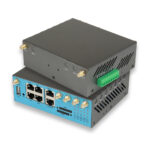
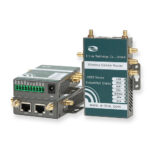
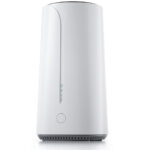
E-Lins H900f: Industrial 5G Router with Dual SIM and Active PoE
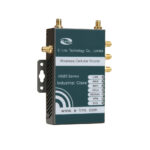
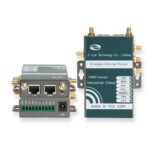
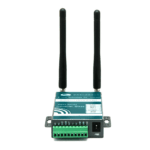
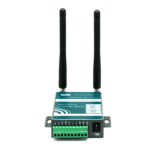
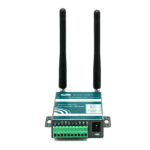
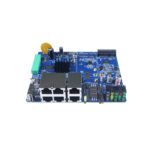
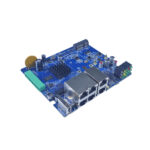
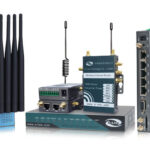
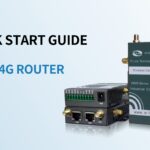
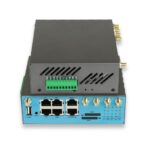
The H900f is E-Lins’ flagship industrial 5G router with dual SIM and outbound PoE capability. Where the compact H685f is optimised for minimal footprint in embedded applications, the H900f is built for multi-device remote sites that need cellular redundancy, multiple Ethernet connections, and the ability to power field devices directly from the router — without a separate PoE switch or injector in the cabinet.
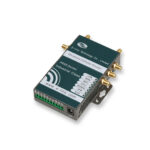
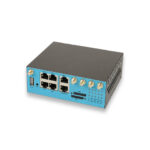
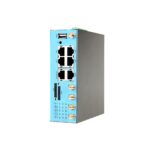
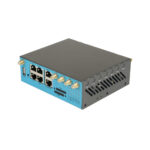
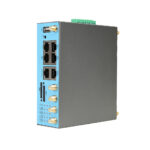
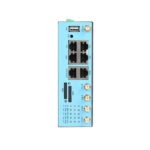
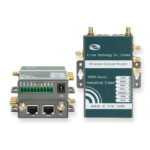
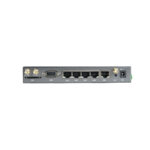
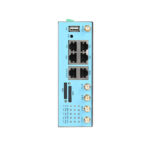
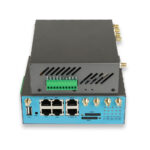
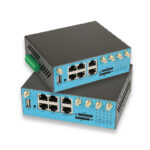
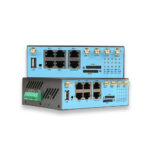
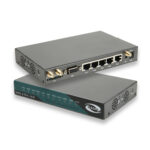
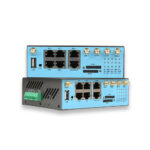
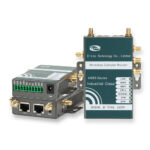
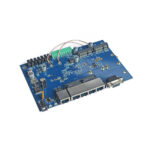
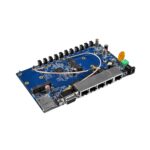
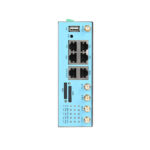
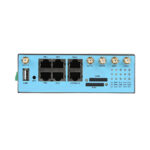
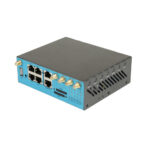
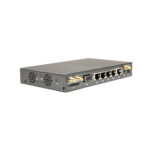
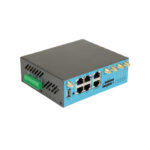
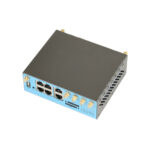
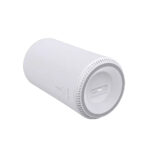
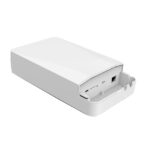
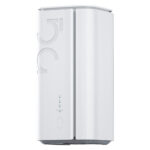
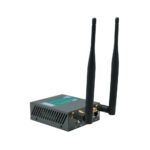
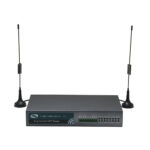
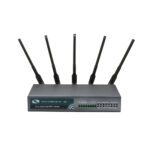
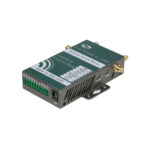
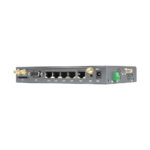
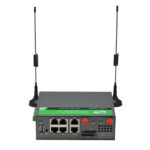
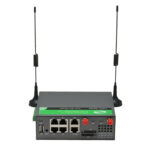
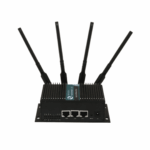
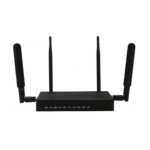
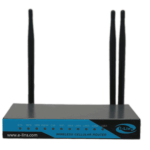
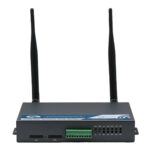
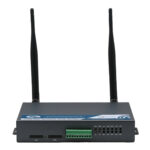
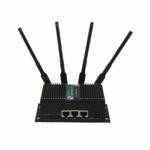
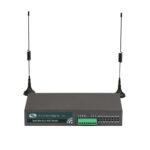
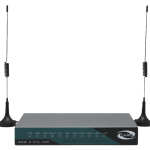
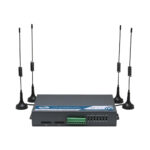
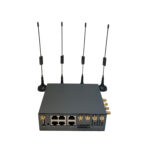
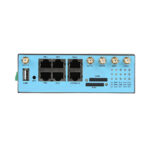
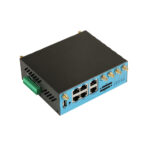
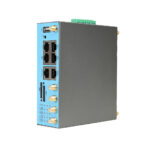
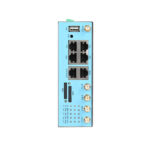
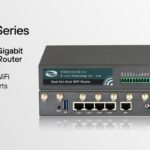
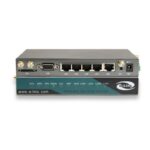
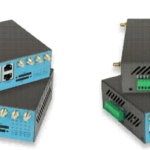
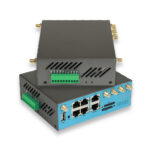
E-Lins H900f Dual SIM Industrial 5G Router with Active PoE
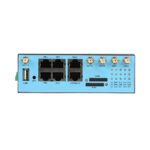
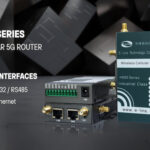
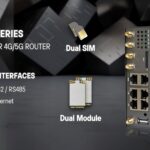
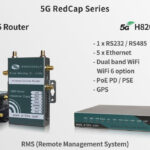
Full-featured industrial 5G router with dual SIM, five Ethernet ports (3× Gigabit + 2× Fast Ethernet), Active PoE Out, Wi-Fi 6, USB 3.0, serial port, 4× DI/DO, GPS/Beidou, WireGuard and full VPN suite. Designed for mission-critical remote deployments requiring carrier redundancy and multi-device field connectivity.
What Makes the H900f Different from a Standard 5G Router
The functional gap between the H900f and a single-SIM 5G router without PoE Out is wider than the spec sheet suggests at first reading. Consider a typical remote CCTV cabinet: four IP cameras, a cellular router, and a small switch to distribute both power and data to the cameras. With a standard router, that cabinet needs the router, a PoE switch, and cabling between them — three components, three sets of failure modes, two power supplies.
The H900f collapses this to one device. Its five Ethernet ports handle LAN switching directly. Its Active PoE output powers the cameras without a separate switch. Its dual SIM handles carrier failover without a separate device. The cabinet becomes simpler, the wiring becomes shorter, and the maintenance interface becomes a single management IP rather than a router plus a switch to monitor separately.
WireGuard support — which appears on the H900f but not on every industrial 5G router in this class — is worth noting for sites with high-frequency VPN reconnections. Where a vehicle-mounted or frequently rebooted device re-establishes its VPN tunnel many times per day, WireGuard’s stateless handshake re-establishes faster than IPsec IKEv2 in most network conditions. For a static site it is a secondary consideration, but for mobile or semi-permanent deployments it reduces the gap between a router restart and a usable camera feed at the management centre.
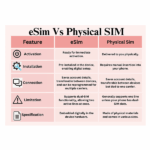
eSIM support allows carrier profiles to be provisioned remotely — relevant for large deployments where physically inserting SIM cards into hundreds of units is a logistics cost, and for cross-border deployments where the target carrier may not have a physical distribution channel convenient to the integrator.
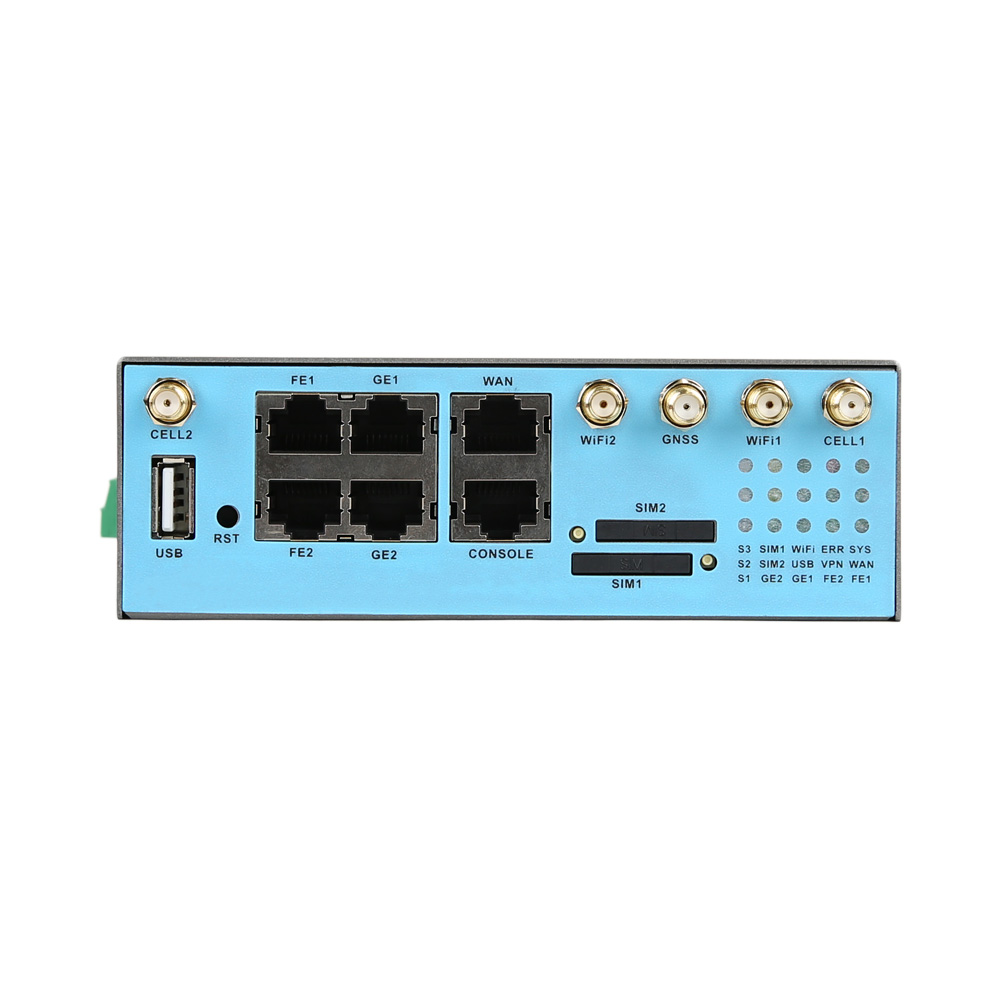
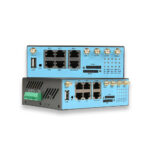
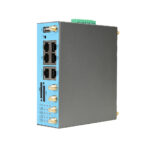
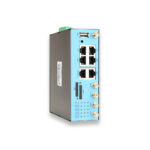
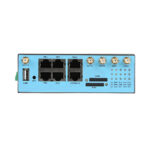
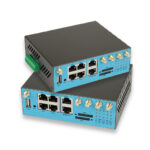
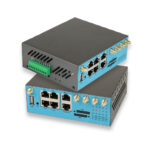
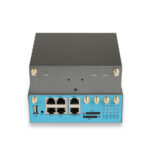
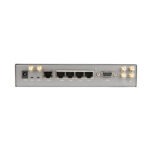
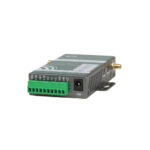
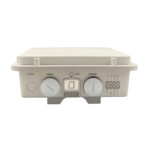
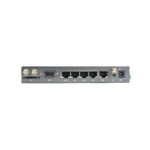
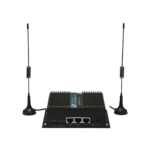
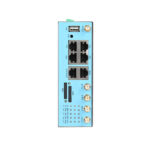
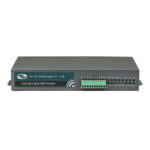
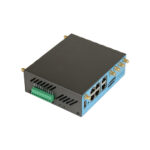
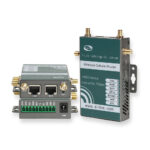
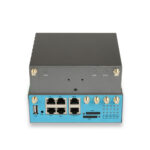
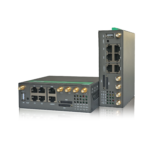
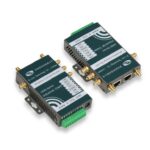
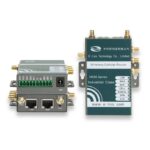
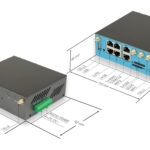
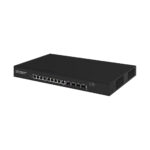
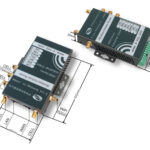
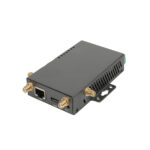
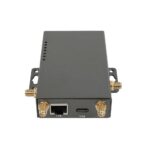
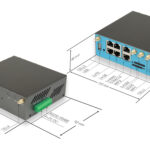
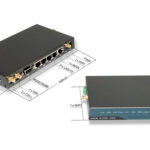
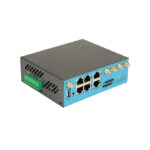
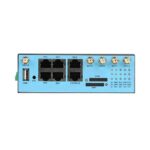
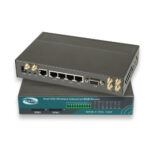
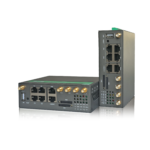
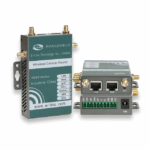
E-Lins H900f — dual SIM 5G router with Active PoE Out, 5× Ethernet, Wi-Fi 6, and DIN-rail mounting for industrial field deployments
Which Project Structure Fits the H900f?
The H900f’s combination of dual SIM, multi-port Ethernet, and Active PoE suits a specific tier of remote deployment — sites where multiple devices need to share one cellular connection, where carrier redundancy is operationally required, and where PoE-powered endpoints can be added or relocated without new electrical work.
Remote CCTV and Surveillance Sites
- Multiple IP cameras sharing one 5G uplink.
- PoE Out eliminates separate camera power supplies.
- Dual SIM keeps footage streaming if one carrier drops.
- VPN protects camera feeds from public internet exposure.
- Gigabit ports prevent camera resolution from being bottlenecked by switching.
Smart Transportation and Roadside Infrastructure
- Traffic cameras, speed sensors, variable message signs.
- PoE Out simplifies pole-mounted installations.
- Dual SIM for uninterrupted roadside monitoring.
- Wide-temperature tolerance for all-weather deployments.
- GPS/Beidou useful for asset tracking alongside monitoring.
Energy and Utility Remote Stations
- Substation RTUs, solar/wind site monitoring, metering.
- RS232/RS485 for legacy Modbus or DNP3 equipment.
- DI/DO for alarm relay and equipment status integration.
- Dual SIM and watchdog for unmanned-site uptime.
- Wide-voltage DC input for solar charge controller rails.
Industrial Automation Panels
- PLC, HMI, camera, and gateway in one cellular-connected cabinet.
- PoE Out for panel-mounted IP cameras without extra power.
- VPN for secure remote PLC access and diagnostics.
- NMS for centralised management across distributed sites.
- CE/UKCA certification for EU/UK market compliance.
Comparison: 5G PoE Router vs Separate Router + PoE Switch vs Plain 5G Router
The decision to use a 5G router with integrated PoE versus combining a plain 5G router with a separate PoE switch is partly a cost question and partly an architecture question. The table below summarises the practical tradeoffs for remote field site deployments.
| Factor | 5G PoE Router (H900f) | Plain 5G Router + PoE Switch | Plain 5G Router (no PoE) |
|---|---|---|---|
| Component count | 1 device | 2 devices + cabling between them | 1 device, but cameras need separate power |
| Cabinet space | Minimal — single DIN-rail unit | More space for switch + router | Minimal, but power adapters add space |
| Dual SIM | Built in | Depends on router chosen | Depends on router chosen |
| PoE power budget | Shared across router’s PoE ports | Switch budget often larger and separate | None |
| Fault points | Lowest — one device to monitor | Two devices, two power supplies | Router + individual camera adapters |
| Best fit | ≤8 cameras, standard PoE loads, critical uptime | >8 cameras or high total wattage | Sites with existing camera power infrastructure |
| Main risk | PoE budget exceeded if cameras exceed spec | Switch failure takes all cameras offline | No PoE benefit |
Common Mistakes When Deploying a 5G PoE Router at Remote Sites
Counting Ports Instead of Watts
A router with four PoE ports does not guarantee 30 W on each simultaneously. The total PoE power budget is shared. A cabinet with four PTZ cameras drawing 20 W each requires 80 W of PoE budget — not just four ports. Always calculate the worst-case aggregate draw before specifying hardware, using the camera manufacturer’s maximum wattage including IR illumination.
Confusing PoE In with PoE Out
This confusion is more common than it should be and is not always corrected in distributor listings. PoE In means the router accepts power from a PoE source — useful for simplifying the router’s own power supply. PoE Out means the router delivers power to downstream devices. For powering cameras and sensors, PoE Out is the required function. Verify the datasheet explicitly states Active PoE Out with wattage figures before ordering.
Skipping Dual SIM for Critical Surveillance Sites
Security and surveillance systems are often treated as non-critical by network planners until something is stolen or an incident goes unrecorded because the single cellular link was down during a carrier outage. At sites where the camera footage matters enough to install it, the connection reliability should be designed to match. A dual SIM 5G router with Active PoE output costs modestly more than a single-SIM equivalent and provides qualitatively different uptime assurance.
Testing Signal Outdoors, Installing Indoors
A site survey conducted in the open air beside the planned cabinet location is not the same as a signal test inside the sealed metal enclosure with the antenna cables routed to their final position. Metal cabinets attenuate signal significantly. The router should be tested inside the actual enclosure, with real antennas in their final mounting positions, using the real deployment SIM on the real carrier, before the site is handed over.
We measured this directly on a steel cabinet representative of standard roadside installations. A test device held at the open cabinet door registered −83 dBm RSRP on LTE Band 3. The same SIM inside the closed cabinet, with the router’s antenna ports connected to internal pigtail antennas resting against the cabinet wall, measured −101 dBm — an 18 dB degradation. After routing external SMA cables to two outdoor omni antennas mounted on the cabinet top, signal inside the router’s management interface stabilised at −87 dBm. The difference between internal and external antennas was 14 dB of recovered signal — roughly equivalent in coverage terms to being two carrier zones closer to a base station. A site that looked borderline on a drive survey often turns out to be comfortably connected after proper external antenna placement is confirmed.
Ignoring PoE Cable Distance in Large Enclosures or Distributed Deployments
The 100 m cable distance limit for PoE is measured from the PoE source to the powered device. In a large industrial site where the router cabinet is at one end of a building and cameras are at the far corners, this limit can be reached quickly. For longer runs, the choices are to position a secondary PoE switch closer to the cameras, use a PoE extender, or accept that those camera positions need local power. This should be planned before cable trays are installed, not discovered during commissioning.
Application Scenarios for Industrial 5G PoE Routers
Industrial 5G PoE routers appear across a wider range of sectors than the CCTV use case that usually comes up first. The common thread is sites where adding cameras, sensors, or network nodes without new electrical runs makes deployment cheaper and faster.

Remote CCTV and Perimeter Security
Construction sites, logistics yards, and unmanned substations use PoE-powered cameras on a single 5G uplink. Dual SIM keeps footage transmitting even during carrier maintenance windows.

Traffic Monitoring and Smart Roads
Roadside cabinets housing traffic cameras, speed sensors, and variable message signs benefit from PoE-powered endpoints on a ruggedised 5G uplink. Wide-temperature operation handles exposed installations through full seasonal cycles.

Solar and Renewable Energy Sites
Solar farms and wind installations use cellular-connected routers to relay inverter data, environmental sensors, and site camera feeds. The H900f’s wide-voltage DC input works directly from a solar charge controller rail without an additional converter.

Environmental Monitoring Stations
Air quality monitors, weather stations, and water level sensors at remote locations use PoE-powered sensors and cellular backhaul. RS232/RS485 ports connect legacy environmental instruments directly to the router.

Factory Floor and Industrial Automation
Production cells with PLCs, HMIs, and quality cameras use a single router for cellular backhaul, PoE-powered inspection cameras, and serial integration with legacy equipment — reducing panel wiring complexity.

Port, Logistics, and Yard Operations
Container yards and port perimeters deploy PoE cameras and wireless access points on 5G-connected poles without trench cabling. Dual SIM handles the patchy coverage common near large metal structures and ship hulls.
One highway monitoring integrator we worked with consolidated eight roadside monitoring cabinets onto H900f units over a single summer deployment. Their previous configuration placed a separate cellular router and a four-port PoE switch in each cabinet, which meant two active devices, two power supplies, and two management interfaces per site. Replacing both with the H900f cut per-cabinet cabling time by roughly 90 minutes, reduced the component count to one device, and — the detail the project manager highlighted most — gave their NMS platform a single management IP per site instead of two. Handing the completed installation over to the road authority’s internal maintenance team was substantially simpler as a result. Their technicians only needed to learn one device type across all eight sites.
Extended Reading
E-Lins H900f Product Page — Full specification, 3D model, gallery, and ordering information for the dual SIM 5G router with Active PoE.
Industrial 4G/5G PoE Router Category — Compare E-Lins’ full range of industrial PoE routers across 4G and 5G cellular generations.
IoT 5G Router Category — Browse the complete 5G router lineup for industrial IoT, M2M, and remote site gateway applications.
IoT 5G Modems — For embedded or host-managed deployments where the host system already handles routing and PoE distribution.
GSMA 5G IoT Overview — Industry background on 5G IoT use cases including broadband IoT, critical infrastructure, and edge connectivity.
Project Inquiry — Share your site layout, camera count, PoE load estimate, carrier region, and uptime requirements for a tailored router recommendation.
FAQ
What is the difference between PoE In and PoE Out on an industrial 5G router?
PoE In means the router itself can receive power from a PoE-capable switch or injector upstream, removing the need for a separate DC power adapter at the router’s mounting location. PoE Out, or Active PoE, means the router supplies power to downstream devices — IP cameras, wireless access points, or sensors — over the same Ethernet cable that carries their data. For powering field devices, PoE Out is the function that matters. PoE In is a convenience for simplifying the router’s own installation.
How many cameras can the H900f power through its PoE ports?
The number depends on each camera’s wattage and the router’s total PoE power budget. A site with cameras drawing 10–12 W each (typical fixed dome cameras) can support four to six cameras on a 60 W PoE budget. PTZ cameras with infrared illumination can draw 20–25 W, reducing the count accordingly. Always calculate aggregate worst-case load — including IR active — before specifying the router, and verify the H900f’s current PoE budget specification on the product page or with E-Lins directly, as this may vary by configuration.
Does the H900f support WireGuard VPN?
Yes. The H900f includes WireGuard alongside its full conventional VPN suite of IPsec, OpenVPN, DMVPN, GRE, L2TP, and PPTP. WireGuard is particularly useful for deployments with frequent VPN reconnections — mobile platforms, sites with unreliable cellular signal, or configurations where the router reboots periodically — because its stateless handshake re-establishes tunnels faster than IKEv2 in most conditions.
Can the H900f operate on a solar power system?
Yes. The H900f’s 5–40 V DC wide-voltage input (with an optional 5–60 V version) is compatible with 12 V and 24 V solar charge controller outputs without an intermediate DC-DC converter. Dual power inputs with automatic failover allow the router to switch to a backup supply — a secondary battery bank, for example — if the primary solar rail drops below operating voltage during prolonged low-light conditions.
What is eSIM and how does it work on the H900f?
eSIM is an embedded SIM whose carrier profile can be provisioned and changed remotely, without physically swapping a SIM card. On the H900f, eSIM support means that a large deployment of routers can be provisioned with carrier profiles after delivery — useful when the target carrier differs by country or when physical SIM distribution to remote sites is logistically difficult. The physical dual SIM slots remain available alongside eSIM, giving the integrator multiple connectivity options in one device.
How does dual SIM failover work in practice?
The H900f monitors the primary SIM connection continuously. When signal falls below a threshold, data transmission fails, or the carrier registration drops, the router switches automatically to the secondary SIM — on a different carrier if configured that way — without dropping LAN traffic or resetting the VPN tunnel where possible. Failover time varies by configuration and carrier response speed, but is typically under 30 seconds for a properly configured device. Load balancing mode can also use both SIMs simultaneously to aggregate bandwidth.
What cable type and maximum length can be used for PoE camera connections?
IEEE 802.3af/at PoE is specified for up to 100 m on Cat5e or Cat6 unshielded twisted pair cable. Beyond this distance, power delivery at the endpoint drops due to cable resistance, potentially below what the powered device needs to operate. For cameras at the edge of the power budget or at near-maximum cable lengths, Cat6 (lower resistance than Cat5e) and shorter runs are preferable. PoE extenders can push connectivity beyond 100 m but add a component to the installation.
Is the H900f suitable for outdoor installations?
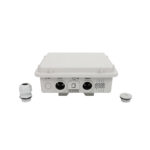
The H900f is designed for industrial cabinet mounting rather than direct outdoor exposure — it carries IP30 ingress protection, which covers internal dust but not rain or water ingress. For outdoor pole-mounted or exposed installations, the router should be housed in a weatherproof enclosure rated for the installation environment. External SMA antenna connectors allow antenna cables to pass through the enclosure to outdoor-rated antennas without compromising the enclosure’s weatherproofing.
Does the H900f support carrier-grade NAT workarounds for remote camera access?
Yes. When the SIM plan uses carrier-grade NAT and does not assign a routable public IP, the H900f can establish an outbound VPN tunnel to a central server with a fixed IP — connecting the camera LAN to the management network through the tunnel rather than requiring an inbound connection to the router. Private APN plans with fixed IP addresses are the cleaner alternative and should be confirmed with the carrier before SIM procurement for critical CCTV deployments.
When should a project choose a separate PoE switch rather than an integrated 5G PoE router?
A separate managed PoE switch is more appropriate when the total camera count exceeds eight to ten units, when individual camera wattage requirements push total PoE load above what the router’s integrated budget can supply, or when the site already has a separate router and only needs the PoE distribution function. For new deployments with up to eight cameras, moderate PoE loads, and a requirement for cellular backhaul, the H900f’s integrated approach is usually the simpler and more cost-effective architecture.
Conclusion: Fewer Cables, Fewer Failure Points, One Device
The practical case for an industrial 5G router with PoE is not about the technology — it is about what does not need to be installed alongside it. No separate PoE switch. No additional power adapters per camera. No extra cabling between the router and a downstream power distribution device. For remote sites where installation labour is expensive and cabinet space is limited, removing those components from the bill of materials is a meaningful cost reduction before the first camera is even powered on.
The H900f specifically suits deployments where that simplification needs to coexist with carrier redundancy, rich interface support, and the ability to handle multi-device LANs that combine cameras, sensors, PLCs, and serial field equipment in a single cabinet. Not every site needs all of that — the H685f handles embedded single-SIM applications more economically — but for the tier of deployment where it does, the H900f is built for exactly that role.
Before finalising any PoE router deployment, confirm the following:
- Calculate total PoE load at maximum camera draw, including infrared, and verify the router’s power budget covers it with margin.
- Test cellular signal inside the actual enclosure using the real deployment SIM and antenna configuration, not a handheld signal meter at the cabinet door.
- Confirm SIM plan IP assignment — fixed public IP or private APN — before deployment if remote camera access requires inbound VPN initiation.
Planning a Remote Site with IP Cameras or PoE Devices?
Tell E-Lins your camera count, PoE load requirements, cellular carrier region, uptime target, and enclosure type. We will confirm whether the H900f fits or recommend the right configuration for your specific deployment.
Contact Us