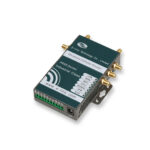
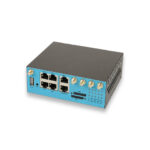
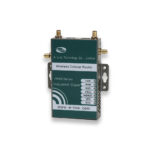
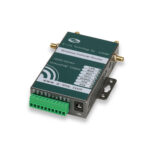
























The Outdoor 5G CPE That Lives on the Pole — and Why That Changes Everything About Remote Site Installation
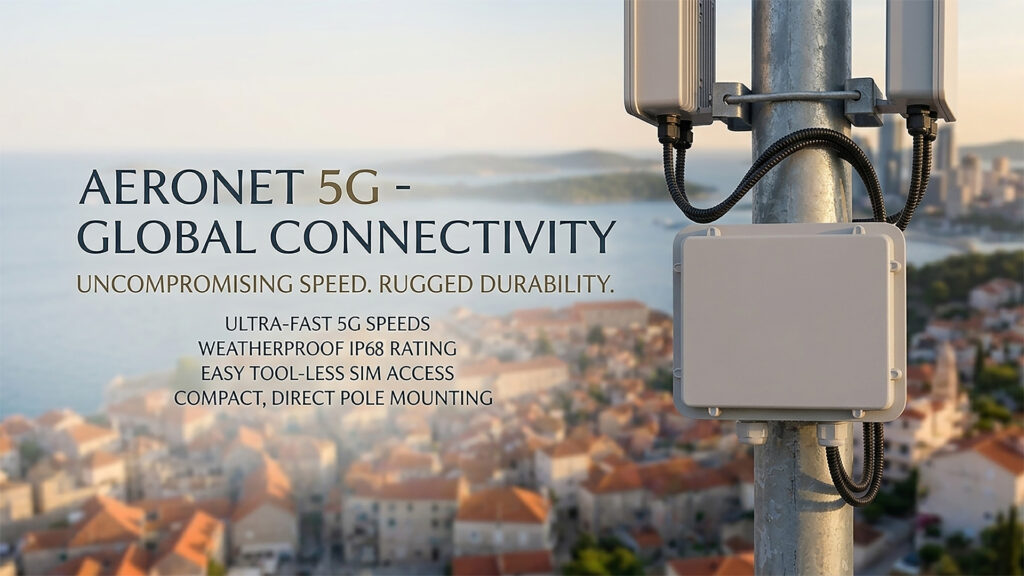
Most outdoor deployments follow the same pattern: find a weatherproof cabinet, mount the router inside it, run conduit to a power socket, then add external antennas. The H820QOf breaks that pattern entirely. It mounts directly on the pole, takes its power and data through a single Cat5e cable from an indoor switch, and exposes nothing to the elements except the unit itself — rated IP68 for full submersion. There is no cabinet to source, no outdoor power supply to install, and no shelter structure to maintain.
What Is a 5G Outdoor CPE Router — and How Is It Different from an Indoor Router?
A 5G outdoor CPE router is a cellular gateway designed to be installed directly in the outdoor environment — on a pole, wall, or mast — rather than sheltered inside a cabinet. CPE stands for Customer Premises Equipment, but in the industrial and infrastructure context it refers specifically to the class of device that terminates the cellular connection at the physical edge of a site, exposed to weather, temperature swings, UV radiation, and everything else the installation environment delivers.
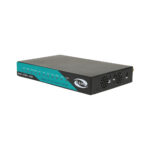
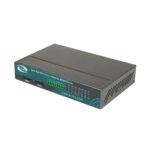
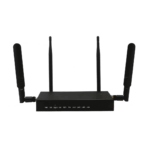
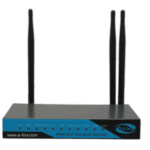
The distinction from a standard indoor industrial router is structural, not just cosmetic. An indoor router like the H685f or H900f carries IP30 ingress protection — it is designed for life inside a sealed cabinet, protected from rain and dust by the enclosure around it. The H820QOf carries IP67/IP68 — it is rated for dust-tight sealing and submersion in water to one metre for thirty minutes. It does not need a cabinet because it is its own enclosure.
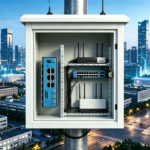
This changes the installation equation in a specific and practical way. The standard indoor-router deployment involves sourcing a weatherproof cabinet, mounting it on the pole or wall, running power to the cabinet, installing the router inside, routing antenna cables from the router through cable glands to external antennas, and then running Ethernet to whatever endpoint the router is serving. The H820QOf replaces that entire assembly with one device on a pole bracket, one cable running back to an indoor PoE switch, and two built-in high-gain antennas already integrated into the housing. The IP68 outdoor 5G router for pole mount installation is not a simplification of the standard approach — it is a different approach entirely.
Key distinction: indoor routers are protected by their enclosure. The H820QOf is its own enclosure. Everything that would normally be inside a weatherproof cabinet — router, antennas, connectors — is consolidated into a single IP68-rated housing that mounts directly on the infrastructure.
Site Readiness Checklist Before Specifying an Outdoor CPE
The H820QOf simplifies outdoor installation, but a few site parameters must be confirmed before that simplicity translates into a smooth deployment. The questions are different from those for an indoor router — they focus on the cable run from the indoor switch to the pole rather than the cabinet interior.
- Where is the nearest indoor PoE-capable switch or injector, and how far is the cable run to the planned pole mounting position?
- Is the PoE source rated for 802.3af or 802.3at? The H820QOf is a PoE PD (Powered Device) — it receives power, not delivers it.
- What is the pole diameter or wall surface type at the mounting point — will the standard bracket hardware suit the pole or will a custom bracket be required?
- Has cellular signal been tested at the planned mounting height? Signal at pole top can differ substantially from signal at ground level, especially in areas with obstructions.
- What is the wind load rating of the pole or mast? A device mounted at height adds mechanical load that should be within the pole’s structural specification.
- Is GPS/GNSS positioning required at this site alongside cellular connectivity?
- What SIM plan, APN, and VPN architecture will the device use, and has this been confirmed as compatible with the carrier coverage at the installation point?
Why Mounting the Router on the Pole Changes the Economics
Every metre between the router and the device it serves is a metre of cable that must be purchased, pulled, terminated, weatherproofed, and eventually maintained. In a standard outdoor surveillance installation without an outdoor CPE, the cable run from an indoor router to a pole-mounted camera includes the camera data cable and the camera power cable — two separate runs, two separate weatherproof glands where each cable enters the cabinet, two terminations at the router end, and two terminations at the camera end.
With an outdoor CPE on the pole, the camera connects to the CPE’s local Ethernet port with a short cable — often less than two metres if the camera and CPE share the same pole bracket. The only cable running back to the building is the single Cat5e or Cat6 that carries both data and power to the CPE via PoE. For a site with four cameras on four poles, the difference is twelve fewer cable runs between the indoor equipment room and the pole positions — and twelve fewer points where water, rodents, or physical damage can interrupt the system.
The cost difference is most visible on greenfield sites where no cable infrastructure exists yet. Trenching, ducting, and pulling cable is typically charged by the metre regardless of cable count. Reducing cable runs from two per pole to one per pole can save 30–40% of the cabling labour on a typical outdoor surveillance deployment, before the cabinet hardware is even considered.
On a perimeter surveillance installation we supported with six camera poles and an indoor equipment room 80 m away, the original design specified a standard indoor router with external cameras: 6 data cables × 80 m plus 6 power cables × 80 m = 960 m of cable total, 24 outdoor weatherproof glands, and a cabinet at each pole containing a PoE injector. Redesigned with an H820QOf at each pole and a single Cat5e to the indoor PoE switch: 6 cables × 80 m = 480 m total, 6 cable glands at the indoor panel, and no outdoor cabinets. Cabling cost dropped by approximately 44%. Installation time across the six poles fell from an estimated 3.5 days to 1.8 days.
A smart city integrator we worked with in Southeast Asia was deploying traffic monitoring cameras at 22 road intersections. Their original architecture used indoor 4G routers in weatherproof enclosures mounted at the base of each signal pole, with separate power cables run up the pole to each camera. After switching to the H820QOf for a pilot group of eight intersections, they reported that the per-intersection installation time dropped from approximately 4 hours to 2.5 hours — largely because the cable run to the camera was eliminated and the weatherproof enclosure sourcing, assembly, and cable gland work at each pole was removed from the scope. The integrator subsequently retender the remaining 14 intersections with the revised architecture.
Important: the single-cable approach depends on the cable run from the indoor PoE switch to the outdoor CPE staying within the 100 m PoE distance limit. For pole positions beyond 80 m from the indoor equipment room, confirm the cable loss budget carefully. At 90–100 m on Cat5e, PoE power delivery to the CPE may be marginal. Cat6 cable or a PoE extender at the midpoint can resolve this for longer runs.
Key Features for Outdoor 5G CPE Selection
An outdoor CPE that fails six months into a three-year deployment is harder to replace than an indoor router — it means sending someone up a ladder or lift to a pole at height. The hardware specification needs to address not just the network requirements but the physical conditions the device will live in for its entire service life.
1. IP67/IP68 Ingress Protection
IP68 is the highest standard level of ingress protection for dust and water. An IP68 rating confirms the device has been tested for complete dust exclusion and for submersion in water to one metre for thirty minutes without ingress. For a device mounted on an outdoor pole exposed to heavy rain, pressure washing during cleaning operations, or flooding in low-lying locations, IP68 provides genuine protection rather than splash resistance. IP67 covers the same submersion test at one metre. Both ratings are appropriate for exposed outdoor installation; IP68 is the higher assurance of the two.
2. PoE In as the Power Path — and What That Requires Indoors
The H820QOf receives power through its Ethernet port via IEEE 802.3af/at PoE. This means there is no separate outdoor power supply, no weatherproof socket, and no DC cable to route to the pole. One Cat5e or Cat6 cable from an indoor PoE switch or PoE injector powers and connects the device. The indoor PoE source must be rated to deliver adequate wattage — check the H820QOf’s specific power consumption against the PoE port wattage of the planned indoor switch before finalising the cable run design.
“The PoE In approach is genuinely underappreciated by buyers coming from a background in cabinet-based deployments. They see it as a constraint — ‘but then I need a PoE switch indoors.’ In practice it is the opposite: it means everything difficult about outdoor power installation simply does not exist. No outdoor socket permit, no weatherproof power enclosure, no separate cable run, no earth bonding for an outdoor power circuit. That removes three to four items from the installation scope before a single hole is drilled.”
— E-Lins application engineering team3. Built-In High-Gain Antennas with External Option
The H820QOf integrates high-gain cellular and Wi-Fi antennas directly into the housing. This matters because outdoor antenna installation — running coaxial from a router inside a cabinet to external antennas on the exterior, sealing the cable penetration, positioning the antennas above the cabinet — adds cost and introduces weatherproofing failure points over time. The integrated antenna approach eliminates this. For sites requiring higher gain for long-distance coverage or difficult terrain, reserved SMA connectors allow external high-gain antennas to be added without replacing the unit.
4. 5G SA/NSA with 4G LTE Fallback and Multi-WAN Failover
The H820QOf supports 5G Standalone and Non-Standalone operation, falling back automatically to 4G LTE where 5G coverage is unavailable. Beyond cellular, it also supports WAN failover across cellular, Ethernet WAN, and Wi-Fi client simultaneously — a weatherproof 5G CPE for remote surveillance that can continue operating through a cellular outage by switching to an Ethernet WAN connection if one is available at the site. For dual SIM configurations, carrier failover operates independently of the WAN-path failover logic.
5. Wide Operating Temperature — −35 °C to +75 °C
An outdoor device mounted on a south-facing pole in a hot climate can reach surface temperatures well above the ambient air temperature in direct summer sun. A router rated to +70 °C may be marginal in these conditions; +75 °C provides meaningful additional headroom. At the cold end, −35 °C covers the majority of continental climates including northern Europe, Canada, and Central Asia through winter. The industrial-grade temperature spec is not a theoretical maximum — it reflects the actual thermal cycling the device is designed and tested to survive.
6. VPN, Firewall, and Private APN for Outdoor Network Security
An outdoor cellular router with PoE In for exposed sites that serves surveillance cameras or infrastructure sensors is carrying data that should not be accessible from the public internet. VPN tunnels — IPsec, OpenVPN, WireGuard, or ZeroTier depending on the platform — ensure that camera feeds and sensor data travel encrypted to a central management system rather than over a raw public cellular IP. The H820QOf’s support for WireGuard is worth noting specifically: WireGuard’s fast reconnection behaviour is well-suited to devices that may cycle through cellular re-registrations after brief outages on outdoor sites.
7. Remote Management and Hardware Watchdog for Unattended Poles
A router at the top of a four-metre pole is not easy to reboot manually. Hardware watchdog recovery — which monitors the device’s connectivity state and restarts it automatically when failure is detected — is the primary defence against the scenario of a frozen unit that requires a site visit to recover. Cloud NMS, SNMP, TR-069, and SSH access provide the remote diagnostic and configuration capability that keeps a fleet of pole-mounted devices manageable without truck rolls for routine maintenance.
E-Lins H820QOf: IP68 5G Outdoor CPE with Pole Mount
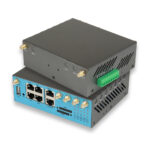
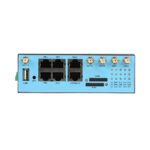
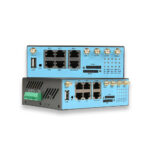
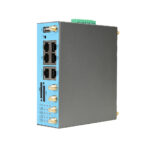
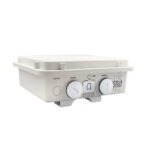
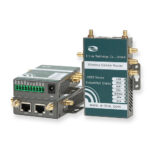
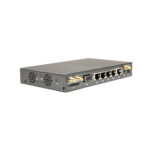
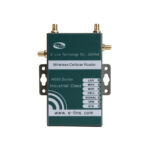
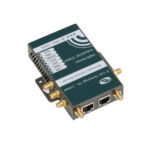
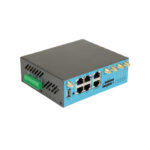
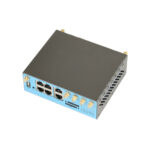
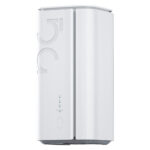
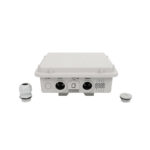
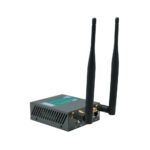
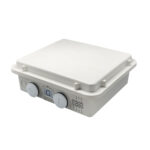
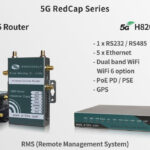
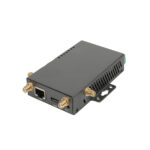
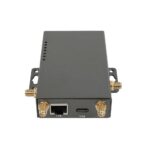
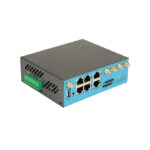
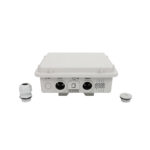
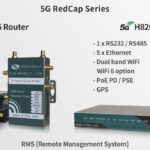
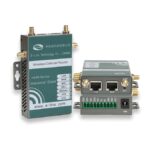
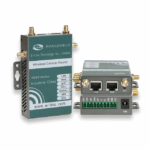
The H820QOf is E-Lins’ purpose-built outdoor 5G CPE, designed for direct pole and wall mounting in exposed environments. Unlike the indoor H685f and H900f — which require a cabinet to shelter them — the H820QOf is the enclosure. Its IP67/IP68 housing, integrated antennas, and PoE In power design make it the natural choice for deployments where installing a cabinet at each mounting point is the primary cost and complexity driver.
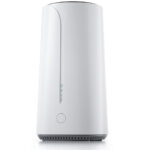
E-Lins H820QOf IP68 5G Outdoor CPE Router
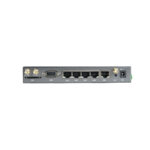
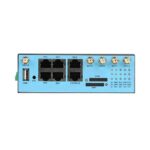
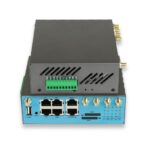
Ruggedised IP67/IP68 outdoor 5G/4G CPE with built-in high-gain antennas, PoE In power, pole/wall/DIN-rail mounting, WireGuard + full VPN suite, dual-band/tri-band Wi-Fi option, and GPS/GNSS support. Designed for 7×24 h unattended outdoor operation across the full industrial temperature range.
What Makes the H820QOf the Right Choice for Exposed Outdoor Sites
The clearest way to understand the H820QOf’s position is to compare it against the cabinet-based alternative on a specific installation. Take a traffic monitoring pole at a road intersection: four cameras, a cellular router, and a variable message sign controller. The cabinet-based approach needs a weatherproof enclosure sized to house the router and associated hardware, an outdoor power supply or conduit run from the nearest electrical point, external antennas routed through cable glands, and a maintenance programme for the enclosure seals. That is before the router itself is configured.
The H820QOf approach mounts the unit to the pole, runs one Cat5e back to an indoor PoE switch at the nearest building, and connects the cameras to the unit’s local Ethernet port. The antennas are built in. The enclosure is the unit itself. Maintenance is remote — NMS, SNMP, or SSH from the central management platform — unless a physical hardware fault requires a visit. For a programme of 50 or 100 intersections, the reduction in per-site installation complexity compounds into a material project cost difference.
ZeroTier VPN support is worth highlighting for integrators who manage large fleets of outdoor devices. ZeroTier creates encrypted peer-to-peer tunnels without requiring a central VPN concentrator with a fixed IP — particularly useful in deployments where the SIM plans available in the target market use carrier-grade NAT and where setting up a dedicated VPN server adds operational overhead the integrator prefers to avoid.
The optional tri-band concurrent Wi-Fi with MU-MIMO is relevant for deployments where the outdoor CPE serves not just backhaul purposes but also provides local Wi-Fi coverage — passenger platforms, outdoor public spaces, construction site welfare areas, or agricultural sites where workers need connectivity in the field alongside the IoT sensor network the router is primarily managing.
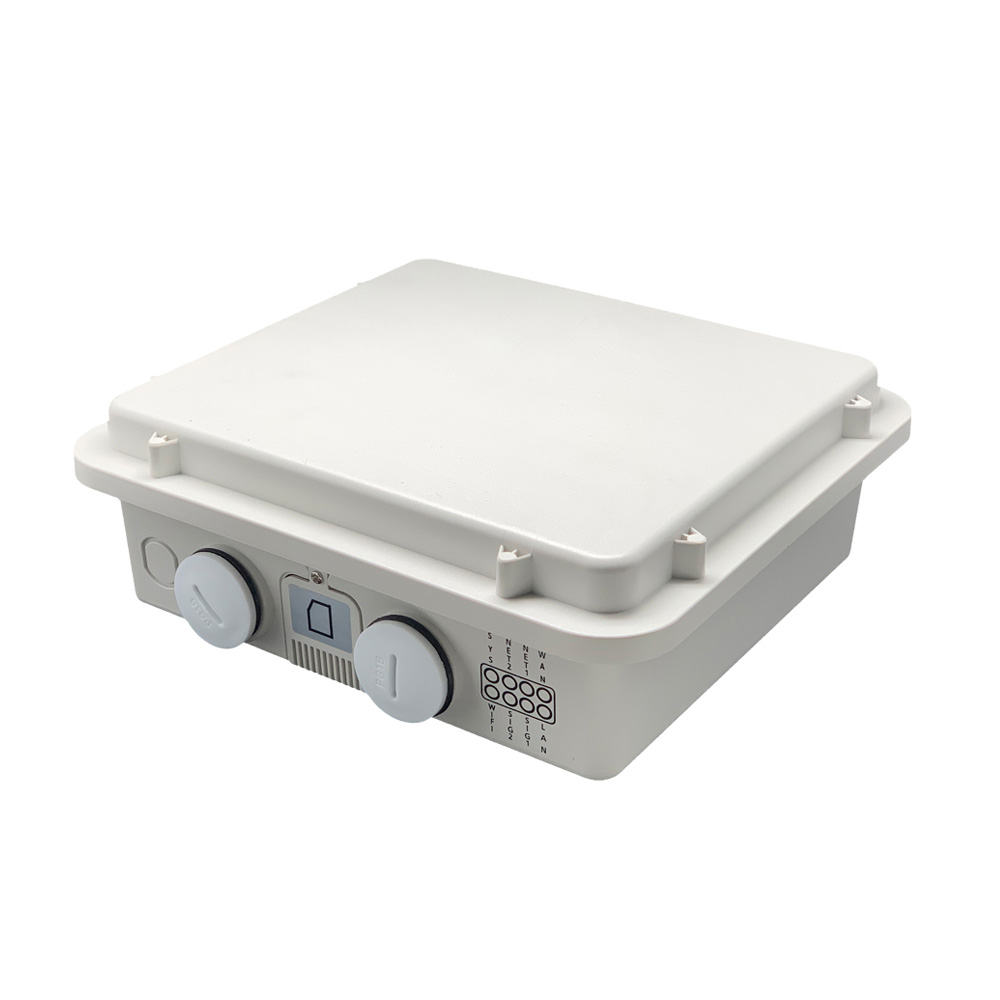
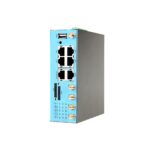
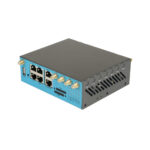
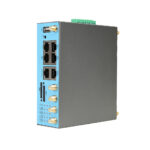
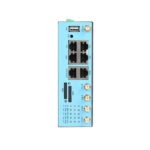
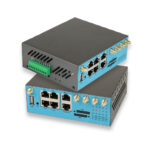
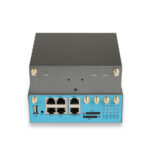
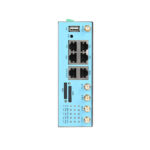
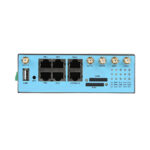
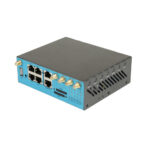
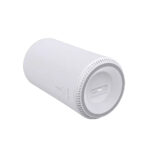
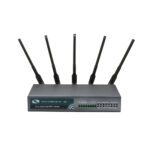
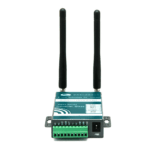
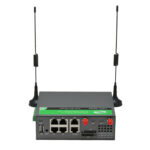
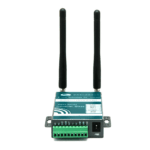
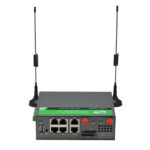
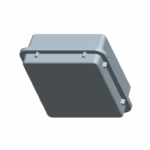
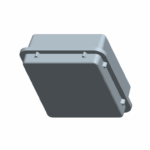
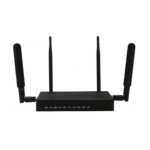
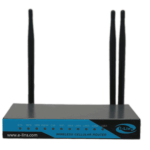
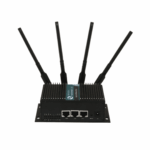
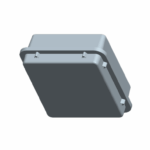
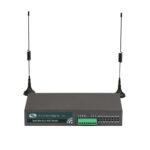
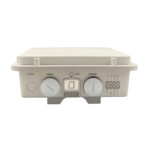
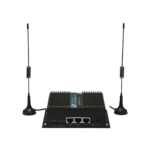
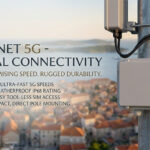
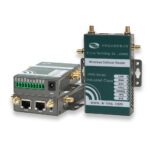
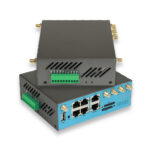
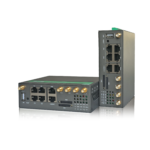
E-Lins H820QOf — IP68 5G outdoor CPE with integrated antennas, pole mount bracket, and PoE In power for direct outdoor installation without a cabinet
Which Project Structure Suits the H820QOf?
The H820QOf is best suited to projects where the cost or complexity of providing a sheltered, powered mounting point for each router is a significant factor in the overall deployment budget. If an outdoor cabinet is already in the design for other reasons, an indoor router inside it may be equally appropriate. Where the cabinet exists only to house the router, the H820QOf removes the cabinet from the project entirely.
Outdoor CCTV and Perimeter Security
- Cameras and router share the same pole — one cable back to building.
- IP68 housing eliminates weatherproof enclosure per pole.
- Built-in antennas avoid external antenna cable management.
- VPN protects footage from public internet exposure.
- Watchdog recovery keeps cameras online without site visits.
Smart City and Traffic Infrastructure
- Traffic cameras, speed sensors, VMS signs on signal poles.
- PoE In from cabinet equipment room — no outdoor power work.
- GPS/GNSS option for intersection location tagging.
- NMS fleet management across hundreds of pole sites.
- WireGuard/ZeroTier for carrier-NAT-tolerant secure access.
Environmental and Utility Monitoring
- Air quality, weather, water level sensors at exposed locations.
- IP68 protects against flooding at low-lying monitoring points.
- Wide-temperature range for polar and desert deployments.
- RS232/RS485 option for legacy sensor integration.
- Solar or battery DC supply with PoE In over a short cable.
Construction and Temporary Sites
- Temporary pole or scaffold-mounted surveillance and connectivity.
- No permanent cabinet installation — unit relocates with the pole.
- Wi-Fi option serves site welfare and worker connectivity needs.
- Dual SIM option for sites in marginal single-carrier coverage areas.
- Rugged housing survives site dust, vibration, and pressure washing.
Comparison: Outdoor CPE on the Pole vs Indoor Router in a Cabinet
The table below compares three approaches to outdoor cellular router deployment. The right choice depends on whether an outdoor cabinet is already justified on the site for other purposes, how many poles or mounting points are involved, and whether the installation budget is constrained by cabling and enclosure costs.
| Factor | H820QOf on pole (outdoor CPE) | Indoor router + weatherproof cabinet | Indoor router in existing cabinet |
|---|---|---|---|
| Cabinet required | No — unit is its own enclosure | Yes — per mounting point | Yes — but already present |
| Outdoor power supply | No — PoE In from indoor switch | Yes — separate outdoor power run | Usually yes |
| Cable runs per pole | 1 × Cat5e/Cat6 (data + power) | 1 data + 1 power minimum | 1 data + 1 power minimum |
| Antenna management | Built-in; external SMA option | External antennas via cable glands | External antennas via cable glands |
| IP rating | IP67/IP68 — submersion rated | Depends on cabinet IP rating | IP30 router protected by cabinet |
| Per-site hardware cost | CPE unit + pole bracket | Router + cabinet + power supply + antennas | Router only (cabinet already costed) |
| Best fit | Greenfield multi-pole deployments with no existing cabinets | Sites needing cabinet for other equipment anyway | Existing infrastructure upgrade |
| Main risk | PoE cable run distance limit; pole-height wind load | Cabinet seal maintenance; outdoor power circuit | Cabinet thermal management for added device |
Common Mistakes When Deploying an Outdoor 5G CPE
Assuming Outdoor = No PoE Planning Needed
The H820QOf removes outdoor power infrastructure from the project, but it does not remove PoE planning. The indoor PoE switch or injector must be specified to deliver sufficient wattage to the CPE over the planned cable run length. A budget PoE switch with underrated port wattage will under-power the device at long cable runs. This should be confirmed against the H820QOf’s power consumption specification before the indoor switch is procured — not after the cable is pulled.
Ignoring the 100 m PoE Cable Limit
PoE power delivery over Cat5e or Cat6 is specified for a maximum of 100 m. For poles positioned more than 80–90 m from the indoor PoE source, the power margin at the endpoint narrows considerably due to cable resistance losses. For borderline runs, either use Cat6 cable (lower resistance per metre than Cat5e), install a PoE extender at the midpoint, or position the indoor PoE equipment closer to the field. This is the single most common cause of intermittent H820QOf power issues in the field, and it is entirely avoidable with a cable-run measurement at the design stage.
Relying on Ground-Level Signal Tests
Signal conditions at pole-mounted height can differ significantly from signal measured at ground level, particularly in areas with buildings, terrain, or vegetation creating obstructions at low elevation. A signal test with a handheld device standing at the base of the pole is not a valid proxy for signal at three or four metres up. Testing should be done at or near the planned mounting height, ideally with the H820QOf itself or an equivalent device, before cable infrastructure is committed.
On a rural road deployment we supported in Central Europe, ground-level RSRP on LTE Band 20 measured −108 dBm at the planned pole position — marginal for reliable video streaming. At 3.5 m mounting height, signal improved to −96 dBm, a 12 dB gain attributable to the device rising above a line of hedgerows between the site and the base station. The deployment that appeared borderline on a drive survey was confirmed as workable once the mounting height was accounted for. This result is not universal — terrain geometry varies — but it illustrates why height testing is part of the site survey, not an afterthought.
Skipping Watchdog Configuration on Unattended Poles
An outdoor CPE at the top of a pole that freezes or loses its cellular registration with no watchdog configured requires a physical site visit to recover. On a 50-unit deployment, a 2% annual failure rate that requires a site visit costs approximately one field service day per year. With a properly configured hardware watchdog and automatic reconnection logic, the same failure rate is handled automatically, and the field service call is reserved for genuine hardware faults. Watchdog configuration should be verified and documented as part of the commissioning procedure for every unit, not left as an optional post-installation step.
Wrong Antenna Choice for the Deployment Distance
The H820QOf’s built-in antennas are appropriate for most urban and suburban deployments where base stations are within reasonable range. For rural or remote deployments where the nearest 5G or LTE base station is several kilometres distant, the external SMA connector option allows a higher-gain directional antenna to be pointed toward the base station — potentially recovering 6–10 dB of signal that the omni-directional built-in antenna cannot capture at long range. The decision between built-in and external antenna should be made at the design stage based on a link budget calculation for the specific site, not assumed to be irrelevant because the device has antennas included.
Application Scenarios for Outdoor 5G CPE Routers
The common thread across every scenario below is the same: a site that needs cellular connectivity at a pole or wall location, where installing a sheltered cabinet would add cost, complexity, or lead time that the project cannot justify. The H820QOf’s value is most visible when the alternative is a cabinet that exists solely to house the router.

Perimeter and Site Security
Construction sites, logistics yards, solar farms, and critical infrastructure perimeters deploy pole-mounted IP cameras on a single 5G uplink. The CPE and cameras share the same pole bracket with one cable back to the building.

Traffic and Smart City Infrastructure
Traffic cameras, speed sensors, and variable message signs at road intersections use a pole-mounted CPE for cellular backhaul. GPS tagging supports intersection location data alongside video and telemetry.

Environmental and Weather Monitoring
Air quality monitors, weather stations, and river level sensors at exposed outdoor locations need IP68 protection and wide-temperature tolerance alongside cellular backhaul. The H820QOf integrates all three in one pole-mounted unit.

Solar and Renewable Energy Sites
Solar farms and wind sites in remote areas use outdoor CPEs for inverter monitoring, camera surveillance, and environmental data collection. Wide-voltage DC input accommodates solar charge controller output directly.

Agriculture and Rural IoT
Precision irrigation controllers, soil sensors, livestock tracking, and field cameras in agricultural settings need weatherproof connectivity at locations where a cabinet installation is impractical. The H820QOf mounts on an existing fence post or field pole.

Port and Logistics Perimeters
Container yards, port perimeters, and open logistics sites need weatherproof cameras and wireless nodes at locations where running conduit to a sheltered cabinet is prohibitively expensive. Pole-mounted outdoor CPEs serve both cellular backhaul and local Wi-Fi distribution simultaneously.
Extended Reading
E-Lins H820QOf Product Page — Full specification, 3D model, product gallery, and ordering information for the IP68 5G outdoor CPE.
Industrial 4G/5G PoE Router Category — Compare E-Lins’ full range of PoE-capable industrial routers, including both indoor and outdoor configurations.
IoT 5G Router Category — Browse the complete 5G router lineup for industrial IoT and M2M applications where an indoor cabinet-mounted router is appropriate.
H900f Dual SIM 5G Router with PoE — The indoor counterpart for sites where a cabinet is already present and Active PoE Out to downstream devices is required.
GSMA 5G IoT Overview — Industry background on 5G IoT deployment scenarios including smart city, environmental monitoring, and critical infrastructure connectivity.
Project Inquiry — Share your pole count, cable run distances, cellular carrier region, mounting surface type, and connectivity requirements for a tailored recommendation.
FAQ
What is the difference between IP67 and IP68 on the H820QOf?
Both IP67 and IP68 provide complete dust exclusion (the “6” prefix) and water immersion protection. IP67 is rated for submersion to one metre for 30 minutes. IP68 extends this to continuous submersion at a manufacturer-specified depth, typically greater than one metre. For most outdoor pole-mounted applications, IP67 is more than sufficient — rain, pressure washing, and incidental flooding are covered. IP68 provides additional assurance for deployments in low-lying areas with flood risk, or where the device may be temporarily submerged during installation or maintenance.
Does the H820QOf require an outdoor power supply?
No. The H820QOf is powered entirely through its Ethernet port via PoE In (IEEE 802.3af/at). A single Cat5e or Cat6 cable from an indoor PoE switch or PoE injector carries both data and power to the outdoor unit. There is no separate outdoor power supply, no outdoor socket, and no DC power cable to weather-seal at the mounting point. This is the primary installation cost advantage of the outdoor CPE architecture over cabinet-based indoor router deployments.
How far from the indoor PoE switch can the H820QOf be mounted?
IEEE 802.3af/at PoE is specified for a maximum cable run of 100 m on Cat5e or Cat6. For practical reliability, particularly where the device’s power consumption is near the PoE port’s maximum rated output, keeping the cable run to 80 m or less provides a comfortable margin against cable resistance losses. For runs approaching 100 m, Cat6 cable (lower resistance than Cat5e) or a PoE extender at the midpoint is advisable. Cable run distance should be measured and documented at the design stage, not estimated on-site.
Can the H820QOf power downstream cameras or sensors via PoE Out?
No. The H820QOf is a PoE PD (Powered Device) — it receives power through its Ethernet port from an upstream PoE source. It does not deliver PoE power to downstream devices. For deployments requiring outbound PoE to power cameras or sensors from the router itself, the H900f (which supports Active PoE Out) is the appropriate product. The H820QOf’s role is to be the device that sits at the pole, powered by one cable from the building, while the cameras it serves are typically co-located on the same pole and connected locally by short cable runs.
Does the H820QOf support dual SIM?
Dual SIM is available as an option on the H820QOf. The standard configuration uses a single SIM. For deployments where carrier redundancy is required — critical surveillance sites, emergency infrastructure, locations in marginal single-carrier coverage — the dual SIM option should be specified at ordering. Dual SIM operation supports both automatic failover (primary carrier outage triggers switch to secondary) and load balancing across both SIM connections simultaneously.
What VPN options does the H820QOf support?
The H820QOf supports IPsec, OpenVPN, WireGuard, ZeroTier, DMVPN, GRE, L2TP, and PPTP, operating in both VPN client and VPN server modes. WireGuard is particularly suited to outdoor CPEs that experience cellular re-registration events, as its fast stateless handshake re-establishes the tunnel quickly after brief connectivity interruptions. ZeroTier is useful for deployments where SIM plans use carrier-grade NAT and a traditional VPN concentrator with a fixed IP is not available or desired.
Is the H820QOf suitable for agricultural or rural remote sensing deployments?
Yes. The IP68 rating provides reliable protection in agricultural environments including irrigation spray, high-humidity storage areas, and outdoor field mounting on fence posts or purpose-built poles. The wide operating temperature range covers seasonal extremes in most agricultural regions. For remote rural sites where base station coverage is limited, the external SMA antenna connectors allow a high-gain directional antenna to be added, which can recover several additional dB of signal at distances where the built-in omni-directional antenna becomes marginal.
Can the H820QOf be powered by a solar system?
Yes. The H820QOf’s wide-voltage DC input (5–40 V, 5–60 V option) is compatible with 12 V and 24 V solar charge controller outputs, either directly or through the PoE In path from an indoor PoE injector powered by the solar system. For fully off-grid deployments where solar power is used, the dual power input with automatic failover allows a secondary battery or power source to maintain connectivity if the primary solar rail drops below operating voltage during extended low-light periods.
How does the H820QOf handle temperature extremes on south-facing or desert deployments?
The H820QOf is rated to +75 °C operating temperature. In direct sun on a south-facing surface in a hot climate, surface temperatures can exceed ambient air temperature by 15–20 °C. The +75 °C rating provides meaningful margin over the commonly-cited +70 °C limit of many industrial routers. For extreme environments — Middle East, North Africa, Australian outback — confirming the device’s thermal performance in the specific installation orientation (vertical pole vs horizontal surface mount) is advisable, as heat dissipation differs between orientations.
What is the difference between the H820QOf and the H900f for outdoor deployments?
The H820QOf is designed to be mounted outdoors directly, with IP68 protection, integrated antennas, and PoE In as its power path — it replaces the weatherproof cabinet. The H900f is an indoor router with IP30 protection that lives inside a cabinet, and it provides Active PoE Out to power downstream devices like cameras. If a site already has a cabinet and needs the router inside it with PoE Out to cameras, the H900f is the right choice. If the goal is to eliminate the outdoor cabinet and mount the router directly on the pole, the H820QOf is the right choice. The two products serve complementary architectures rather than competing for the same use case.
Conclusion: When the Cabinet Is the Problem, the Outdoor CPE Is the Solution
The fundamental argument for a 5G outdoor CPE router is not technical — it is architectural. At a site where a weatherproof cabinet exists for other equipment, an indoor router inside it is perfectly appropriate. At a site where the cabinet would exist only to house the router, the outdoor CPE removes the cabinet, the outdoor power supply, the cable gland work, the enclosure seal maintenance programme, and the antenna cable management from the project in a single product decision.
The H820QOf is designed for that second category of site: pole-mounted surveillance, traffic infrastructure, environmental monitoring stations, agricultural IoT, and any outdoor deployment where the installation cost of sheltering the router exceeds the cost of replacing it with a device that does not need shelter. One Cat5e cable from an indoor PoE switch, one pole bracket, one IP68-rated unit with built-in antennas — and the site is connected.
Before specifying the H820QOf for a deployment, confirm the following:
- Measure every cable run from the planned indoor PoE source to each pole mounting position — verify all runs are within 100 m, or plan for Cat6 cable or PoE extenders on longer spans.
- Test cellular signal at the planned mounting height at each pole position, not at ground level — height can recover 10–15 dB of signal that a ground survey misses.
- Confirm the VPN and APN architecture against the carrier’s SIM plan before deployment — ZeroTier or WireGuard for carrier-NAT environments; IPsec or OpenVPN for fixed-IP or private APN plans.
Planning Outdoor Cellular Connectivity Without the Cabinet?
Tell E-Lins your pole count, cable run distances, mounting environment, carrier region, and connectivity requirements. We will confirm whether the H820QOf fits or recommend the right outdoor CPE configuration for your specific site.
Contact Us