
LTE Routers: Your Ultimate Connectivity Guide for IoT & IIoT
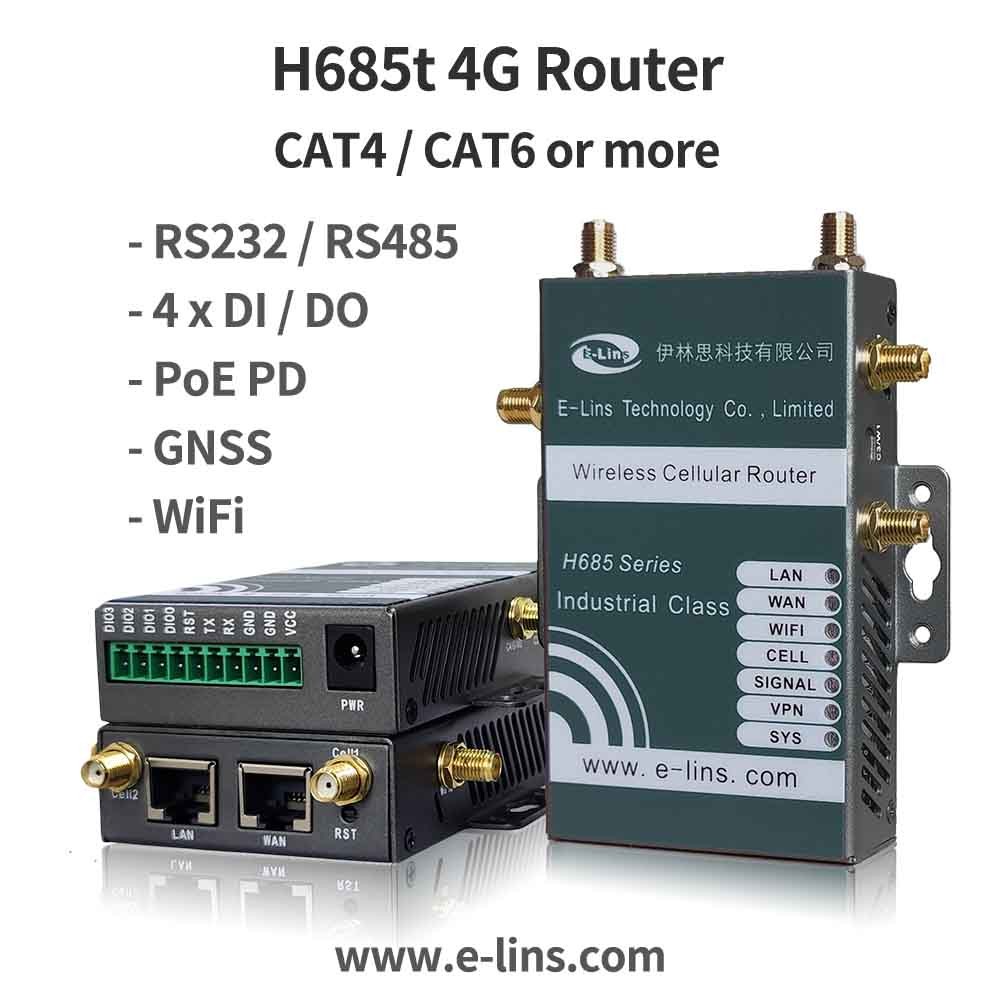
An Ultimate Guide to High-Speed Industrial Wireless Connectivity via LTE Routers: Enterprise, Remote Location & IoT
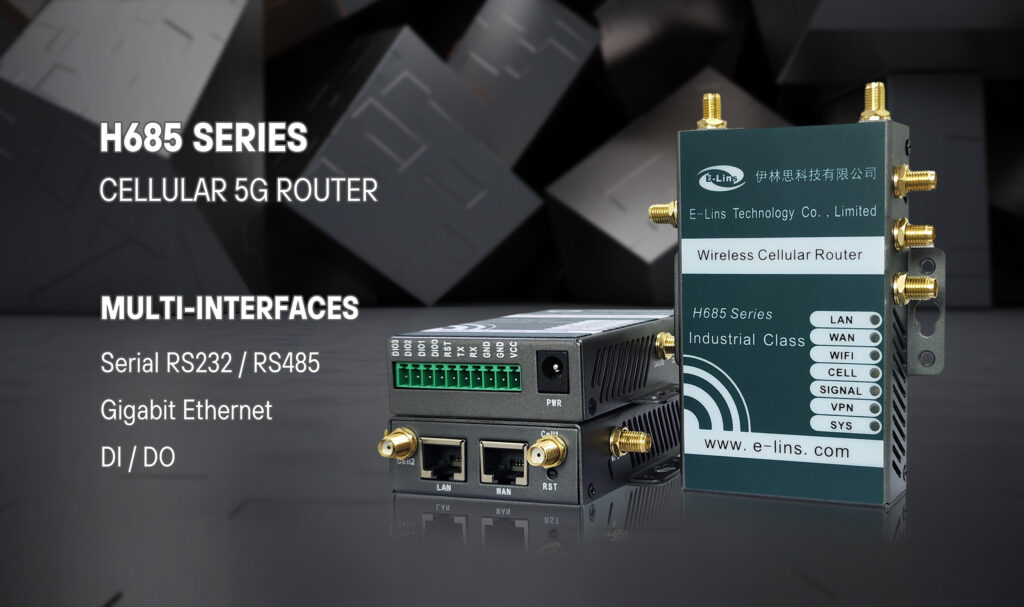
1)Introduction
The message is to a high demand customer: quality internet access is not optional, it has become a required service in this connected world where businesses and industrial operations can gain so much from reliable coverage as will people who work at remote locations (away from traditional wired broadband) for whom conventional wireless broadband does not exist or simply will never work. And this is where the LTE router usage comes into play. Certain LTE (Long-Term Evolution) routers are also known as 4G Routers, these are more dedicated cellular 4G LTE gadgets for use of dependable fast and secure wireless internet over cellular infrastructure. On the other hand, Industrial and professional LTE routers are ruggedized for heavy-duty applications with 24/7+ operation to provide a backbone for class-leading solutions in Industrial Internet of Things (IIoT), Machine-to-Machine (M2M) and remote networking.
This comprehensive guide provides a deep insight into the technology underlying LTE routers and their use cases across industries, backing it up with insights into core features/specifications (supported by basic breakdown tables) & specifications followed by a step-by-step detailed buying guide lined through answering the most encountered questions one might have before settling on to buy one.
2) LTE Router: What is it and How it Works?
What is LTE?
Long-Term evolution LTE is the international wireless broadband communication standard for 4G networks. LTE — short for Long Term Evolution — is a mobile communication standard developed by the 3rd Generation Partnership Project (3GPP) that minimizes the differences between different generations, rendering previous standards like 3G obsolete in terms of hundreds and sometimes thousands of times faster data transfer speeds, reduced latency, enhanced spectral efficiency, and increased capacity among other benefits.
Speeds: LTE delivers theoretical download speeds as high as 1 Gbps (with LTE-Advanced) and upload speeds of up to 500 Mbps. In reality, normal speed sits in the ballpark of 10 Mbps to 100 Mbps for permanent LTE (even Cat 4), and beyond for broadband LTE-Advanced (through Cat 6/Cat 9).
Latency: One of the most significant improvements, LTE latency (also known as round-trip time) is at around 30-50 milliseconds for real-time applications.
Network Type: LTE is a packet-switched network created primarily for effective data transfer rather than previous circuit-switched networks targeted at voice traffic.
Top Websites for Downloading Games for Computer & Mobile
A LTE router is a piece of hardware that combines several core elements which transforms the cellular signal into accessible Wi-Fi or wired Ethernet connectivity —
LTE Modem — the main hardware on the device that connects to the cell tower and transmits/receives data via a SIM card.
Processor / RCPU: It is an industrial grade (typically a 32bit or 64bit) computer processor capable of routing data and/or converting protocols, as well as managing System Operation.
Memory (RAM/Flash): stores the OS, firmware, config settings and temporary data.
Wireless Radio (Wi-Fi): Translates LTE signal to a Wi-Fi signal (and usually either 2.4GHz and/or 5GHz) wireless beams for laptops, phones, and sensors to communicate with.
Ethernet Ports: Local Area Network ports — for directly connecting through the Ethernet cable. WAN Wide Area Network port with wired connection failover
Serial Ports (RS232/RS485)—these will rarely be for consumer use but are quite often present on the industrial models to enable connection to older style industrial equipment such as PLCs, HMIs etc.)
Antenna: Internal or external for LTE cellular and Wi-Fi signal. External high-gain antennas also improve reception tremendously in weak coverage areas.
Power supply: The majority of industrial models are multi-voltage input (9-60V DC) and redundancy power Input is required for reliability.
Casing: The consumer models are mostly made of plastic. Industrial routers are generally found in a sturdy metal enclosure — shielding them from dust and moisture, vibration and extreme temperatures.
Basic Operation Principle
An LTE router works entirely on process; but the power that it packs is something else.
The SIM card has an active data plan with the intention of connecting the router’s LTE modem to the nearest possible cellular base station.
It gets more data from the internet over the LTE network.
Router processors are then used to route data.
Therefore this data is sent to connected devices via wireless (Wi-Fi) or through solid connections by means of Ethernet cables.
Likewise, all traffic generated from the local devices is relayed back through the router to visit sites on the internet over LTE.
Higher models of provide interactive referral via VPN, firewall unit switch facts streaming encrypted along with safe.
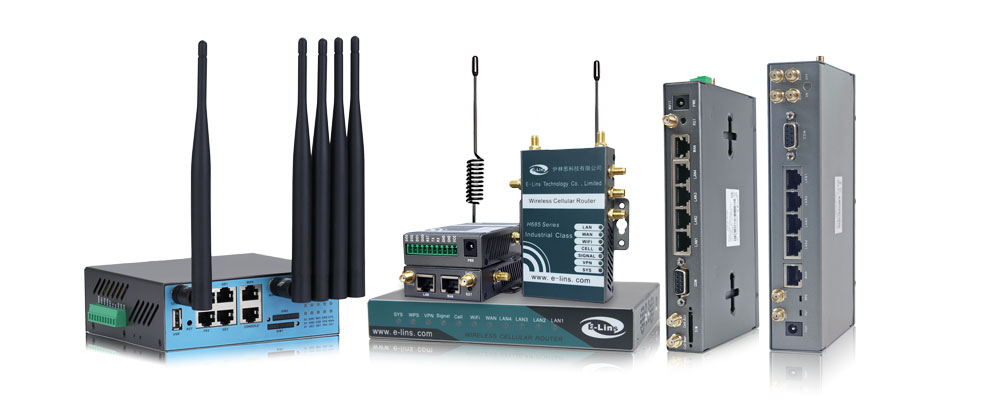
3) LTE Routers —LTE Routers: Key Applications & Use Cases
LTE routers are incredibly versatile. And they have disrupted industries due to their ability to offer immediate and reliable connectivity globally where cellular signal can be accessed.
Industrial IoT & Automation
This is the largest and most significant application of industrial LTE routers.
Industrial Automation: Connect PLC, sensors and robotic arms from the field side to SCADA or MES system for monitoring & control over time.
Process Monitoring: Data sent from temperature, pressure and flow sensors in chemical plants, oil refineries and manufacturing facilities.
Smart Grids: Allows independent from a location monitoring along with controlling of power substations, renewable energy farms (solar/wind) and utility meters.
Protocol conversion Industrial routers rely on workable protocols, such as Modbus and OPC UA, that enable the interconnection of different devices.
Remote & Rural Connectivity
Distant sites: Construction zones, mines and agriculture fields where it is inefficient or too costly to trench the fiber into these areas.
Sky Blue ISP gives High Speed internet via Wireless technology to most of the western countries even places where there is no wiring for Cable or DSL homes and businesses.
Environmental monitoring: weather stations, water quality sensors, wildlife cameras in remote natural areas.
Transportation & Mobility
Vehicle: Public transit Wi-Fi, Fleet management systems, Trucking/Bus/Train in vehicle security
Intermediary with Knowledge Transport: Linking Traffic Cameras, Road Sensors and Electronic collection points
Maritime: To offer a broadband internet in coastal and inland waters to ships & boats crossing on the ocean.
Security & Surveillance
Remote CCTV: IP Streaming HD video to a temporary or remote location (e.g. building sites, special events)
Perimeter Security–Integration Sensors, Alarms and Access Control Systems
Air transport, Seaports & Power Plants: Equipped with uninterrupted and reliable connectivity.
Retail & Commercial
Point of Sale (POS): Stable, tethered devices for credit card terminals in retail settings, pop-up shops and stationary merchants.
Updating content on outdoor and distant digital signage.
Short term: Wi-Fi for concerts, festivals and conventions
Backup & Failover
Business Continuity: Act as a primary internet access point or even failover for offices. If the wired connection goes down, LTE router takes care of them and makes sure that should work without hitting a stop.
4) Features and Specification that need to be Taken into Consideration
These are key considerations for an LTE router, but even more so in industrial or mission critical applications:
LTE Category (Cat)
It defines the neither max speed nor performance but LTE category.
Class 1: low-cost, low-power IoT connectivity for lower-bandwidth applications and M2M (size-10 Mbps—examples include utility meters)
Cat 4: Standard – (up to 150 Mbps down / 50 Mbps up) – The most widely available standard for non-high-speed industrial applications.
Cat 6 / Cat 9: High speed (up to 300-600Mbps) – For HD video, transferring large files
Use Case
Sensory nodes accommodating LEO Cat M1 / NB-IoT: Battery-driven, ultra-low power, wide area
Industrial Grade vs. Consumer Grade
Compare Table
Feature Industrial LTE Router Consumer LTE Router
Enclosure Rugged metal, IP30/IP65 rated Plastic
Temperature Freezing, my not mark it very much (Octo zero flag to +75°C.): +/- 40 degrees, or such
Power Input Redundant Wide voltage (9-60V DC) Fixed voltage (12V DC)
MTBF >100,000 hours <50,000 hours
Ports multiple Ethernet, rs232/485, di/do 1-2 only ethernet ports.
Security Full VPN suite (IPsec, OpenVPN), Firewall Basic security
Watchdog, dual SIM failover Basic firmware
Network & Carrier Support
Dual SIM Card Slots: Very Important redundancy Auto-switches to second SIM when primary network is not working.
Carrier Aggregation (CA) — Combines multiple LTE bands for faster speeds.
Step 1: Global frequency bands — Confirm LTE bands supported by carriers in your target regional market such as B1, B3, B7, and B28 with the router.
Security Features
VPN Tunnels: IPsec, OpenVPN (provides encrypted communication over a public network), L2TP
Firewall & ACL: Stateful firewall as well as Access Control Lists to block unwanted traffic.
Data Encryption: Secure data transmission.
Management & Software
Cloud: Cloud (CMS, RMS, NMS), access to the routers remotely!
Firmware Upgradability: Can new version be flashed to add features or security patches?
QoS (Quality of Service) Uses QoS to prioritize non-browser (VoIP, video, etc.) traffic above standard browsing
5) FAQ — Questions Related to LTE Router
Q1: What makes an LTE router better than a mobile hotspot?
An LTE router is a permanent or fixed (or vehicle mounted device) designed for 24/7 operation allowing many tens of wired and wireless devices to be connected at the same time (typically 20+) also supporting additional features like VPN functionality, dual SIM support and industrial ruggedization. The mobile hotspot itself is a portable consumer grade device for temporary usage purposes (which will optionally only for few (5-10 max) devices at the same time and thus, will not have the power nor many features compared to a router.
Q2: Is this method applicable for any SIM card?
Technically, but in practice we recommend to use on SIM from operator covering your area best to work properly at least ESPECIALLY INDUSTRIAL models. Typical consumer data plans offer a handful of gigabytes to be consumed throughout the month, but several carriers include dedicated M2M data packages for just LTE routers that work out cheaper in the long run. The router is unlocked for use with any SIM.
Use cases such as LTE routers and how many devices does one LTE router support.
This depends on the model. Even consumer class routers only connect 10–15 devices On intermediate industrial versions, they assist 30-50 collaborations simultaneously. All of this is backed up with more robust processors, with higher-end enterprise-grade LTE routers supporting 100+ devices as well as newer Wi-Fi (Wi-Fi 5/6).
Q3: What is the average data usage of an industrial LTE router?
Data usage varies wildly. As an example, telemetry (i.e., sensor data) should be 50MB-1GB/month. Data Rate (HD video surveillance w/ 50GB – 200GB usage per month/per camera) Choosing the right data plan is important to your consumption style. Added to this, routers that have a built-in monitoring facility which oversees usage and fits perfectly.
Q4: Are LTE routers secure?
One thing is consumer level LTE routers have very little hand-made security Conversely, industrial-grade LTE routers are built to be ‘bullet-proof’, and facilitate enterprise class VPN encryption, firewalls and access logs. However, when set up properly (strong passwords and VPNs and turning off everything that is not needed, et al) they can provide a secure conduit for sensitive industrial data.
Q5: 5G is here, are LTE Routers Dead?
As 5G inevitably makes its way across the globe, 4G LTE networks will continue to be active in locations for well over a decade. In comparison to high-band 5G, LTE offers stronger coverage in rural and remote locations than 5G (especially Band n77). With a lower price point, more coverage and progressive history in that LTE routers will always be the preferred choice for most industrial, M2M and remote applications. Also, many modern LTE routers are equipped with modular designs that allow them to easily transition into “5G-ready” during future upgrades.
Conclusion
They are a tried, tested & efficient lower cost solution that extends Internet access to even the most challenging locations. Whether you are an engineer designing an IIoT network, a business owner needing the failover connection — or even a farmer that needs some connectivity while being out in the middle of your field, having an understanding about LTE routers (core principles, applications and features) will save you time (and possibly money). Select an appropriate industrial-grade LTE router to achieve a faultless, secure and uninterrupted connection that drives your mission-critical operations.

Do you need a reliable 4G LTE Router? You could contact with E-Lins, a IoT expert, providing many excellent 4G LTE Routers.