
Industrial 5G RedCap Router: Bridging the Gap Between LTE & 5G
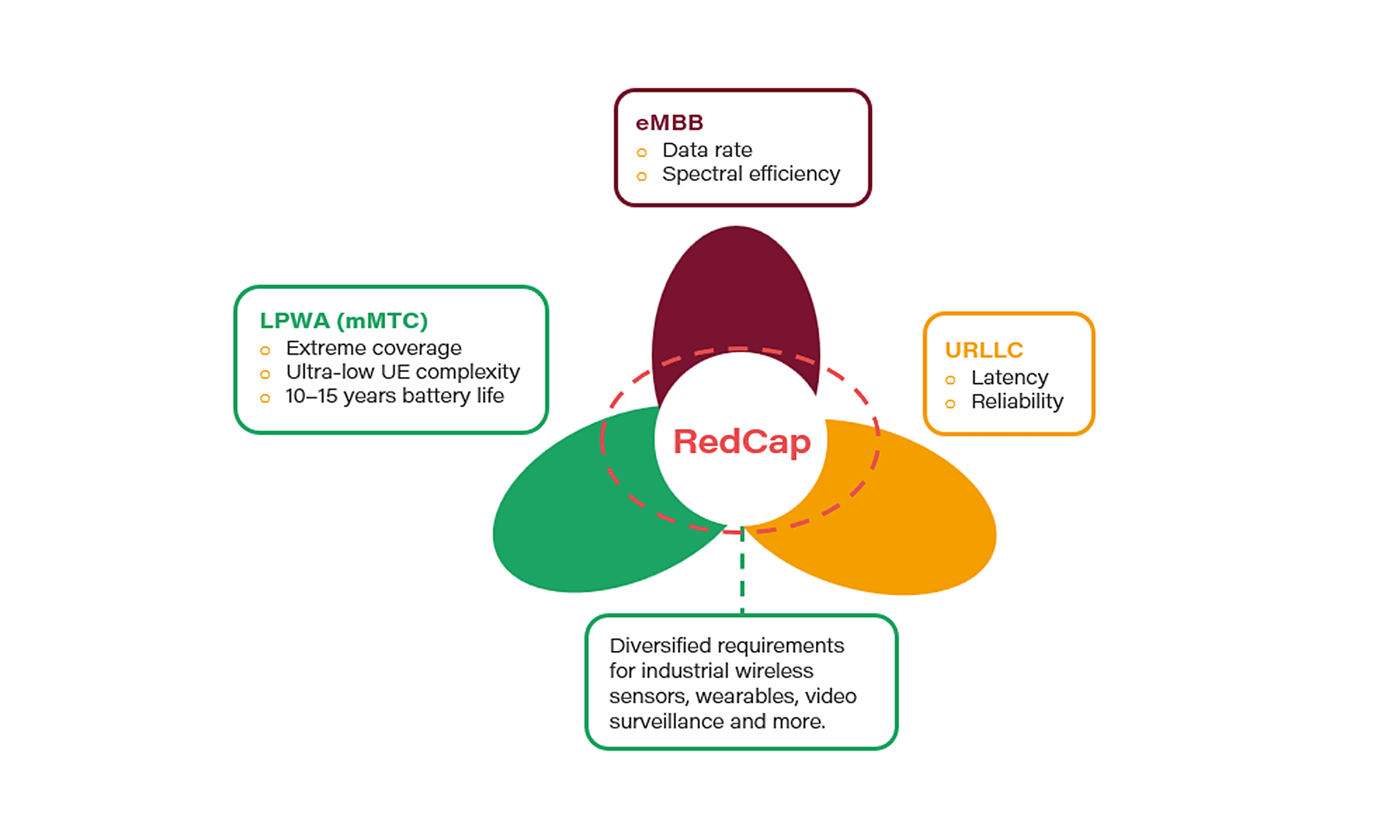
The industrial internet of things (IIoT) is undergoing a paradigm shift, driven by the need for reliable, high-performance connectivity that can keep pace with the demands of smart factories, remote infrastructure, and autonomous industrial systems. While full 5G (eMBB) offers gigabit speeds and ultra-low latency, it often comes with excessive costs and power consumption that are unnecessary for many mid-speed IIoT applications. On the other hand, LTE networks are approaching obsolescence, with carriers refarming spectrum for 5G and unable to support long-term IIoT deployments planned today. This is where the industrial 5G RedCap router emerges as a game-changer—a right-sized connectivity solution that bridges the gap between LTE and full 5G, delivering optimized performance for the unique needs of industrial environments.
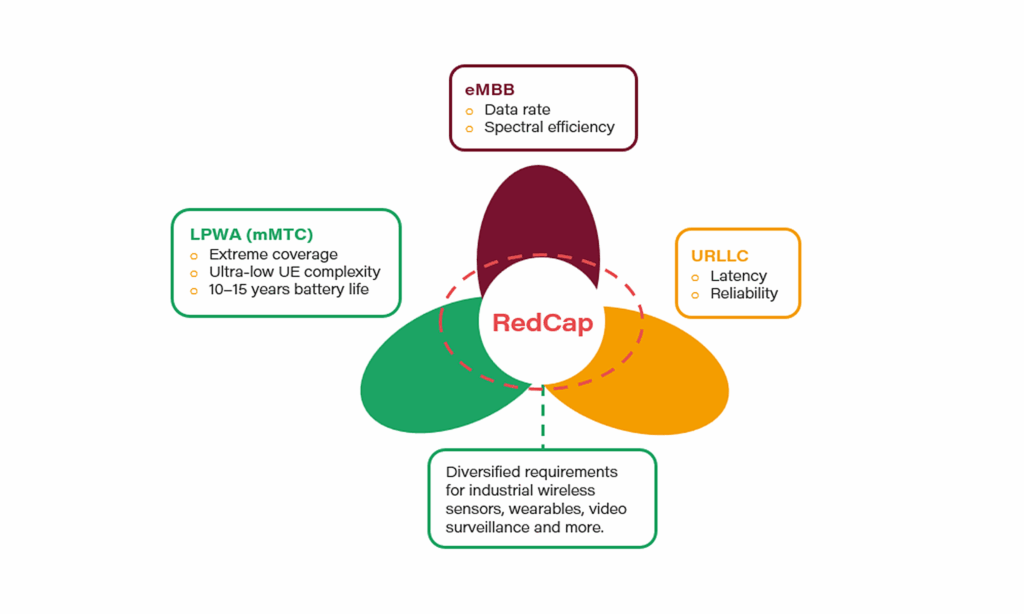
5G RedCap (Reduced Capability), defined in the 3GPP R17 standard, is a lightweight 5G variant specifically designed for industrial and commercial IoT applications. Unlike full 5G, which is overengineered for bandwidth-heavy tasks like 4K streaming or AR/VR, RedCap simplifies hardware complexity—reducing antenna counts, bandwidth, and processing requirements—while retaining the core benefits of 5G, such as low latency, network slicing, and future-proof compatibility. When integrated into an industrial-grade router, this technology becomes a powerful tool for organizations looking to modernize their IIoT infrastructure without the premium costs and power demands of full 5G solutions.
What Is an Industrial 5G RedCap Router?
An industrial 5G RedCap router is a rugged, industrial-grade networking device that leverages 5G RedCap technology to provide reliable, cost-effective, and energy-efficient connectivity for IIoT devices and systems. Unlike consumer-grade routers, these devices are built to withstand the harsh conditions of industrial environments—extreme temperatures, humidity, vibration, and electromagnetic interference (EMI)—while delivering consistent performance for critical industrial operations.
At its core, an industrial 5G RedCap router acts as a gateway, connecting IIoT sensors, controllers, machines, and other devices to the cloud or on-premise servers. It supports 5G RedCap’s key capabilities, including SA and NSA modes, down compatibility with 4G LTE, and optimized data rates that balance performance and efficiency. Industrial-grade models, such as the USR-G806R and USR-G816R from Jinan Youren IoT, often feature additional industrial-specific enhancements, including wide-temperature operation, rugged metal enclosures, multiple installation options, and advanced security protocols to protect sensitive industrial data.
1)Key Technical Specifications of Industrial 5G RedCap Routers
Industrial 5G RedCap routers are engineered to meet the strict requirements of industrial environments, with technical specs that prioritize reliability, durability, and efficiency. Below are the core specifications that define these devices, based on leading industrial models and 3GPP R17 standards:
1. Cellular Connectivity
Industrial 5G RedCap routers support 5G NR bands (typically n1/3/5/8/28/41/78/79 for global compatibility) and LTE bands (B1/3/5/8/34/38/39/40/41) for backward compatibility. They deliver peak download speeds of up to 226 Mbps and upload speeds of 120 Mbps—more than enough for mid-speed IIoT applications like video surveillance, sensor data transmission, and remote device control. Most models support all major carriers (China Mobile, China Telecom, China Unicom, China Broadcast) and feature dual SIM slots or customizable eSIM options for redundant connectivity and flexible deployment.
2. Industrial-Grade Design
To withstand harsh industrial conditions, these routers feature rugged metal enclosures with IP30 or higher protection ratings (IP64 for outdoor models), wide operating temperature ranges (-20°C to +70°C for standard models, -40°C to +125°C for storage), and input (DC 9-36V) with reverse polarity protection. They also undergo rigorous testing for EMI, electrostatic discharge (ESD), surge, and electrical fast transient (EFT) protection, ensuring reliable operation in factories, oil fields, and outdoor infrastructure.
3. Networking and Interface Options
Industrial 5G RedCap routers offer versatile connectivity options to integrate with a wide range of IIoT devices. Common interfaces include 2-4 Ethernet ports (10/100 Mbps or 1 Gbps), Wi-Fi (2.4GHz or dual-band 2.4GHz/5.8GHz, supporting AP/STA/relay modes), and serial ports (RS232/RS485) for direct connection to sensors and legacy industrial equipment. Advanced models may also support 5G LAN, network slicing, and multi-DNN (Data Network Name) to enable segmented, secure connectivity for different industrial applications.
4. Power Efficiency
One of the most significant advantages of industrial 5G RedCap routers is their low power consumption—up to 4x more efficient than full 5G eMBB routers. Models like the E-Lins H685f feature idle power consumption of less than 5W, making them ideal for battery-powered or solar-powered IIoT deployments, such as remote oil well monitoring, smart grid sensors, and underground utility tunnels. This efficiency extends the lifespan of battery-operated devices, reducing maintenance costs and improving operational continuity.
5. Security and Management
Industrial 5G RedCap routers prioritize security to protect sensitive industrial data. They support VPN protocols (PPTP, L2TP, IPSec, OpenVPN), firewall features (NAT, access control lists, port forwarding), and encryption to secure data transmission. Many models also integrate cloud-based management platforms (E-Lins NMS) that enable remote monitoring, configuration, and firmware updates, reducing the need for on-site maintenance and improving operational efficiency.
2)Why Industrial 5G RedCap Routers Are Superior to Traditional Routers
When compared to traditional 4G LTE routers and full 5G eMBB routers, industrial 5G RedCap routers offer a unique balance of performance, cost, and efficiency that makes them ideal for most IIoT applications. Below is a detailed comparison of their key advantages:
1. Cost-Effectiveness
Full 5G eMBB routers require complex hardware (multiple antennas, high-performance processors) that drives up upfront costs. In contrast, industrial 5G RedCap routers simplify hardware design (fewer antennas, reduced RF complexity), reducing module costs by up to 50% while retaining 5G’s core benefits. Additionally, their low power consumption lowers operational costs, as they require less energy to operate and reduce the need for frequent battery replacements in remote deployments.
2. Power Efficiency
4G LTE routers are less efficient than RedCap routers, while full 5G eMBB routers are power-hungry—making them impractical for battery-powered or solar-powered IIoT applications. Industrial 5G RedCap routers solve this problem by optimizing hardware and software for low power consumption, enabling long-term deployments in remote or off-grid locations where power is limited.
3. Future-Proofing
As LTE networks are phased out, 4G routers will become obsolete, requiring costly upgrades. Industrial 5G RedCap routers support 5G SA, ensuring compatibility with evolving 5G networks over 10-20 years deployment lifecycles. This future-proofing eliminates the need for frequent hardware replacements and ensures that IIoT infrastructure remains compatible with emerging 5G technologies.
4. Balanced Performance
Most IIoT applications do not require the gigabit speeds of full 5G eMBB. Industrial 5G RedCap routers deliver optimized data rates (50-226 Mbps) and low latency (10-20 ms) that are perfectly suited for mid-speed applications like AGV control, video surveillance, and sensor data transmission. This balance ensures that organizations get the performance they need without paying for unnecessary bandwidth.
3)FAQ: Industrial 5G RedCap Routers
Q1: What is the difference between an industrial 5G RedCap router and a standard 5G router?
A standard 5G router (eMBB) is designed for high-bandwidth applications (e.g., 4K streaming, AR/VR) with gigabit speeds but high-power consumption and costs. An industrial 5G RedCap router is a lightweight variant optimized for IIoT, with reduced hardware complexity, lower power consumption (up to 4x more efficient), and lower costs—while retaining 5G’s low latency and network slicing capabilities. Industrial models also feature rugged designs for harsh environments, unlike consumer-grade standard 5G routers.
Q2: Can industrial 5G RedCap routers work with existing 4G infrastructure?
Yes, most industrial 5G RedCap routers support both 5G SA/NSA modes and backward compatibility with 4G LTE networks. This means they can seamlessly connect to existing 4G infrastructure today and transition to 5G networks as they are deployed, minimizing transition costs and ensuring continuity of operations.
Q3: What industrial applications are best suited for 5G RedCap routers?
Industrial 5G RedCap routers are ideal for mid-speed IIoT applications that require reliability, low latency, and energy efficiency. Key use cases include AGV and control, and logistics, video surveillance, oil and gas remote monitoring (e.g., oil well control), smart grid operations, water and gas network telemetry, and industrial automation in smart factories.
Q4: How secure are industrial 5G RedCap routers?
Industrial 5G RedCap routers are built with industrial-grade security features to protect sensitive data. They support VPN encryption, firewall controls, access control lists, and secure remote management via cloud platforms. Many models also feature hardware-level security, such as secure boot and tamper detection, to prevent unauthorized access and ensure data integrity.
Q5: What is the typical lifespan of an industrial 5G RedCap router?
Industrial 5G RedCap routers are designed for long-term industrial deployments, with a typical lifespan of 10-20 years. This is due to their rugged industrial design, wide-temperature operation, and future-proof 5G SA support, which ensures compatibility with evolving networks. Additionally, their low power consumption reduces wear and tear on components, extending their operational life.
Q6: Can industrial 5G RedCap routers be remotely managed?
Yes, most industrial 5G RedCap routers support remote management via cloud-based platforms or on-premise software. These platforms allow administrators to monitor device status, configure settings, update firmware, and troubleshoot issues remotely—reducing the need for on-site maintenance and improving operational efficiency. For example, Sierra Wireless AirLink routers can be managed via the AirLink Management Service (ALMS), while Youren IoT routers integrate with Youren Cloud for centralized management.
Q7: Are industrial 5G RedCap routers compatible with all major carriers?
Most industrial 5G RedCap routers are designed to be carrier-agnostic, supporting all major global carriers (e.g., China Mobile, China Telecom, China Unicom, China Broadcast, Verizon, AT&T). They feature multi-band support and can be configured to work with different carrier networks, making them flexible for global industrial deployments.
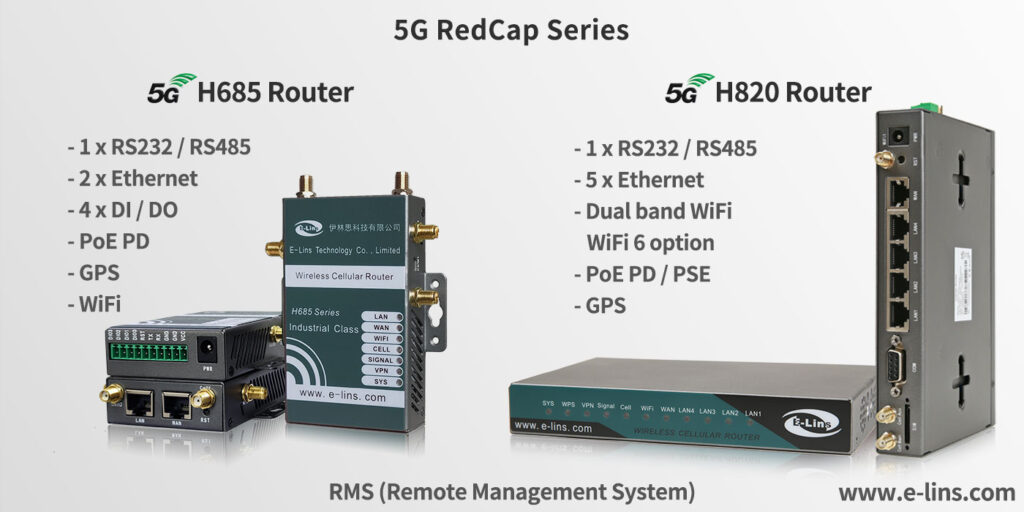
Are you sourcing an industrial 5g redcap router? E-Lins will be an excellent choice for you. Founded since 1999, specialized on manufacturing 5g redcap routers.